
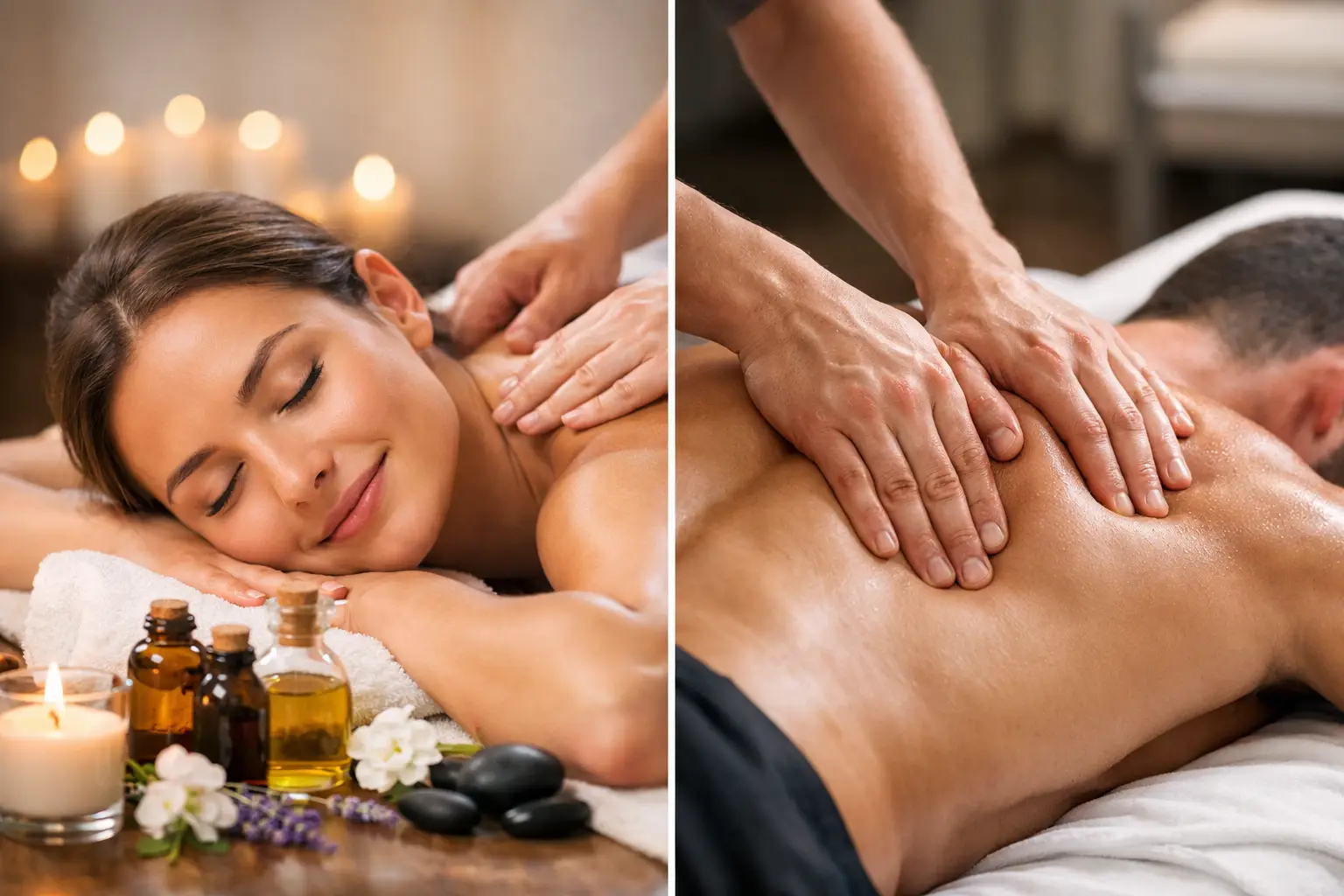
Some days, your body asks for softness. Other days, it asks for pressure that reaches the places stress has settled and stayed. That is the real question behind aromatherapy massage vs deep tissue. Both can restore you, but they do it in very different ways, and the right choice often depends on what your body is carrying when you arrive.
One is guided by scent, atmosphere, and the quiet shift of the nervous system. The other is more deliberate, more concentrated, and often chosen when tension feels rooted deep beneath the surface. Neither is better in every case. They simply serve different needs, different moods, and different moments in a person’s rhythm of care.
Aromatherapy massage vs deep tissue: the core difference
Aromatherapy massage is centered on the sensory experience of touch paired with essential oils. The pressure is usually lighter to moderate, and the session is designed to calm, soothe, and create a feeling of internal spaciousness. The oils are not just fragrance in the background. They shape the mood of the ritual, whether the goal is grounding, rest, clarity, or emotional ease.
Deep tissue massage takes another path. It uses firmer, slower pressure to work through layers of muscle and connective tissue where tightness has become stubborn. The focus is less on atmosphere alone and more on physical release. If your shoulders feel knotted, your lower back feels dense, or your body has been bracing for too long, deep tissue is often the more direct answer.
The contrast is not simply gentle versus intense. It's regulation versus release, although there can be overlap. Aromatherapy often helps the whole system soften. Deep tissue often targets specific areas that need more attention.
How aromatherapy massage feels
A well-crafted aromatherapy massage tends to feel immersive from the first breath. The room is part of the experience. The oil warms against the skin. The scent begins to settle the mind before the hands have fully begun their work. For many people, this style of massage creates a sense of being gathered back into themselves.
The pressure is usually flowing rather than forceful. Long strokes encourage circulation and relaxation, while the essential oils add another layer of support. Lavender may invite rest. Eucalyptus may feel clearing. Citrus may feel bright and uplifting. The exact blend matters, because scent is deeply tied to memory, emotion, and the body’s stress response.
This makes aromatherapy especially appealing when life feels noisy, sleep has been shallow, or stress feels more mental and emotional than structural. If your whole body feels tired but not necessarily injured or severely tight, this ritual can feel like a reset.
That said, lighter pressure does not mean it lacks depth. Sometimes the body lets go more fully when it feels safe rather than challenged. A gentler approach can reach places that force cannot.
How deep tissue massage feels
Deep tissue is more focused and more purposeful in its intensity. The therapist uses slow, sustained pressure to address muscle adhesions, chronic tightness, and areas where movement feels restricted. You are likely to notice the work most in a few key regions rather than as one continuous floating sensation.
This style can be deeply satisfying when your body feels compacted by long hours at a desk, repetitive movement, travel, hard training, or ongoing tension patterns. It's often chosen by people who say things like, “My neck is always tight,” or “I need real pressure.”
Still, more pressure is not always better. Deep tissue should come across as productive, not punishing. There may be moments of tenderness or intensity, but the body should not feel attacked. The most helpful sessions balance firmness with sensitivity, allowing tissue to soften rather than forcing it into submission.
It's also worth knowing that deep tissue can leave you feeling a little tender afterward, especially if the tightness was significant. Many people welcome that feeling because it comes with greater range, ease, and relief in the days that follow.
Which one is better for stress?
If stress is showing up as racing thoughts, poor sleep, shallow breathing, or that familiar feeling of being unable to fully exhale, aromatherapy massage often has the advantage. The combination of calming touch and intentional scent can help shift the body out of vigilance and into rest. It meets stress at the level of the nervous system.
Deep tissue can help with stress too, especially when stress has become physical. A clenched jaw, lifted shoulders, tension headaches, and a constantly tight upper back may all respond well to deeper work. But if your system already feels overstimulated, very firm pressure may not be what your body wants first.
That's where honesty matters. Ask yourself whether you want to melt or whether you want to release. Sometimes the answer is obvious. Sometimes it changes week to week.
Which one is better for pain and tight muscles?
For localized tightness, deep tissue is usually the more effective choice. It's designed to work into persistent muscle tension and help restore mobility where things feel stuck. If one area keeps calling for attention, a more targeted approach makes sense.
Aromatherapy massage can still help when discomfort is tied to general tension, fatigue, or stress-related holding. It may not go as aggressively into a knot, but it can reduce overall guarding in the body. And when the body guards less, pain often softens too.
The trade-off is simple. Deep tissue is often better for specific muscular issues. Aromatherapy is often better for overall restoration. If your pain is diffuse and tied to exhaustion, the gentler option may actually serve you more.
Aromatherapy massage vs deep tissue: how to choose
The easiest way to choose is to think about your intention before you think about the technique. Not, “Which one should I book?” but, “What do I want to feel when I leave?”
If you want to feel lighter, calmer, more rested, and more connected to your breath, aromatherapy massage is often the right fit. If you want to feel looser in a specific area, less restricted in movement, or relieved of long-held tension, deep tissue may be the better ritual.
There are also practical details to consider. If you are sensitive to pressure, new to massage, or simply craving quiet comfort, aromatherapy tends to be more approachable. If you are comfortable with stronger sensation and want a session that is more corrective in feel, deep tissue is a natural choice.
Your energy matters too. When you are depleted, intense work can sometimes feel like too much. When you are energized but physically tight, deeper work can feel exactly right.
When a blended approach makes sense
The choice is not always either-or. Some of the most thoughtful massage experiences borrow from both styles. A therapist may use aromatherapy to create calm and open the body, then bring focused pressure to one or two areas that need deeper release. That combination can feel especially balanced for someone carrying both emotional stress and muscular tension.
This is often the beauty of a more intentional spa ritual. It's less about fitting yourself into a rigid category and more about listening to what your body is asking for that day. A premium wellness space should make room for that nuance.
Here at donÉvita, the most meaningful care begins with attention. Not just to symptoms, but to state of mind, energy, breath, and the quiet signals the body gives when it is finally still enough to be heard.
A few expectations to set before you book
If you choose aromatherapy massage, arrive ready to slow down. The benefits are strongest when you let the experience be immersive rather than rushed. Notice the scent. Notice your breath. Let the mind stop performing for a while.
If you choose deep tissue, communicate clearly about pressure and problem areas. Strong work should still feel respectful. Speaking up is not interrupting the ritual. It's part of shaping it.
And with either choice, remember that one session can help, but patterns built over months often need repeated care. The body responds beautifully to consistency. Renewal is rarely loud. More often, it happens through small returns to yourself.
If you are standing between aromatherapy massage and deep tissue, let the decision be simple. Choose the ritual that meets your body where it is, not where you think it should be. The right touch is the one that helps you soften, release, and leave with more space than you brought in.