
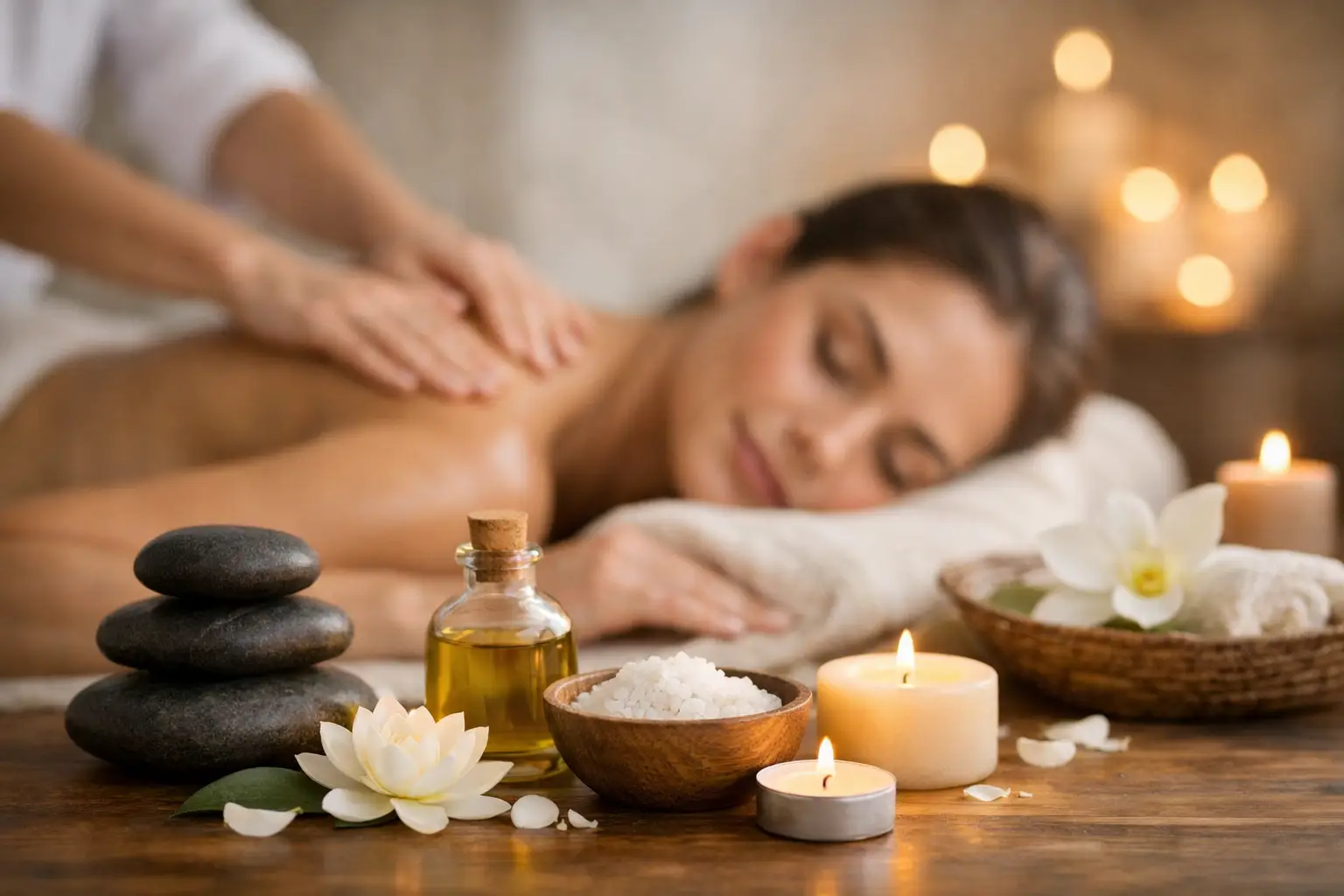
Most people know when a massage feels good. Fewer can explain why one experience lingers long after the table is still, the room is quiet, and the body has softened into ease. That is the Art-Of-Massage - not simply the movement of skilled hands, but the thoughtful shaping of an entire moment of renewal.
A true massage experience begins before touch. It begins with exhale, with the subtle shift that happens when the outside world grows quiet. The body responds to atmosphere faster than we often realize. Warmth matters. Scent matters. The pace of the room matters. Even the feeling of being cared for without being rushed changes how deeply someone can relax.
This is where massage becomes art instead of routine.
The Art of Massage: When Pressure Becomes Poetry
A donEvita Reflection on Intentional Touch, Flow, and Renewal
There is a moment in a truly good massage when the body knows it is being understood.
Not forced. Not rushed. Not pushed into surrender. Simply understood.
That moment does not come from strength alone. Anybody can push hard. Anybody can lean their body weight into a muscle and call it deep work. But pressure, when used without awareness, becomes noise. It becomes a battle between the therapist and the body.
The guest may leave feeling sore, exhausted, or impressed by the force, but not necessarily renewed.
The true art of massage is not how hard a therapist can press. It is how well the therapist can listen.
At donEvita, we believe massage is not only about pressure. It is about presence. It is about creating a guided renewal ritual where touch, rhythm, scent, warmth, and quiet come together in a way the body can trust.
Because when the body feels safe, it begins to soften.
And when the therapist truly understands pressure, the body feels it immediately.
Pressure Is a Language
Pressure is a language.
The body speaks through tension, warmth, resistance, breath, and subtle changes beneath the therapist’s hands. A skilled massage therapist does not simply apply pressure. They have a conversation with the body.
They notice when the tissue is ready. They notice when the nervous system is still guarded. They notice when to sink in. They notice when to pause. They notice when to soften. They notice when a deeper touch is finally welcome.
Some massages are too much force for too long. The therapist goes full power from beginning to end, as if every muscle needs to be conquered. But the body is not a wall to break through. It is living, sensitive, intelligent.
It does not open because it is attacked.
It opens when it feels safe.
Other massages feel relaxing on the surface, but something is missing. The oil feels nice. The flow is smooth. The skin feels moisturized. But the touch has no true intention behind it. You leave feeling like someone moved over your body, but not like someone truly worked with your body.
That is the difference between routine touch and masterful touch.
One moves across the body.
The other listens into it.
The Many Levels of Pressure
A great massage therapist understands that pressure has levels.
Light pressure is not weak. Medium pressure is not average. Firm pressure is not always better. Deep pressure is not always the goal.
Each level has a purpose when it is used at the right time, in the right place, with the right rhythm.
Light pressure can calm the nervous system. It can introduce safety. It can tell the body, “You do not have to protect yourself here.”
Medium pressure can warm the tissue. It can create flow. It can help the body prepare for more focused work.
Firm pressure can bring attention to areas that need care. It can help the body feel supported, grounded, and worked with.
Deep pressure, used wisely, can feel powerful and precise. But deep work does not need to last the entire session. Sometimes the body only needs a few intentional strokes of deep pressure, not ninety minutes of war.
That is where mastery lives.
The goal is not to overpower the body.
The goal is to understand it.
Deep Work Does Not Have to Feel Like War
A master therapist does not chase pain. They chase response.
They are not trying to prove strength. They are trying to create change. They understand that the body often allows deeper work when the nervous system is calm first. When the guest feels safe, the muscles soften naturally. The therapist can reach deeper without forcing the body to defend itself.
This is why pressure must be blended like music.
A massage should have rhythm. It should have timing. It should have moments of depth and moments of quiet. It should rise and soften, like waves reaching the shore.
Too much intensity without pause becomes overwhelming. Too little intention becomes forgettable. But pressure used with awareness becomes memorable.
Before technique even becomes the focus, the therapist’s touch has already created the atmosphere.
The hands say what words cannot. The pace says, “You are safe.” The pressure says, “I am paying attention.” The rhythm says, “Let go when you are ready.”
This is where massage becomes more than a service.
It becomes an art.
The Heart of EvitaFlow™
This is the heart of EvitaFlow™ at donEvita.
Not just massage. Not just movement. Not just pressure.
EvitaFlow™ is intentional touch with purpose. It is a flow that listens. A pressure that adapts. A rhythm that allows the body to feel safe enough to soften.
In a thoughtful massage ritual, the therapist does not use one pressure for the entire session. They move between light, medium, firm, and deep with care. They feel where the body welcomes depth and where it needs gentleness. They understand that the best pressure is not always the strongest pressure.
The best pressure is the right pressure.
Right place. Right moment. Right intention.
That is what makes a massage unforgettable.
The Therapist as an Artist
A massage therapist is, in many ways, an artist.
Like a painter using brush pressure on a canvas, the therapist must know when to glide, when to press, when to soften the edge, and when to bring detail into focus. A careless hand can cover the canvas. A skilled hand can bring it to life.
The same is true with the body.
Every guest is different. Every shoulder, every back, every neck, every tired foot has its own story.
Some bodies carry stress like armor. Some hold tension quietly. Some need grounding. Some need gentleness. Some need strong, specific work. Many need all of these things blended together.
That is why a great therapist constantly adapts.
They feel the tissue change. They notice the breath slow down. They sense when the body invites more pressure and when it asks for space.
This kind of massage cannot be rushed.
It requires patience. It requires sensitivity. It requires presence.
And presence is what turns a massage from mechanical into meaningful.
Presence Turns Massage Into Memory
Presence is the difference between hands that are simply moving and hands that are listening.
When the therapist is present, every stroke has a reason. Every pause has meaning. Every transition feels connected. The massage no longer feels like a sequence of techniques. It feels like one continuous experience.
The guest may not know the names of the techniques being used. They may not know which muscle was released or which method created the change. But they will know how it felt.
They will feel that the therapist found the right places. They will feel that the pressure was strong without being careless. They will feel that their body was respected, not forced. They will feel the quiet difference between being touched and being understood.
That is the art of massage.
It is not only in the hands.
It is in the timing. It is in the sensitivity. It is in the rhythm. It is in the ability to read what the body is saying without words.
Pressure is not random. It is not simply hard, soft, or somewhere in between. It is awareness, patience, and skill working together.
The Quiet Art of Listening
A true master of massage does not ask, “How hard can I push?”
A true master asks, “What does this body need right now?”
Sometimes the answer is stillness. Sometimes it is warmth. Sometimes it is slow, steady pressure. Sometimes it is deeper work, carefully placed. Sometimes it is letting the body rest before asking it to release.
When pressure is used with this kind of understanding, massage becomes unforgettable. The guest does not just leave feeling relaxed. They leave feeling restored. They feel as if the body has been heard.
They feel lighter. They feel calmer. They feel more connected to themselves.
Because the best massage is not a performance of strength.
It is a quiet art of listening.
At donEvita, this is the kind of massage experience we believe in: not force, not routine, not pressure without purpose, but a renewal ritual shaped by presence, flow, and care.
A moment where pressure becomes poetry.
A moment where touch becomes trust.
A moment where the body feels understood.
