
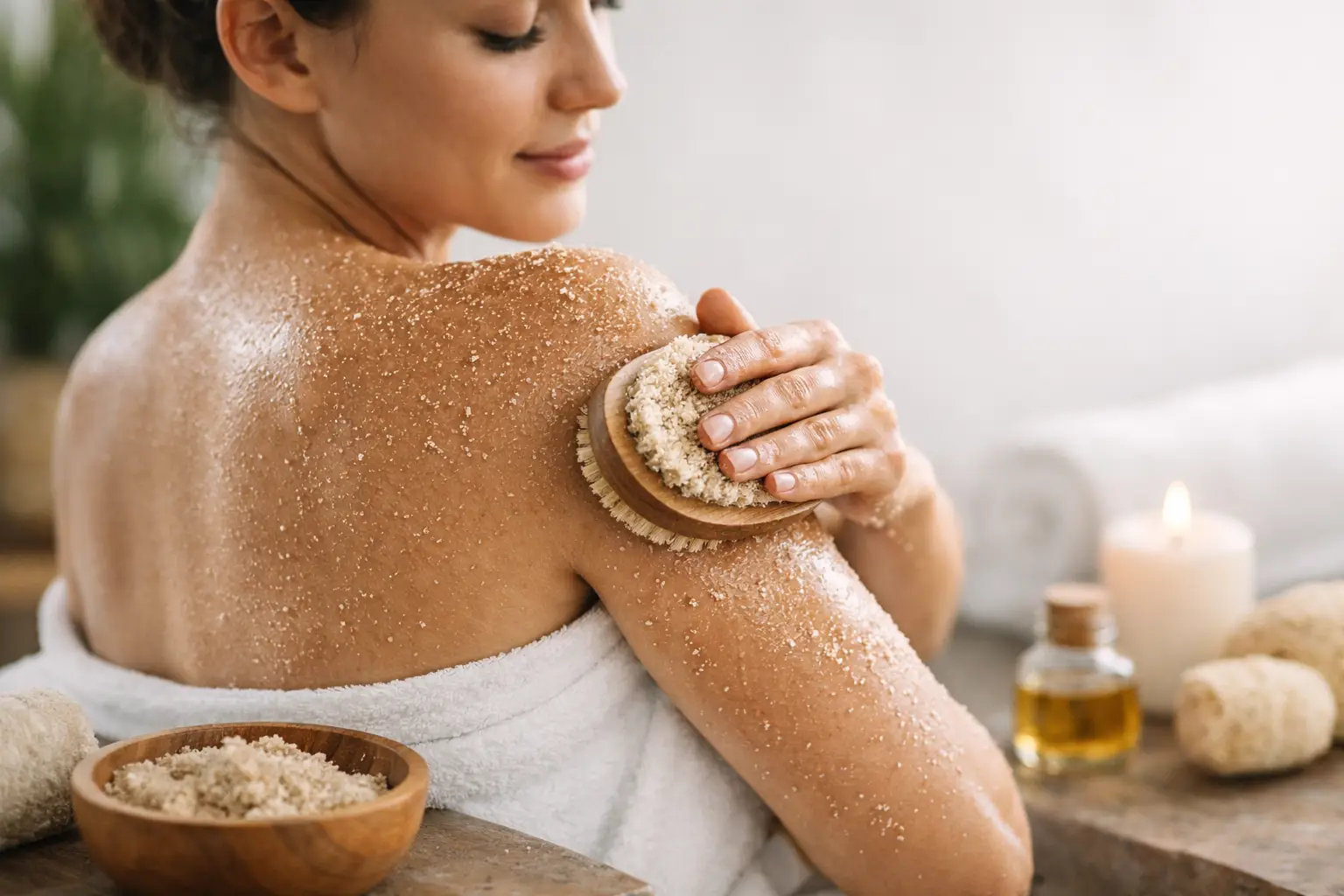
Some treatments wake up the skin. A true body exfoliation ritual does something quieter and deeper. It slows you down long enough to notice where tension has settled, where dryness has dulled your natural glow, and how deeply the body responds to warm touch, steam, scent, and care.
Exfoliation is often reduced to a scrub and a rinse. That is the quickest version, but not the most restorative one. When approached as a ritual, it becomes a reset for the senses as much as the skin. The body feels smoother, yes, but the mind also softens. The room grows still. Breath deepens. What could have been a simple step in a routine begins to feel like renewal.
What makes a body exfoliation ritual feel different
The difference is intention. A rushed exfoliation can leave skin polished, but a well-designed ritual leaves you feeling tended to. The process matters as much as the result. Warmth prepares the skin. Texture awakens it. Moisture seals in softness. Quiet allows the nervous system to follow.
This is why the best rituals are not harsh. They are measured. The pressure should never feel abrasive, and the ingredients should support the skin rather than strip it. Brown sugar, coffee, coconut oil, grapeseed oil, mineral-rich salts, and nourishing lotions each create a different experience. Some invigorate. Others soothe. The right choice depends on what the body needs that day.
There is a practical reason for this gentler approach. Over-exfoliating can leave skin reactive, tight, or uneven. A ritual works because it respects the skin barrier while still encouraging fresh, healthy radiance. Softer is often more effective.
The skin benefits of a body exfoliation ritual
At its simplest, exfoliation helps remove the layer of dead skin cells that can make skin feel rough or look flat. Once that buildup is lifted away, the skin often feels smoother and appears brighter. Moisturizers also tend to absorb more evenly after exfoliation, which is one reason the skin can stay supple longer.
But texture is only part of the story. A body exfoliation ritual can also support circulation through steady massage-like movement across the skin. That touch brings warmth and presence back into areas that are often ignored, especially shoulders, arms, legs, and feet. For many people, the benefit is as emotional as it is visible. To be cared for in this way reminds the body that it can soften.
It also creates a better foundation for other wellness experiences. Exfoliated skin receives oils, lotions, and body butters more beautifully. The finish is not just smoother. It feels complete.
Choosing the right exfoliation for your skin
No single scrub suits every body. Skin type, season, sensitivity, and even stress levels can change what feels best.
If your skin is dry or delicate, fine sugar with nourishing oils often feels more comfortable than a coarse salt blend. Sugar tends to dissolve more easily and can offer a softer polish. Coconut oil and grapeseed oil bring slip and comfort, helping the skin feel cushioned instead of overworked.
If you want a more energizing effect, coffee-based exfoliation can feel grounding and invigorating at once. The texture is distinct, the aroma is rich, and the experience has a way of waking up tired skin. This can be especially welcome when the body feels heavy or dull.
Salt has its place too, especially when paired with steam or warm water. It can feel purifying and deeply renewing, though it may be better for skin that is not already sensitive or freshly shaved. This is where customization matters. What restores one person may be too much for another.
In a premium spa setting, the ritual should be adjusted to the guest, not the other way around. That is part of what makes the experience feel personal instead of routine.
How to build a body exfoliation ritual at home
A home ritual does not need to be elaborate to feel meaningful. What matters most is pacing. If you try to squeeze exfoliation between errands or before answering emails, the body will read it as another task. Leave enough room for the process to be calm.
Begin with warmth. A shower, steam, or warm towels help soften the skin and prepare it to receive exfoliation more comfortably. This first step is easy to skip, but it changes the entire experience. The body becomes more receptive, and the exfoliant can glide more evenly.
Apply the scrub to damp skin using slow circular movements. Start with the limbs and work inward. Let the pressure stay moderate. There is no reward for scrubbing harder. Areas like elbows, knees, and heels may welcome a little more attention, while the chest and neck usually need a lighter hand.
Pause before rinsing. Even thirty seconds allows the scent and texture to settle in. Then rinse with warm water, not hot. Skin that has just been exfoliated often responds better to gentleness.
The final step matters as much as the scrub itself. While the skin is still slightly damp, apply a nourishing oil, cream, or lotion to seal in softness. This is where the ritual becomes lasting rather than temporary. Without moisture, exfoliation can leave the skin exposed. With it, the glow feels settled and complete.
When exfoliation helps, and when less is better
More is not always better. For most people, once or twice a week is enough for a body exfoliation ritual. If your skin is naturally resilient, you may tolerate regular polishing well. If it leans sensitive, dry, or reactive, less frequent exfoliation may leave you looking and feeling better.
Pay attention to what your skin tells you afterward. Softness is the goal. Tightness, stinging, or lingering redness usually means the exfoliation was too aggressive, too frequent, or poorly matched to your skin.
Timing matters too. Exfoliation before a body treatment, warm soak, or richly moisturizing service can deepen the feeling of renewal. Exfoliation right after shaving, sun exposure, or when the skin is irritated can do the opposite. Ritual asks for discernment. It is not about doing the most. It is about doing what restores.
Why professional ritual feels different
At home, exfoliation can be soothing. In the right hands, it becomes immersive. A professional ritual has the advantage of uninterrupted quiet, thoughtful ingredients, and skilled touch that reads the body with care. The pressure is more even. The transitions are more fluid. The environment invites the nervous system to settle in ways most homes cannot always offer.
This is especially true when exfoliation is paired with steam, warm towels, aromatic oils, or a nourishing body application afterward. Each layer supports the next. Skin is softened, but so is the pace of thought. For guests seeking more than a beauty result, this difference matters.
That is why places like donEvita frame these experiences as rituals of renewal rather than isolated services. The body is not treated as a checklist of concerns. It is welcomed into calm, restoration, and personalized care.
The role of scent, texture, and stillness
One reason exfoliation can feel so memorable is that it reaches the senses all at once. The grain of sugar or salt, the warmth of steam, the richness of oil, the quiet scent of coffee or botanicals - each element tells the body it is safe to let go.
This sensory layer is not extra. It is part of why the ritual works. Stress tends to pull attention outward. Ritual gently brings it back inward. The skin becomes the meeting place between physical care and mental quiet.
When people say they feel lighter after a well-crafted body treatment, they are often describing this blend of effects. The skin is smoother, but that is only the visible part. Underneath is the relief of having been still, warm, and carefully tended to for a little while.
A body exfoliation ritual is not really about removing what is old as quickly as possible. It is about making space for softness to return. Sometimes that means an energizing scrub and a brisk finish. Sometimes it means gentle sugar, warm oil, and silence. The right ritual meets you where you are, then leaves you feeling more like yourself when it is over.