
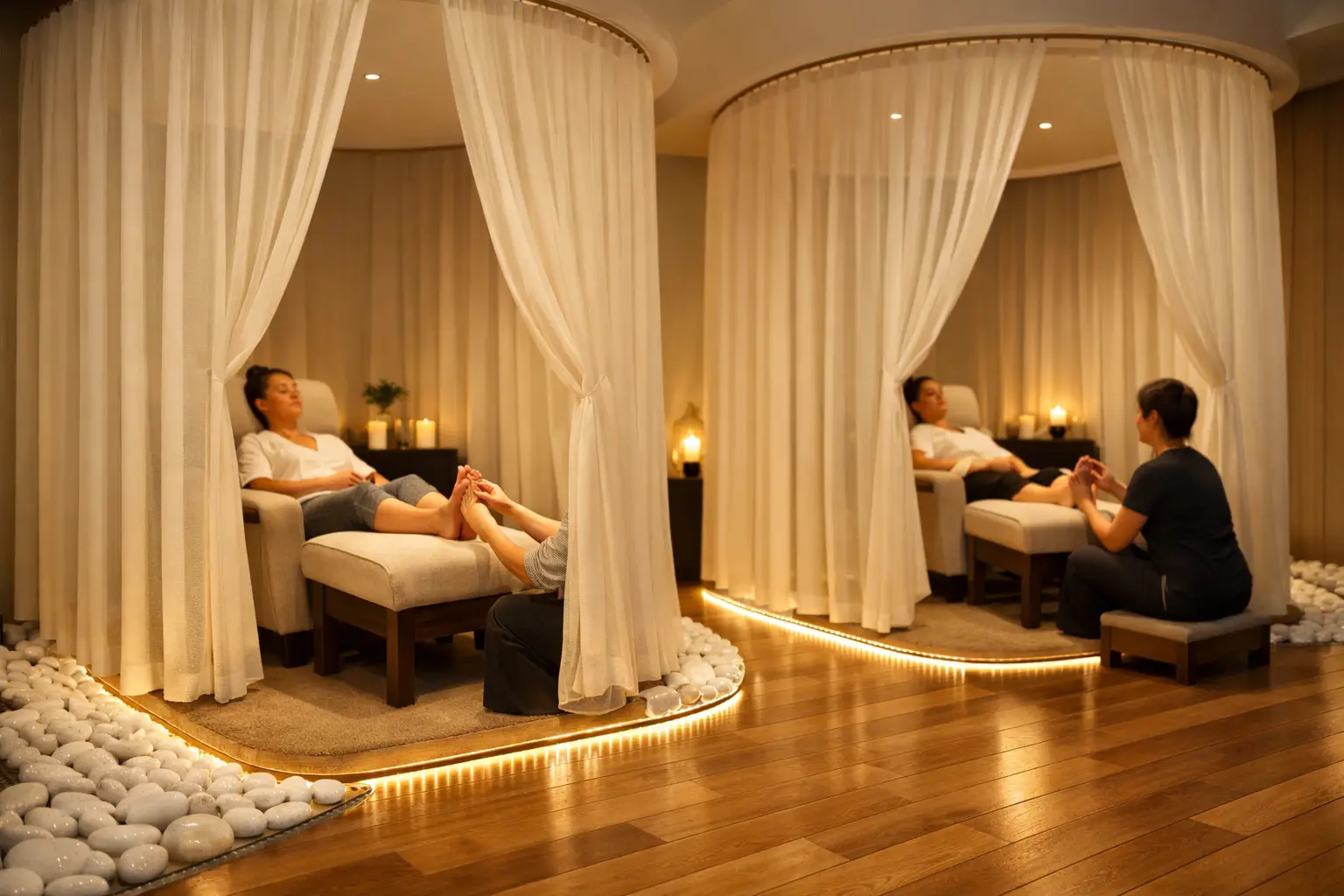
Tension has a way of gathering quietly. It settles into the body through long days, constant movement, overstimulation, and the kind of stress that does not always announce itself. Foot Reflexology meets that tension at ground level. What begins at the feet often unfolds into something larger - a feeling of steadiness, softened breath, and a body that no longer feels as if it must hold everything at once.
For many people, the appeal is immediate. The feet carry us through every day, yet they are often the last place to receive real attention. When touch is focused there with care and intention, the experience can feel unexpectedly expansive. Not dramatic. Not forceful. Just quietly effective.
What foot reflexology is
Foot reflexology is a touch-based ritual centered on specific areas of the feet. These areas are traditionally understood to correspond with different parts of the body, creating a map that guides the practitioner’s pressure, pacing, and attention. What matters most is to invite the whole system toward balance, not simply to work tired feet.
This is part of why reflexology feels different from a standard foot massage. A massage may focus on muscles, tension, and general relief. Reflexology tends to be more intentional in pattern and rhythm. The pressure may be subtle in one moment and more concentrated in the next, depending on what the feet seem to reveal.
That said, the line between the two can feel soft from the guest’s perspective. Both can be deeply soothing. The difference is often less about what you see and more about what you sense - a greater feeling of internal quiet, a slower mind, a body that begins to settle from within.
Why Foot Reflexology feels so restorative
The feet are rich with sensation. They are responsive, often tender, and closely tied to how we experience grounding. When they are cared for with patience, the nervous system often responds in kind. Many people notice that their breathing deepens without trying. Others feel warmth moving through the body, or a heaviness in the limbs that signals real release.
There's also something symbolic in the experience. To pause, recline, and receive focused care at the feet can create an immediate sense of surrender. It interrupts the usual momentum of the day. In a space designed for stillness, that interruption matters.
The benefits can vary. Some people come for relief after travel, long hours standing, or general fatigue. Others are drawn to the meditative quality of the ritual itself. Reflexology is not a cure-all, and it does not need to be. Its strength is often in how gently it helps the body shift out of strain and back toward ease.
What to expect during a session
A Foot Reflexology session is usually quiet by design. You may begin seated or reclined, with the feet cleansed or wrapped in warmth before the ritual begins. The first touch is often broad and calming, allowing the body to adjust. From there, pressure becomes more precise.
At times, certain areas may feel unexpectedly sensitive. This does not always mean something is wrong. Often it simply reflects built-up tension, overuse, or heightened awareness in a part of the foot that rarely receives focused touch. A skilled practitioner will work with that sensitivity rather than against it.
The most memorable sessions are rarely the most intense. More often, they are the ones paced with restraint. Reflexology should never feel punishing. There can be moments of tenderness, but the overall effect should be one of support, not endurance.
Who it is best for
Foot reflexology suits people who want restoration without excess. It can be especially appealing if you prefer wellness experiences that feel calm, tactile, and inward rather than highly stimulating. If full-body work feels like too much, starting at the feet can offer a gentler path into relaxation.
It's also well suited to people whose days are mentally crowded. Because the ritual is simple and contained, it often becomes easier to let go. There's less to process. The body understands the invitation quickly.
Still, preferences matter. Some people love focused footwork. Others are ticklish or sensitive and need a lighter approach. That's why the best experience is always a personalized one, shaped around comfort rather than routine.
The ritual, not just the technique
In a thoughtful setting, reflexology becomes more than pressure points and practiced hands. It becomes ritual - warmth, quiet, scent, breath, the feeling of being tended to with care. Technique matters, but atmosphere matters too. One supports the body. The other gives the mind permission to follow.
That's where places like donÉvita distinguish the experience. The intention is not simply to provide a service, but to create a pause that feels whole. Foot reflexology belongs naturally in that kind of sanctuary because it asks so little of you, yet offers so much in return.
If you have never tried it, there is no need to arrive with expectations. Just notice what changes when the feet are given time, attention, and skillful touch. Sometimes renewal begins in the most grounded place.