
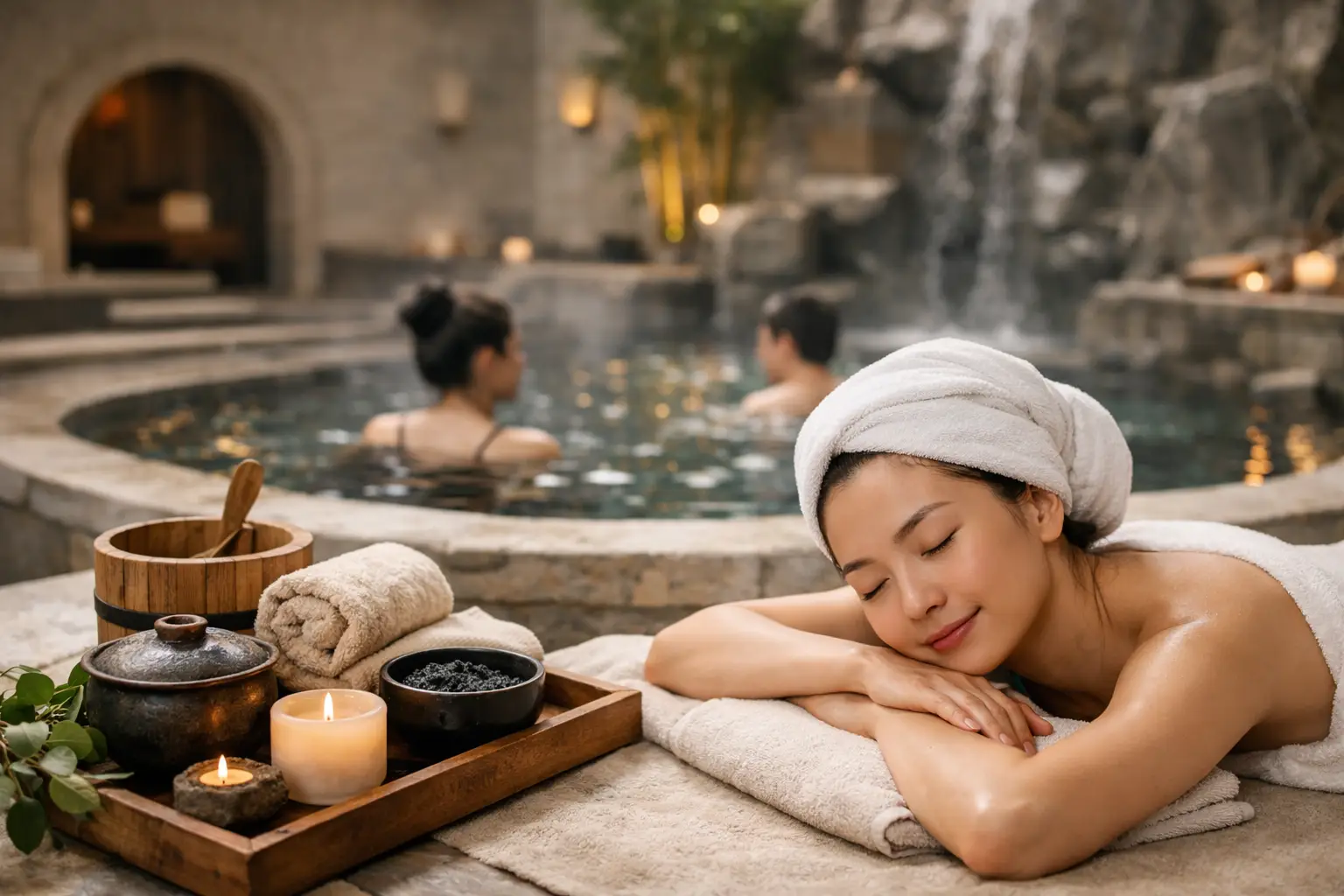
The first surprise for many guests is how unhurried it feels. A better guide to Korean spa experience is less about rules and more about rhythm - warm rooms, water, exfoliation, rest, and the quiet sense that your body can finally exhale.
For anyone curious but slightly unsure, that hesitation is normal. Korean spa culture can feel unfamiliar at first, especially if you are used to a treatment room, a robe, and a single service on a menu. A Korean spa is often more communal, more layered, and more ritual-based. You are not simply arriving for one treatment. You are stepping into a sequence designed to soften the body and clear mental static.
What makes a Korean spa experience different
A Korean spa, often called a jjimjilbang, centers on heat, hydrotherapy, exfoliation, and rest. Some spaces are large and social, with shared saunas and lounge areas. Others feel more private and refined. The common thread is the way each element works together. Warmth opens the body. Water resets the senses. Scrubbing lifts away dull skin. Stillness settles in afterward.
That layered approach is what makes the experience memorable. Instead of one isolated service, you move through a gentle progression. The result can feel deeper than relaxation alone. Many people leave feeling lighter, clearer, and more at home in their skin.
There's also a cultural difference worth respecting. Korean spas often have established etiquette around bathing, noise level, and the order of use. Following that rhythm is part of the experience. It creates a shared atmosphere of calm and care.
Your guide to Korean spa experience before you arrive
The most helpful preparation is simple. Give yourself time. A Korean spa is not ideal for rushing in between errands. If you can, treat it as a true pause in your week rather than another appointment to complete.
Hydration matters. Heat rooms, steam, and soaking can be draining if you arrive already dehydrated. Drink water beforehand, and plan to continue drinking water after your visit. It also helps to eat lightly. You want to feel nourished, not heavy.
Mentally, it helps to release the idea that everything needs to be familiar to be comfortable. If this is your first visit, some customs may feel new. That does not mean you are doing anything wrong. Most of the experience is intuitive once you slow down and observe the space.
You may also want to know that body scrubs can be more vigorous than many guests expect. They are effective, deeply satisfying, and not always delicate in the traditional spa sense. If your skin is very sensitive, ask questions before booking. Renewal should come across as supportive, not harsh.
What to expect when you check in
Most Korean spas begin with changing into spa attire or using designated bathing areas before entering common thermal spaces. Depending on the spa, amenities may be gender-separate, co-ed, or a mix of both. This is one of those it-depends moments. Each property has its own flow, and knowing that in advance can make you feel more at ease.
Once inside, the pace shifts. Shoes come off. Voices lower. Warm air replaces outdoor noise. Even in busier spaces, there is usually a shared understanding that people have come to rest.
If the spa offers multiple rooms, you may see dry saunas, steam rooms, salt rooms, clay rooms, or heated lounges. Not every guest uses every area, and you do not need to force a perfect circuit. Let your body guide the pace. Stay long enough to feel the warmth settle in, then step out before discomfort replaces ease.
The bathing ritual and why it matters
Bathing is often the anchor of the Korean spa experience. Warm pools, cool rinses, steam, and showering are not side details. They prepare the body for what comes next.
Warm water softens the skin and begins to loosen the surface layer that a body scrub will later remove. It also shifts the nervous system. Shoulders drop. Breathing slows. The mind stops gripping the day quite so tightly.
There can be a temptation to move quickly toward the treatment you booked, especially if exfoliation is your main goal. But the bathing phase is part of the treatment. Give it your attention. A few quiet minutes in water can change the entire tone of the visit.
The Korean body scrub
If there is one treatment people talk about most, it is the scrub. And for good reason. A traditional Korean body scrub is meant to be thorough. Dead skin is physically exfoliated in a way that can leave the body remarkably smooth, bright, and refreshed.
For first-time guests, the intensity can be surprising. This isn't a light polish with a fragrant sugar blend. It's a practical, deeply cleansing ritual with visible results. Some people love that directness immediately. Others need a moment to adjust. Neither reaction is wrong.
The key is timing and communication. Skin that has been warmed properly responds better. A skilled practitioner also makes a difference, because pressure and pace matter. You should leave feeling renewed, not overworked.
Afterward, many guests notice not only softer skin but a sense of reset that goes beyond the surface. Exfoliation has a psychological effect too. There's something clarifying about letting the old layer go.
Saunas, steam, and resting rooms
Heat rooms are where the experience expands from treatment into ritual. Different rooms may offer different sensations - dry warmth that pulls tension from the muscles, humid steam that softens breath, mineral or salt environments that feel grounding and still.
There's no prize for endurance here. Longer is not always better. What matters most is paying attention to your body. Stay until you feel nourished by the heat, then cool down, rest, and begin again if it feels right.
Rest is not filler between rooms. It's where the body integrates what it has received. Sit quietly. Sip water. Notice the softness in your limbs. A premium wellness experience is rarely about doing more. It's about allowing enough space for calm to take hold.
Etiquette that helps you feel at ease
The most useful etiquette is simple respect. Shower when required. Keep your voice low. Follow the posted guidance for each area. Bring presence instead of performance.
If a space is communal, remember that privacy and modesty are handled differently across cultures and facilities. Let the environment guide you rather than assuming every spa works the same way. Staff are there to help if you are unsure.
Phone use is often limited, and that is part of the gift. A Korean spa can feel restorative precisely because it asks so little of you beyond being there.
Is a Korean spa right for everyone?
Usually, yes, but not in the same way for every person. If you love quiet, warmth, and body rituals, it may feel immediately natural. If you are private, heat-sensitive, or uncertain about communal settings, some aspects may take more consideration.
That does not mean the experience is off-limits. It means choosing thoughtfully. Some guests prefer a shorter visit. Others skip the scrub and focus on soaking and sauna rooms. Some seek spaces that feel more intimate and guided, where touch, steam, scent, and exfoliation are woven together with a softer sense of care. In places like Bedford and across the DFW area, many wellness guests are looking for exactly that balance - the clarity of ritual without the rush.
A Korean spa experience can also be seasonal in its appeal. In colder months, the heat feels especially comforting. During stressful stretches, the structure itself can be soothing because it gives your mind fewer decisions to make.
How to get the most from the experience
Arrive with less urgency than usual. Let the first ten minutes be quiet. Warm the body before any scrub. Alternate heat with rest instead of pushing through fatigue. Drink water. Notice what your skin and nervous system respond to.
Most of all, resist the urge to judge the experience while you are still in it. New rituals often make sense after the body has had time to absorb them. What first feels unfamiliar can become deeply comforting once you understand the pace.
A thoughtful guide to Korean spa experience always comes back to the same truth: the ritual works best when you stop trying to manage every moment of it. Let warmth open you. Let water steady you. Let stillness do its quiet work. Then carry that softened feeling with you, long after you have stepped back into the day.