
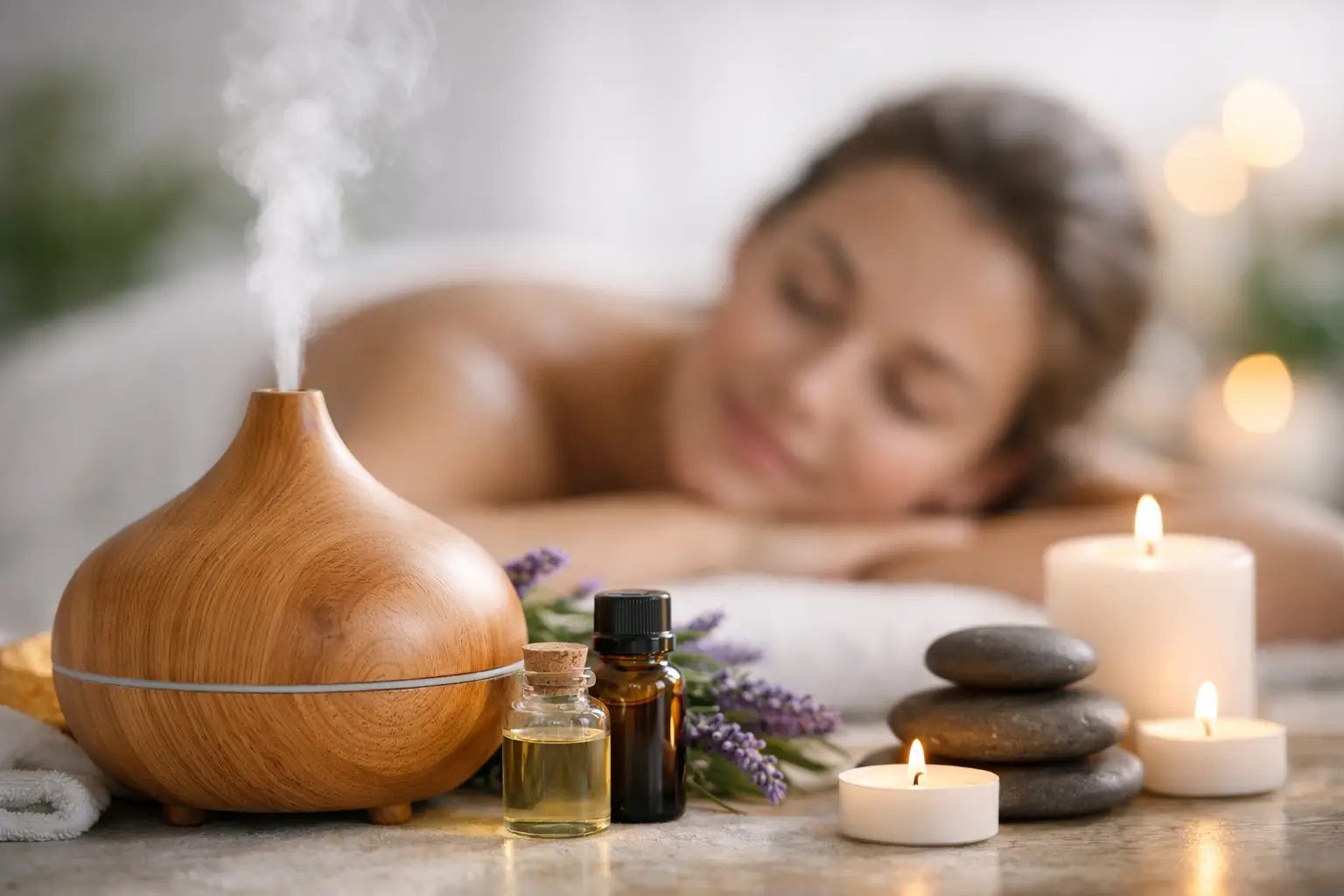
A room can change before anything visible happens. The light stays the same. The chair remains where it is. And yet one quiet breath of lavender, neroli, or sandalwood can soften the edges of a day that felt too sharp to hold. This is part of how aromatherapy supports relaxation - not by forcing stillness, but by inviting the body and mind to remember it.
Aromatherapy is often misunderstood as simple fragrance, something pleasant added to a bath, a massage, or the air. But scent has a more intimate relationship with the nervous system than many people realize. It moves quickly, almost wordlessly. Before the mind begins to analyze, the body has already responded.
That response is what makes aromatherapy feel so immediate. A well-chosen essential oil can create a sense of safety, warmth, and quiet within moments. Not because scent solves everything, and not because every oil works the same for every person, but because smell is deeply tied to memory, emotion, and the rhythms that shape how we feel in our own skin.
How aromatherapy supports relaxation through the senses
Relaxation rarely arrives as a command. It comes through cues. Lower light. Softer sound. A slower exhale. Scent belongs to that same language.
When essential oils are inhaled, aromatic molecules travel through the nose and interact with pathways linked to emotion and memory. This helps explain why certain scents seem to settle us almost instantly. The experience is not purely psychological, nor is it purely physical. It lives in the meeting point between the two.
That meeting point matters. When the body has been carrying tension for hours or days, it does not always respond to logic. You cannot reason yourself into ease when your shoulders are lifted, your jaw is set, and your breathing has become shallow. Scent can offer a gentler route. It suggests, rather than demands, that the pace can change.
This is one reason aromatherapy is so often paired with touch, steam, bathing, or rest. On its own, scent can be meaningful. Combined with other sensory rituals, it becomes even more persuasive. The nervous system begins to read a fuller message: you are safe enough to soften now.
Why scent can feel calming so quickly
Some forms of relaxation ask for time before their effects are felt. Aromatherapy can be different. The shift may be subtle, but it is often fast.
Part of that comes from association. If you have used chamomile before sleep, for example, the aroma itself may begin to signal rest. If rose reminds you of a peaceful garden, it may carry that feeling back into the present. Scent is deeply personal, and this is where nuance matters. An oil widely described as calming may not feel calming to everyone. The same fragrance that soothes one person might feel too sweet, too earthy, or simply unfamiliar to another.
This is why personalization matters more than trends. The most helpful aroma for relaxation is not always the most popular one. It's the one your senses receive with ease.
There's also the matter of concentration. More is not always better. A room saturated with fragrance can become distracting, even agitating. Relaxation tends to respond to restraint. A soft veil of scent often works more beautifully than a heavy cloud of it.
The oils people often turn to
Lavender is perhaps the most recognized for calming rituals, and for good reason. Its scent is herbaceous, floral, and familiar, which can make it easy to welcome. Chamomile carries a quieter sweetness that many people associate with comfort. Bergamot feels brighter - citrus with softness rather than sharpness - and can be especially appealing for those who want calm without heaviness.
Then there are deeper notes like sandalwood, cedarwood, and frankincense. These can feel grounding, almost architectural, creating a sense of steadiness in the atmosphere. Neroli and ylang-ylang bring a more floral richness, often chosen when relaxation is meant to feel restorative as well as serene.
None of these oils is universally right. Mood, season, time of day, and personal history all shape the experience. In summer, a citrus-forward blend may feel cleansing and light. In the evening, woods and resins may feel more settling. It depends on what kind of exhale you need.
How aromatherapy supports relaxation in daily rituals
Aromatherapy works best when it becomes part of a rhythm rather than a rare event. Relaxation is easier to access when the body learns to recognize certain cues again and again.
This can be very simple. A few moments with a diffuser at the end of the workday. A shower opened by eucalyptus steam. A drop of diluted oil applied to pulse points before reading. Linen carrying a faint trace of lavender at bedtime. These are small gestures, but their strength lies in repetition.
Ritual matters because it creates continuity. Over time, the mind starts to associate a certain scent with a certain state. This is one of the quiet gifts of aromatherapy. It helps transform relaxation from an abstract goal into something the senses can locate.
Here at donÉvita, this idea feels especially natural. Wellness is rarely built through intensity. More often, it is shaped through thoughtful repetition - through moments that teach the body how to return to itself.
Still, there are trade-offs to consider. If scent is introduced only when stress is already overwhelming, it may feel less effective than expected. Aromatherapy is supportive, not absolute. It tends to work most beautifully as part of a broader environment of care, where breath, rest, touch, and atmosphere are all in conversation with one another.
Diffusion, bathing, and massage
The way an oil is used changes the experience. Diffusion affects the whole room, making it ideal for setting an emotional tone. A bath creates immersion, allowing warmth and scent to work together in a slower, more enveloping way. Massage adds touch, which can deepen the sense of grounding and help the body release held tension.
Each method offers something different. Diffusion is effortless and atmospheric. Bathing feels cocooning. Massage can be profoundly anchoring. The most helpful choice depends on whether you want to shift the mood of a space, mark a transition in your day, or settle physical tension that has been lingering under the surface.
The emotional side of relaxation
What people seek from relaxation is not always just the absence of stress. Sometimes it is clarity. Sometimes it is comfort. Sometimes it is the feeling of coming back into a body that has been treated like a vehicle instead of a home.
Aromatherapy can support that return because scent bypasses performance. You do not need to be good at meditating. You do not need to silence every thought. You only need to notice what happens when you breathe in.
That simplicity can be powerful, especially for people whose lives are full, fast, and highly verbal. Scent offers another kind of knowing. Less analytical. More felt.
This does not mean every experience will be dramatic. Often the shift is modest. Your breath lengthens a little. Your forehead softens. The room feels kinder. These are not small things. Relaxation is often built from gentle changes that accumulate.
Choosing aromatherapy with care
Because essential oils are concentrated, quality and usage matter. Pure, well-crafted oils generally offer a more refined experience than synthetic fragrance, which can smell flat or overwhelming. Dilution matters for skin application, and some oils are better suited to inhalation than direct contact. Sensitivity also varies from person to person.
For that reason, the most luxurious approach is not excess. It's discernment. A carefully chosen oil, used lightly and intentionally, often creates a more elegant and effective ritual than a shelf full of random blends.
It also helps to let preference guide you. If a scent feels forced, your body will not relax into it. If it feels natural, the response is often immediate and sincere. This is less about following rules and more about listening closely.
Aromatherapy does not ask much. A breath. A pause. A willingness to notice. That may be why it endures. In a culture that often treats rest as something to earn, scent offers a softer message: calm can begin in a single inhalation, and from there, the whole body may remember the way home.