
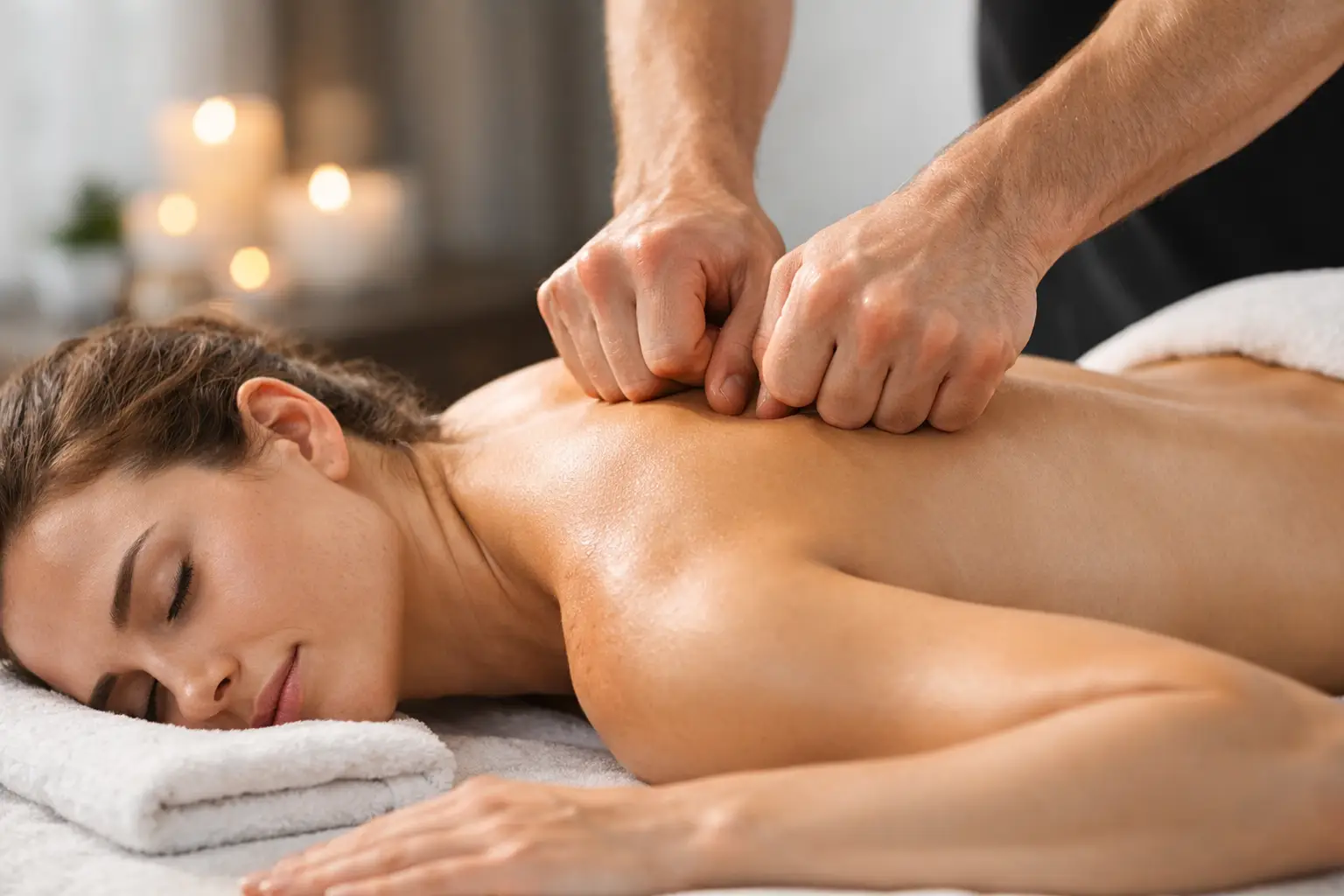
Some forms of touch ask the body to soften. Deep tissue massage asks it to listen.
If you have ever wondered how deep tissue massage works, the answer is not simply that it uses more pressure. That is the common shorthand, but it misses the real experience. Deep tissue work is slower, more deliberate, and more precise than many people expect. It's less about force and more about reaching layers of tension that have settled in over time - in the shoulders that stay lifted, the lower back that braces, the hips that hold old strain, the neck that never fully lets go.
At its best, this kind of massage feels like careful conversation with the body. The practitioner follows resistance, not to overpower it, but to encourage change within tissue that has become dense, guarded, or limited in movement.
How deep tissue massage works beneath the surface
Muscles are wrapped in connective tissue, often called fascia, which helps support and organize the body. When you move well, rest well, and recover well, these tissues tend to glide more freely. But stress, repetitive motion, long hours at a desk, intense exercise, old injuries, and even shallow breathing can all contribute to patterns of tightness. The body adapts, then keeps adapting, until what was once temporary tension starts to feel normal.
Deep tissue massage works by applying sustained pressure and slow strokes to specific areas of restriction. This can help release adhesions, improve mobility, and reduce the sense of hardness or congestion in overworked muscles. The key word is specific. A skilled practitioner is not trying to press deeply everywhere. They are reading the tissue, layer by layer, and choosing where depth will be useful and where gentleness will do more.
There's also a nervous system side to the experience. Tightness is not always a purely mechanical problem. Sometimes a muscle feels stubborn because the body has learned to protect that area. When touch is steady, attentive, and well-paced, the nervous system may begin to feel safe enough to reduce that guarding. This is one reason deep tissue massage can create a feeling of relief that goes beyond the muscle itself. The body is not just being worked on. It's being invited out of defense.
Why slow pressure matters
People often imagine deep tissue massage as intense from the first moment. In practice, the most effective work usually builds gradually. If pressure arrives too quickly, the body may tense against it. Muscles contract. Breathing gets shallow. The area becomes harder to access, not easier.
Slow pressure gives tissue time to respond. It allows warmth to build, circulation to increase, and guarding to soften. This is why a deep tissue session can feel surprisingly calm, even when the work is focused and strong. The depth comes not only from the amount of pressure, but from the patience behind it.
This pace matters for another reason. Pain and progress are not the same thing. Some discomfort can be part of the process, especially in areas that have held tension for a long time. But more pressure does not automatically mean better results. The body tends to respond best when sensation stays within a manageable range - intense, perhaps, but still breathable.
What the therapist is actually feeling for
A thoughtful therapist is noticing texture, temperature, movement, and response. One area may feel ropey. Another may feel stuck, almost as if the layers are not gliding past each other. A shoulder might resist movement in one direction but release in another. These details shape the session.
In deep tissue massage, hands, forearms, knuckles, or elbows may be used to work into thicker layers of muscle. But technique is only part of it. The deeper skill is discernment. Where is the tension originating, and where is it merely showing up? A sore neck may be connected to the chest, jaw, or upper back. Tight hamstrings may reflect what is happening in the hips. The body rarely isolates its patterns as neatly as we do.
What deep tissue massage can help with
For many people, deep tissue massage is chosen because something feels persistently tight or limited. Common areas include the neck and shoulders, lower back, hips, and legs. It may be especially appealing if you carry tension from repetitive work, athletic training, travel, stress, or postural habits that accumulate quietly over months and years.
That said, it helps to keep expectations grounded. Deep tissue massage is not a magic reset. Sometimes one session creates a noticeable shift. Sometimes it reveals how much holding has been present, and change unfolds more gradually. Much depends on the cause of the tension, how long it has been there, your stress load, your hydration, your sleep, and how your body responds to touch.
There's also a difference between relief and resolution. You may leave feeling longer, lighter, and less restricted, but if the original pattern continues unchanged, the tension may return. Massage can open the door. Your daily habits decide how long the room stays open.
How it feels during and after
A well-delivered deep tissue massage often feels focused rather than rushed. You may notice moments of tenderness, pressure that asks for your breath, and then a gradual spreading sense of release. Some areas may respond immediately. Others take time.
Afterward, people often describe a pleasant heaviness, warmth, or a feeling of spaciousness in the body. Mild soreness is possible, especially if the work was concentrated in areas that have been tight for a long time. This should usually feel more like post-exercise tenderness than sharp pain.
Water, rest, and gentle movement can support the body after the session. A short walk, an easy stretch, or simply a quieter evening may help the work settle. If you schedule deep tissue massage and then move straight into another day of strain, you may not notice the full benefit.
When deep tissue is not the right choice
Not every body needs deep work, and not every day calls for it. If you are already depleted, highly sensitive, acutely inflamed, or simply craving restoration rather than intensity, another style of massage may suit you better. The deepest work is not always the most healing work.
That's where a more personal approach matters. In a premium wellness setting like donÉvita, the value is not in applying the same ritual to everyone. It's in recognizing that the body changes from week to week, season to season. Sometimes it wants focused release. Sometimes it wants quiet support.
The role of breath, trust, and timing
One of the less obvious parts of how deep tissue massage works is that the body responds differently when it trusts the experience. Breath is part of that. When you exhale fully during a focused stroke, you often create more release than pressure alone could achieve. When you tense in anticipation, tissue tends to resist.
Trust also comes from communication. A better session is not silent endurance. It's a subtle exchange. If pressure is too much, if an area feels too raw, or if a certain technique is not landing well, saying so helps refine the work. This does not interrupt the ritual. It deepens it.
Timing matters as well. Deep tissue is often most helpful when the body has enough space to receive it. If you rush in overstimulated and rush out immediately after, the nervous system may stay in the same alert state. But when the session is part of a slower rhythm - even for an hour - the effects often reach further.
A deeper kind of relief
The real value of deep tissue massage is not that it overwhelms tension. It's that it meets tension with precision, steadiness, and care. It works through muscle and fascia, yes, but also through breath, attention, and the body’s own readiness to release.
For some, that relief feels physical first - less pulling in the shoulders, more ease in the hips, a neck that turns without effort. For others, it arrives as something quieter: a sense that the body is no longer bracing against itself.
If you are considering deep tissue massage, let the question be less about how much pressure you can tolerate and more about what your body has been carrying. The most meaningful work often begins there.