
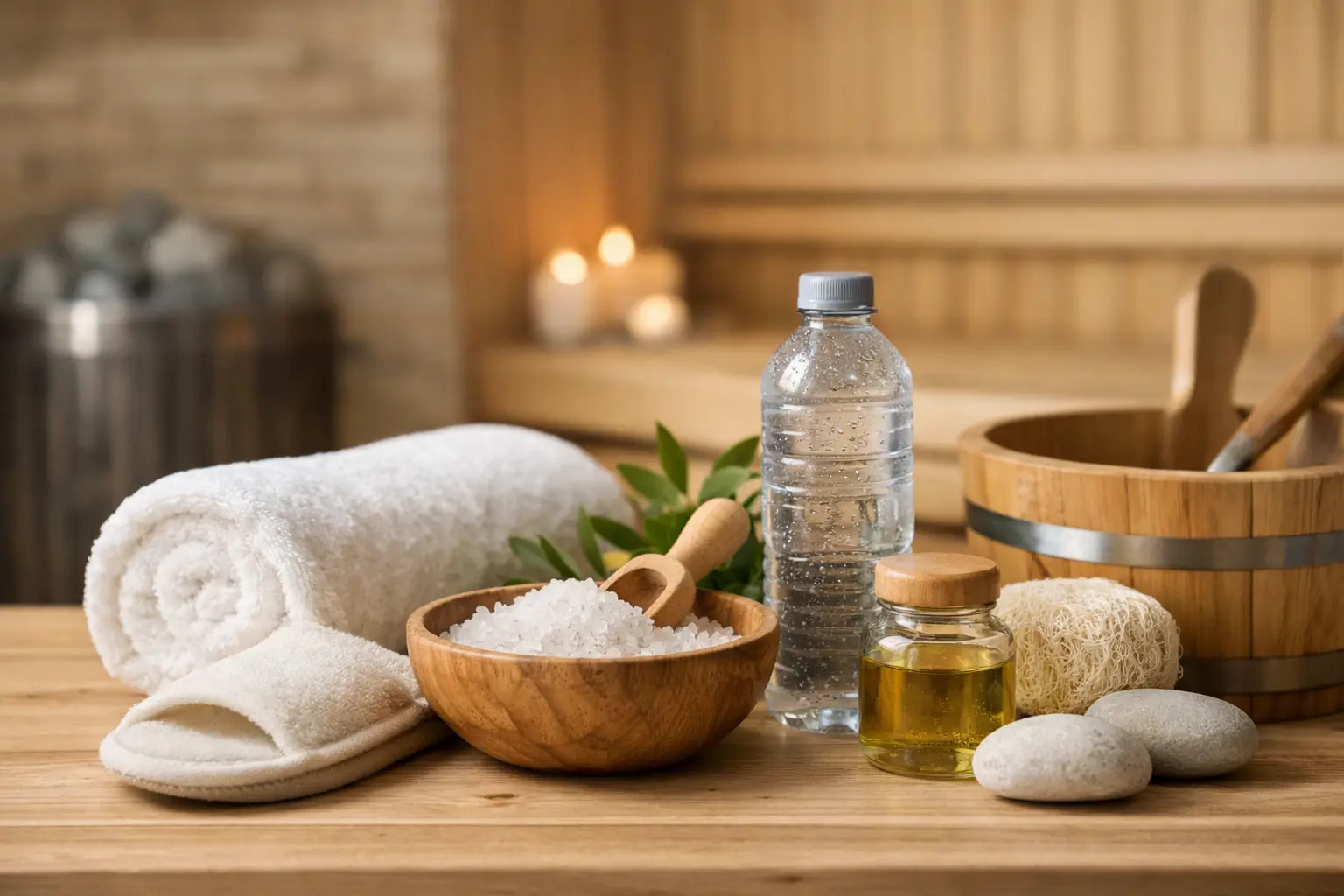
The quality of a sauna ritual is often decided before the warmth ever reaches your skin. Knowing how to prepare for sauna therapy helps you arrive unhurried, comfortable, and ready to receive the quiet restoration that heat can offer. This is not a moment to force or rush. It is an invitation to soften your pace and let your body settle into warmth.
How to Prepare for Sauna Therapy Before You Arrive
Begin with water. Sauna heat encourages perspiration, so arriving well hydrated helps your body feel more at ease throughout the session. Sip water steadily during the hours before your appointment rather than drinking a large amount just before you step into the sauna. A bottle of water in the car or at your desk can be a small, helpful reminder to care for yourself before the ritual begins.
Eat lightly if you need a meal beforehand. A nourishing snack or a simple meal with enough time to digest is usually more comfortable than entering intense warmth on an empty stomach or after a heavy dinner. Think of foods that leave you feeling steady rather than overly full. The goal is not perfection. It is simply to avoid distracting discomfort while your body is trying to rest.
Skip alcohol before sauna therapy. Alcohol can contribute to dehydration and may make it harder to notice when heat is becoming too much. If you have had a demanding day, let water, a slower breath, and a few quiet minutes be the transition instead. Sauna time feels more restorative when you arrive clear and present.
Your clothing should be easy, soft, and uncomplicated. Wear something comfortable to and from your appointment, and follow the spa's guidance on what to wear in the sauna itself. Remove jewelry when possible, especially metal pieces that can become uncomfortably warm. Leave your schedule open enough that you do not need to rush back into traffic, a meeting, or a long list of tasks afterward.
Arrive With a Little Extra Time
The body does not always shift from a busy day into stillness the moment you walk through a door. Giving yourself even 10 or 15 minutes of margin can change the experience. Arrive early enough to check in without hurry, drink a little water, and allow your breathing to slow.
This is especially valuable after a long commute through Dallas-Fort Worth, a workout, or a day spent moving from one obligation to the next. Sauna therapy asks for very little from you, but it gives more when you are not carrying urgency into the room.
Before your session, tell your practitioner about anything that could affect your comfort. This may include recent exercise, sensitivity to heat, skin concerns, a current illness, medications, pregnancy, or a health condition. Sauna therapy is not the right choice for every person at every moment. If you have a medical concern or have been advised to limit heat exposure, speak with a qualified healthcare professional before booking or participating.
Honest communication is part of personalized care. A thoughtful spa experience should make room for adjustments, whether that means a shorter session, a gentler temperature, more breaks, or choosing another restorative ritual on a day when heat does not feel right.
Keep Skin Care Simple Before Heat
Clean, bare skin is often the most comfortable way to enter a sauna. Remove makeup if you can, and avoid applying heavy oils, thick body butters, or strong fragranced products immediately beforehand. They can feel unpleasant as your skin warms and begins to perspire.
This does not mean your skin needs to be stripped or over-cleansed. A gentle shower is enough. If you are combining sauna time with a body treatment, exfoliation, massage, or a water ritual, ask about the ideal order of services. Heat can make the skin feel more receptive, but timing matters. A skilled provider can help create a sequence that feels soothing rather than overstimulating.
Save shaving, waxing, and other potentially irritating hair-removal services for another time when possible. Freshly treated skin may be more sensitive to heat, steam, and perspiration. The same care applies if you have a sunburn, rash, open wound, or irritated skin. Let your body guide the decision. Restoration should feel like care, never like endurance.
Let the Sauna Be a Conversation With Your Body
Once you enter, resist the urge to treat the sauna as a test of willpower. More time is not always better. The right length depends on the temperature, the style of sauna, your experience with heat, how you feel that day, and the guidance provided by the spa.
Settle onto a towel, soften your shoulders, and breathe at an unforced pace. You do not need to perform relaxation. Notice the warmth on your skin, the quiet around you, and the gradual release that can come when there is nowhere else to be. If your thoughts are still moving quickly, give them a simple place to land: count a few breaths, listen to the hush of the room, or bring your attention back to the rise and fall of your chest.
Take breaks without apology. Step out if you feel dizzy, nauseated, faint, unusually uncomfortable, or simply ready for cooler air. Your body is giving you useful information. A shorter, peaceful sauna session can be far more renewing than staying past your comfort point.
If cold water, a cool shower, or a rest period is part of the experience, approach it gradually. The contrast between warmth and coolness can feel clarifying, but it should remain comfortable and intentional. There is no prize for intensity. The most beautiful rituals leave you feeling balanced, not depleted.
What to Do After Sauna Therapy
The minutes after heat are part of the treatment, not an afterthought. Rehydrate slowly with water and give your body time to cool down naturally. A shower may feel refreshing, but avoid turning it into another hurried task. Let the water be gentle and give your skin a moment to breathe.
Afterward, choose light, comfortable clothing. Your body may continue to perspire for a short time, and tight layers can feel restrictive. If you are receiving massage, body exfoliation, or another spa service after the sauna, follow your provider's recommendations for water, rest, and skin care.
Try not to plan strenuous exercise, a demanding errand run, or an evening of alcohol immediately afterward. A sauna session can leave you feeling clear and relaxed, but that softness deserves room to last. A simple meal, a quiet drive home, and an earlier bedtime can extend the sense of renewal well beyond the spa.
Make Preparation Part of the Ritual
At donEvita, wellness is not meant to feel like another item on a crowded calendar. It is a return to warmth, stillness, and the feeling of being thoughtfully cared for. Preparing well for sauna therapy is less about following rigid rules and more about honoring the conditions your body needs to rest.
Bring water. Eat with care. Arrive without rushing. Listen when your body asks for a pause. Then carry that same gentleness with you when you leave. The sauna may be where the warmth begins, but the restoration can continue in the quieter choices you make afterward.