
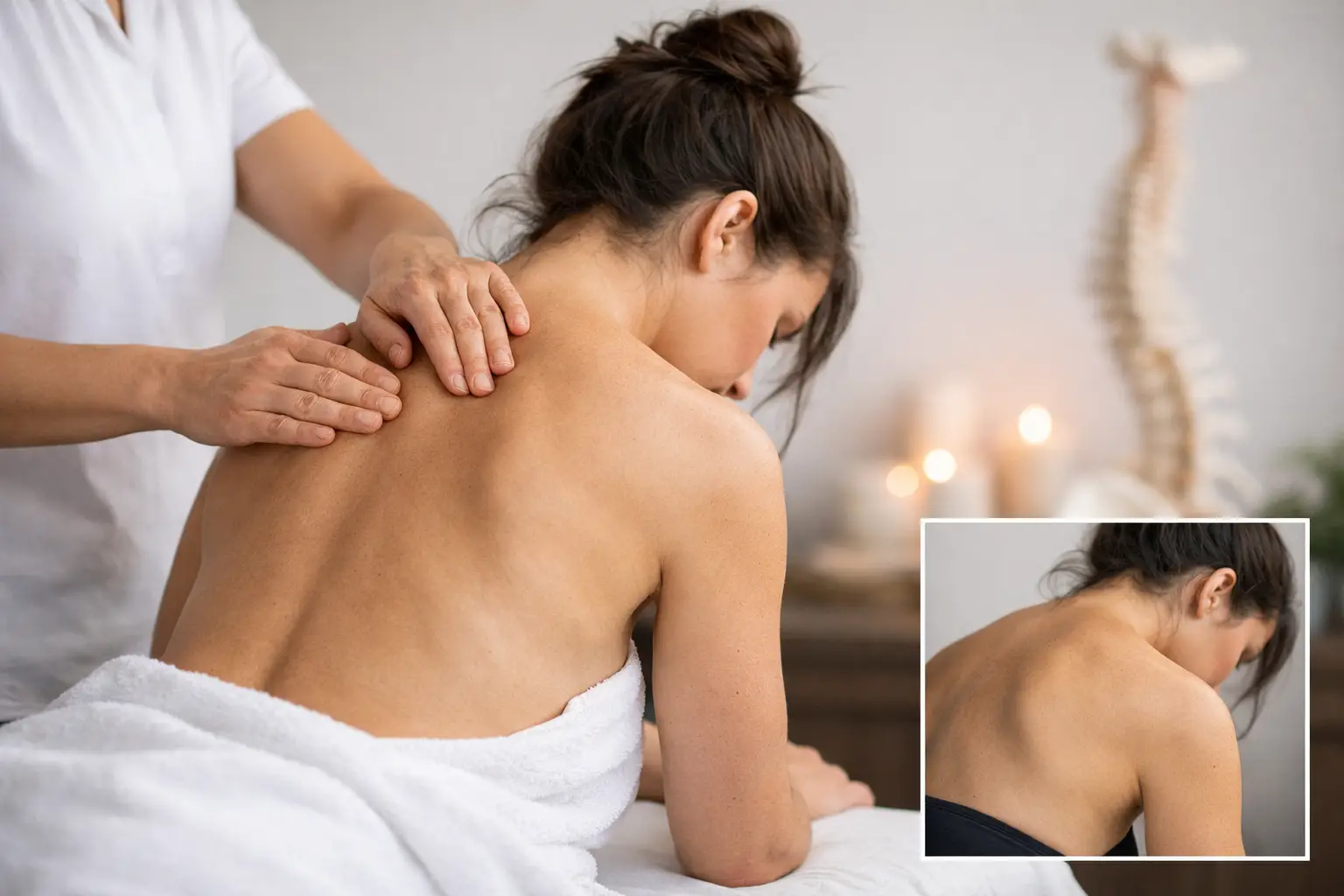
A tight, rounded upper back can change more than posture. It can make breathing feel shallow, turn desk work into a strain, and leave the neck, shoulders, and chest carrying a quiet, constant ache. That is often why people start looking into kyphosis-massage - not for a dramatic fix, but for relief that feels steady, thoughtful, and real.
When the upper spine curves more than it should, the body adapts. The chest may tighten. The muscles between the shoulder blades may feel overworked yet weak. The neck often joins in, trying to lift the head against a forward pull. Massage can help with many of those soft-tissue patterns. It cannot straighten the spine on its own, and it is not a cure for structural kyphosis, but in the right hands it can become part of a restorative plan that helps the body feel more open, supported, and at ease.
How Massage May Support Kyphosis: A Gentle Wellness Approach to Posture, Stress, and Home Care
Kyphosis is commonly understood as an increased rounding of the upper back. For some people, it is a visible curve through the shoulders and upper spine. For others, it is felt more than seen: tightness across the chest, stiffness between the shoulder blades, neck tension, shallow breathing, or the sense that the body is slowly folding forward after long hours of sitting, working, driving, scrolling, or carrying stress.
From a wellness perspective, kyphosis is not only about how the back looks. It can also influence how a person feels in their body. The upper back may feel heavy. The shoulders may feel pulled forward. The neck may work harder than it should. Even simple moments of stillness can feel uncomfortable when the body has spent so much time bracing, tightening, or adapting to daily strain.
This article is written from a non-medical perspective. Massage does not “cure” kyphosis, reverse structural spinal changes, or replace care from a physician, physical therapist, chiropractor, or other qualified healthcare professional. Kyphosis can have different causes, and some require professional evaluation. Kyphosis could be described as excessive forward rounding of the upper back and notes that treatment may vary depending on the cause and severity. Certain types may be supported with stretching and strengthening exercises, while other cases may require additional medical care.
Still, massage may play a meaningful supportive role. It may help ease muscular tension, improve comfort, encourage relaxation, support posture awareness, and help the body feel more open and less guarded. When combined with gentle home exercises and daily posture habits, massage can become part of a thoughtful self-care routine for people experiencing postural tension or upper-back stiffness.
Understanding kyphosis from a wellness point of view
Not all kyphosis is the same.
Some forms are structural, meaning the curve may be related to bone shape, spinal development, osteoporosis, compression changes, injury, or other medical conditions. Other cases may be more postural, influenced by daily habits, muscle imbalance, weakness, tension, emotional stress, physical stress, or long periods spent in forward-positioned activities.
This distinction matters because wellness care should never force the body. If a curve is structural, massage cannot change the shape of the spine. If the rounding is more related to posture and soft-tissue tension, massage may help the surrounding muscles feel more relaxed and balanced. In both cases, the goal should be comfort and support, not aggressive correction.
Many people with rounded upper-back posture also experience tension in connected areas, including the neck, shoulders, chest, ribs, jaw, lower back, and hips. The body works as a whole. When the upper back rounds forward, the head may drift forward, the chest may tighten, and the shoulder blades may become less active. Over time, the muscles that support upright posture can become tired, while the muscles in the front of the body may feel shortened or guarded.
That's where massage may be helpful. It works with the soft tissues that surround the posture pattern.
How massage may help
Massage does not straighten the spine. But it may help the body release some of the tension that makes rounded posture feel worse.
For example, a person with kyphosis-like posture may carry tightness across the chest and front shoulders. The neck may feel strained from holding the head forward. The upper back may ache from constantly trying to support the shoulders. The lower back may compensate. Breathing may feel restricted because the ribs and chest do not move freely.
A thoughtful massage session may help by softening these areas and encouraging the body to feel less compressed. The therapist may work with the muscles of the upper back, shoulders, neck, chest, and side body. The intention is not to push the shoulders backward or flatten the spine. The intention is to create space, comfort, and awareness.
Massage may support kyphosis-related tension in several ways:
- It may reduce tightness in overworked neck and shoulder muscles.
- It may help soften the chest and front shoulder area.
- It may improve comfort between the shoulder blades.
- It may encourage easier breathing by relaxing muscles around the ribs and upper body.
- It may calm stress-related muscle guarding.
- It may help the guest become more aware of posture without judgment.
- It may make gentle movement and stretching feel more accessible afterward.
This last point is important. Many people know they “should stretch” or “should sit straighter,” but their body feels too tight or tired to do it comfortably. Massage can create a temporary window of ease. During that window, the body may be more receptive to slow breathing, gentle mobility, and simple strengthening exercises.
The role of stress and body tension
Posture is not only physical. It's also emotional.
When people are under stress, the body often protects itself. The shoulders lift or round forward. The chest tightens. The breath becomes shallow. The jaw clenches. The neck becomes tense. Over time, this protective posture may become familiar, especially for people who spend long hours at a desk, drive often, care for others, or carry emotional pressure without much rest.
This does not mean emotional stress directly causes structural kyphosis. But it can contribute to the soft-tissue patterns that make the upper body feel closed, tense, or collapsed. Physical stress can do the same. Heavy workloads, repetitive movements, poor ergonomics, lack of movement, and fatigue can all influence how the body holds itself.
Massage can be valuable because it addresses both muscle tension and nervous-system tension. Slow, skilled touch can help the body move out of a guarded state. Warmth, steady pressure, quiet, and intentional pacing can invite the shoulders to drop, the breath to deepen, and the muscles to soften.
In this way, massage is not only about the back. It's about helping the whole person feel less braced.
Areas a massage therapist may focus on
A massage session for kyphosis-related tension should be gentle, respectful, and personalized. The therapist should listen to the guest’s comfort level and avoid forcing the body into a position it cannot naturally accept.
Neck and base of the skull
When the upper back rounds, the head may drift forward. This can place extra demand on the neck. Massage may help soften tension at the base of the skull, along the sides of the neck, and through the upper shoulders.
Upper shoulders
The upper trapezius area often carries stress. It may feel tight, heavy, or sore. Gentle massage can help reduce the sense of gripping in this area.
Mid-back and shoulder blades
The muscles between the shoulder blades may feel tired or achy. They are often working to support posture, especially when the shoulders roll forward. Massage may help improve comfort and awareness in this area.
Chest and front shoulders
Tension in the chest and front shoulders can contribute to a rounded posture. Gentle work here may help the upper body feel more open. This area should always be approached with clear communication, professionalism, and guest comfort in mind.
Ribs and side body
The muscles around the ribs and side body can affect breathing and upper-body mobility. Gentle massage in these areas may support a feeling of expansion and ease.
Lower back and hips
The spine does not work in isolated sections. If the upper back is rounded, the lower back and hips may compensate. Massage may include these areas to support a more balanced overall experience.
What massage cannot do
It's important to be honest and careful.
Massage cannot cure kyphosis. It cannot reverse bone changes. It cannot treat osteoporosis, spinal fractures, congenital spinal conditions, or progressive curves. It should not replace professional diagnosis or treatment.
Massage is best understood as supportive wellness care. It may help with comfort, soft-tissue tension, relaxation, and body awareness. It may complement stretching and strengthening when appropriate. But if there is pain, numbness, tingling, weakness, balance problems, difficulty walking, breathing issues, or a curve that appears to be getting worse, the person should seek guidance from a qualified healthcare professional.
Note that exercise and physical therapy may help strengthen back and abdominal muscles, improve posture, and stretch tight areas in some cases of kyphosis. Stretching and strengthening exercises may help improve spinal flexibility and relieve back pain for certain types of kyphosis.
Massage can support the journey, but it should not be presented as a medical fix.
Home exercises that may support posture
The following home exercises are gentle wellness movements. They are not a medical treatment plan. Move slowly, stay within a comfortable range, and stop if you feel sharp pain, dizziness, numbness, tingling, or unusual discomfort. Anyone with a diagnosed spinal condition, osteoporosis, recent injury, surgery history, or chronic pain should ask a healthcare professional before starting new exercises.
1. Wall posture check
Stand with your back near a wall. Let your heels be a few inches away from the wall. Gently bring your hips, upper back, and head toward the wall as much as feels comfortable.
Do not force the head backward. Instead, imagine the crown of your head floating upward. Let the shoulders relax down.
Hold for 20 to 30 seconds while breathing slowly.
This exercise helps you notice your posture without strain. Cleveland Clinic includes a “back to the wall” posture exercise as a way to build awareness of body position. :contentReference[oaicite:3]{index=3}
2. Chin tucks
Sit or stand tall. Keep your eyes level. Gently draw your chin backward as if making a soft double chin.
Do not look down. Do not force the neck.
Hold for 3 to 5 seconds, then relax.
Repeat 8 to 10 times.
This movement may help with forward-head posture, which often appears along with rounded shoulders. Cleveland Clinic also describes chin tucks as a posture exercise that may support neck muscle strength and alignment awareness. :contentReference[oaicite:4]{index=4}
3. Shoulder blade squeezes
Sit or stand comfortably. Let your arms rest by your sides. Gently draw your shoulder blades back and slightly down, as though you are placing them into your back pockets.
Avoid arching the lower back. Keep the movement small and controlled.
Hold for 5 seconds.
Repeat 8 to 10 times.
This exercise helps activate the muscles between the shoulder blades, which can support a more open upper-body posture.
4. Doorway chest stretch
Stand in a doorway. Place your forearms on the door frame with your elbows around shoulder height. Step one foot forward slowly until you feel a gentle stretch across the chest.
Keep the stretch mild. Avoid pushing into pain. Breathe slowly.
Hold for 20 to 30 seconds.
Repeat 1 to 2 times.
This can be helpful for people who feel tight across the chest from sitting, driving, or working at a computer.
5. Wall angels
Stand with your back near a wall. If possible, let your head, upper back, and hips gently contact the wall. Bring your arms into a goalpost shape, then slowly slide them upward and downward.
If your arms do not touch the wall, that is okay. Stay within your natural range.
Repeat 5 to 8 times.
Wall angels can help bring awareness to shoulder mobility, chest tightness, and upper-back engagement.
Simple daily habits that may help
Massage and exercise are helpful, but posture is shaped by daily repetition. Small changes practiced consistently can make a meaningful difference in how the body feels.
Consider these gentle habits:
- Take short movement breaks during long sitting periods.
- Keep screens closer to eye level.
- Avoid looking down at the phone for long stretches.
- Relax the shoulders while driving.
- Breathe slowly when stress builds.
- Stretch the chest after computer work.
- Strengthen the upper back gradually.
- Choose a pillow that supports the neck comfortably.
- Notice when the body is bracing, then soften where possible.
You're not trying to hold perfect posture all day. That's unrealistic and can create more tension. The aim is to build awareness and return to balance more often.
How massage and home care work together
Massage may help the body feel more open. Home exercises may help the body maintain better support. Breathing may help calm the nervous system. Better daily habits may reduce the amount of time spent in positions that encourage rounding.
Together, these approaches can create a supportive rhythm.
A guest may come in feeling tight, heavy, and compressed. After massage, the shoulders may feel softer, the breath may feel easier, and the upper back may feel less guarded. At home, a few minutes of chin tucks, shoulder blade squeezes, wall posture checks, or doorway stretching may help reinforce that feeling of openness.
It does not have to be complicated.
A simple routine practiced consistently is often more realistic than a long routine that is abandoned after a few days.
When to seek professional guidance
Because kyphosis can have many causes, professional guidance is important when symptoms are significant or changing.
A person should consider speaking with a healthcare professional if they experience severe or worsening back pain, numbness, tingling, weakness, difficulty walking, balance changes, breathing difficulty, recent injury, known osteoporosis, or a spinal curve that appears to be progressing.
Children and teenagers with noticeable spinal rounding should also be evaluated, especially during growth years. Bracing may be used in some children with Scheuermann’s disease during growth periods, depending on the case.
Massage is most appropriate when it is part of a safe, informed wellness plan.
A gentle path toward comfort and renewal
Kyphosis can affect how a person moves, breathes, rests, and feels in their body. It may create tension in the upper back, shoulders, neck, and chest. It may also carry an emotional layer, especially when stress, fatigue, or long-term body strain has encouraged the upper body to close inward.
Massage offers a gentle way to support the body without judgment.
Through skilled touch, warmth, calm, and intentional care, massage may help ease soft-tissue tension, support relaxation, and encourage a greater sense of openness. It does not force the spine. It does not promise a cure. Instead, it gives the body space to soften.
When combined with simple home exercises and mindful daily habits, massage may become part of a larger routine for comfort, posture awareness, and renewal.
Perfection isn't the point.
The aim is to feel more supported, more balanced, and more at ease in your own body.