
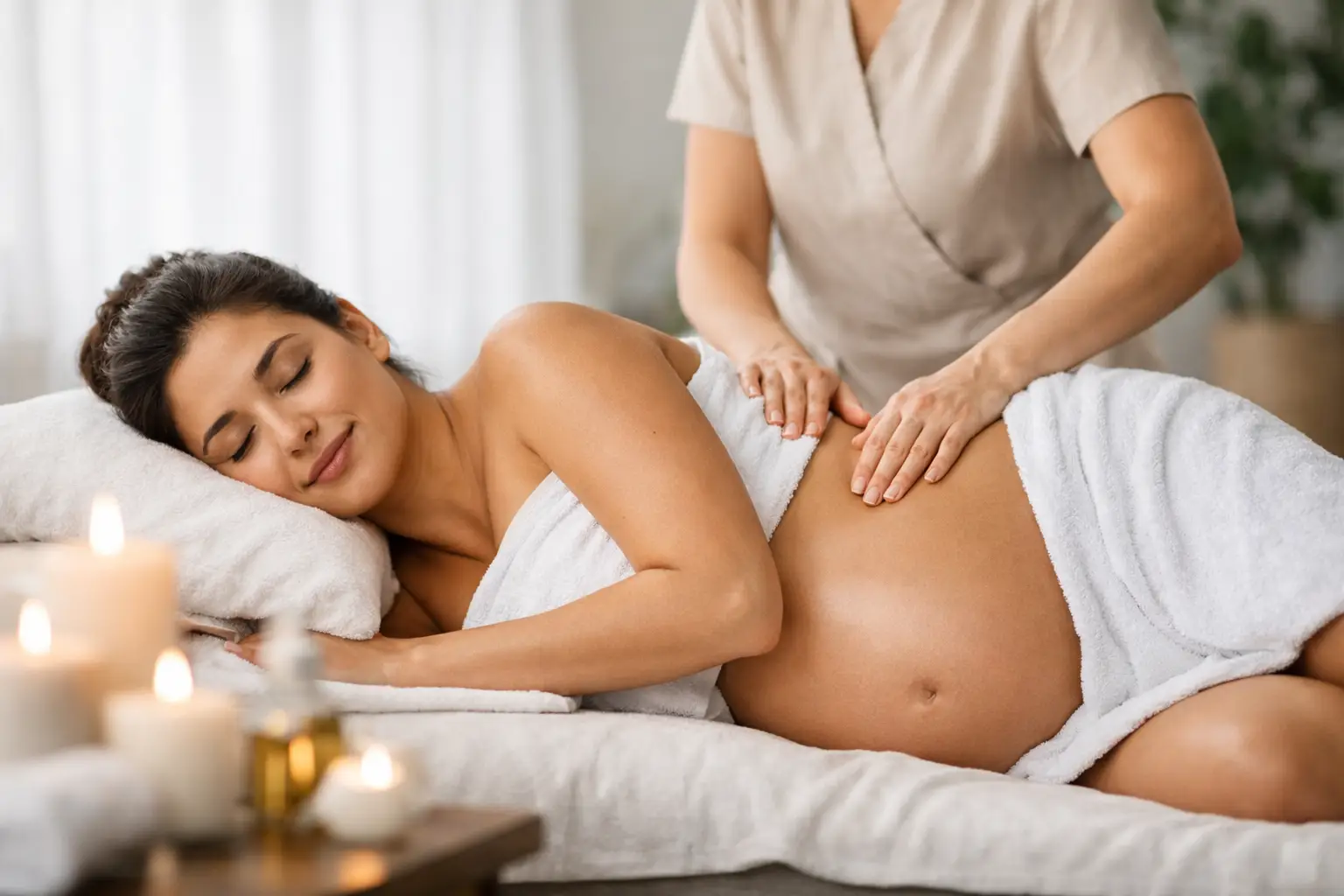
Some forms of care ask very little of you. A quiet room. A slower breath. The feeling of being supported without having to explain why you are tired. Pregnancy massage often begins there.
As the body changes, comfort can become less predictable. Sleep shifts. Hips carry more weight. The lower back works harder than usual. Even moments of stillness can feel strangely demanding. In that season, touch can become more than relief. It can feel like a way back to yourself.
What pregnancy massage is meant to support
Pregnancy massage is a form of bodywork shaped around the needs of an expectant body. The intention is not intensity. It's steadiness, circulation, ease, and the kind of grounding that helps the nervous system soften.
The most common reasons people seek it are simple and deeply felt. The body may be holding tension in the shoulders, neck, hips, or legs. Swelling can create heaviness. Sleep may feel harder to reach. A session designed for pregnancy creates space for the body to rest in a way daily life often does not allow.
There's also an emotional dimension to this kind of care. Pregnancy can be joyful and disorienting at once. Even when everything is wanted and welcomed, the pace of change can be a lot to absorb. Supportive touch offers a kind of reassurance that words do not always reach. It invites quiet. It reminds the body that it does not have to brace all the time.
The benefits of pregnancy massage
The benefits are usually felt first as a change in sensation. Less pressure in the low back. A little more room in the hips. Legs that feel lighter. Breathing that becomes fuller without effort.
With consistent, skillful work, pregnancy massage may help reduce muscular tension, encourage circulation, and ease the feeling of physical fatigue that can gather over the course of a pregnancy. Many people also notice that rest comes more easily afterward. Not because every discomfort disappears, but because the body is no longer working quite so hard to hold itself together.
There's a difference, though, between meaningful relief and unrealistic promises. Massage cannot solve every ache, and it should never be presented as a cure-all. Some symptoms require medical guidance, not bodywork. The most thoughtful practitioners understand that massage belongs within a larger picture of care. It supports well-being. It does not replace prenatal care or professional medical advice.
What makes it different from regular massage
The difference is not only in pressure. It's in pacing, positioning, and awareness.
A body in pregnancy needs a different kind of listening. Certain areas may be more sensitive. Certain positions may no longer feel safe or comfortable. Lying flat on the back for extended periods, for example, can become uncomfortable as pregnancy progresses. Deep work in the legs may also require extra caution depending on the person, the stage of pregnancy, and the practitioner’s training.
That's why pregnancy massage should come across as adaptive rather than routine. Bolsters, pillows, and side-lying support matter. So does the rhythm of the session. There's usually less force and more intention. The most helpful sessions are not generic massages with a few cushions added. They are designed around a changing body and a changing center of gravity.
When pregnancy massage can be most helpful
There's no single perfect time. Some people seek massage early, when fatigue and nausea make them feel unlike themselves. Others arrive later, when the weight of the body becomes more demanding and simple movement takes more effort.
The second and third trimesters are often when people feel the most immediate physical benefit. As the belly grows, the back, hips, glutes, and rib cage begin negotiating space in new ways. Standing, walking, and sleeping can all create strain. At that point, even gentle work can make a real difference.
Still, timing depends on the individual. Energy levels, symptoms, comfort, and overall health all matter. A careful intake and an experienced therapist make that conversation more meaningful than a general rule ever could.
Safety matters more than atmosphere
A beautiful space can help the body relax, but safety is what makes relaxation possible.
Pregnancy massage should be offered by someone trained to work with prenatal clients and comfortable adjusting the session as needed. That includes understanding positioning, pressure, areas of caution, and when massage should be postponed. If there are pregnancy complications, high-risk concerns, unusual swelling, bleeding, severe headaches, or sudden pain, massage is not the first conversation to have. Medical guidance comes first.
Even in a healthy pregnancy, communication matters. A room can be warm and serene, but the real mark of quality is attentiveness. You should be asked how far along you are, what discomforts you are having, how you are sleeping, what positions feel best, and whether anything has changed since your last session. Care should never feel scripted.
What to expect during a session
A well-held session has a slower beginning. There's time to settle. Time to get comfortable with support under the knees, between the legs, or along the side body if side-lying is used. The first few minutes should not feel rushed.
From there, the work is usually focused on the areas carrying the most strain. The low back may need broad, grounding contact rather than deep pressure. The hips and glutes often benefit from patient attention. The shoulders may soften with gentle release, especially if posture has shifted or sleep has become interrupted.
Some sessions include the scalp, hands, or feet, and these can be especially soothing when the rest of the body feels overworked. But everything should be guided by comfort. A better pregnancy massage follows the body’s cues instead of forcing a technique because it is standard.
Afterward, many people feel both lighter and more rooted. Sometimes the change is dramatic. Sometimes it is subtle, like discovering that standing up no longer feels quite so heavy. Either response can be valid. The body does not always unwind in obvious ways.
How to choose the right pregnancy massage experience
Not every massage space is suited to this kind of care. Skill matters, but so does temperament.
Look for a place that treats the experience with calm and respect rather than speed. Pregnancy is not a condition to be managed in a hurried way. The right environment should come across as considered, quiet, and responsive. Questions should be welcomed. Adjustments should be offered without making you ask twice.
It also helps to notice the language a spa uses. The most helpful care does not rely on big promises. It speaks in a more grounded way about comfort, rest, and support. That kind of restraint usually reflects confidence. Here at donÉvita, the most meaningful rituals are never hurried. They are shaped around presence.
A premium experience is not about excess. It's about thoughtfulness. Clean lines, warm hands, attentive pacing, and a sense that the whole room is arranged around ease. During pregnancy, that can matter more than any luxury detail.
Pregnancy massage as a ritual of restoration
There's a reason this kind of touch stays with people. It's not only because the body feels better, though that matters. It's because pregnancy can pull attention outward in a hundred directions, and massage offers a rare inward pause.
For one hour, sometimes more, nothing is being asked of you. You are not preparing, deciding, organizing, or anticipating. You are simply being held in a way that lets the body unclench. That has value beyond comfort.
Seen this way, pregnancy massage becomes more than a service on a menu. It becomes a ritual of restoration - a place where the body can be met with gentleness while it does extraordinary work. For many people, that is the real benefit. Not escape, exactly. Something quieter and more sustaining.
If you are considering it, trust spaces and practitioners who understand that care during pregnancy should come across as calm, informed, and deeply personal. Relief is important. So is the feeling of being received with enough tenderness to finally exhale.