
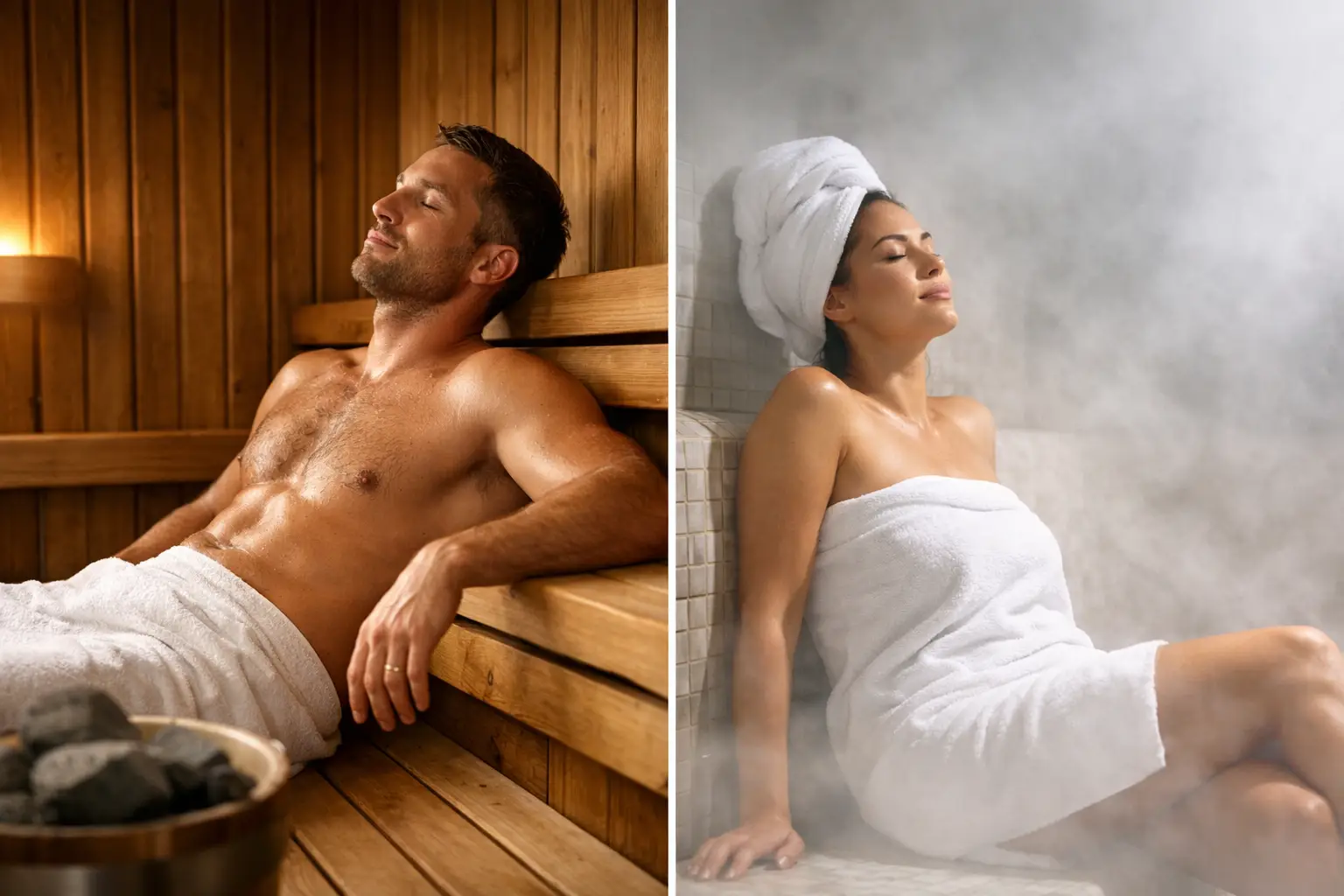
Some forms of warmth ask your body to wake up. Others ask it to let go. That is often the real question behind sauna vs steam room - not which one is better on paper, but which one meets you where you are.
If you have ever stepped into a cedar-lined sauna and felt the air press in with quiet intensity, you know dry heat has a distinct character. A steam room creates a different kind of hush. The warmth wraps around the skin, the breath feels softer, and the whole space seems to slow your pace for you. Both can be deeply restorative. They simply restore in different ways.
Sauna vs steam room: the core difference
The clearest difference is the kind of heat you experience. A sauna uses dry heat, usually at a higher temperature. The air feels hot, crisp, and light. Sweat comes quickly, and many people love the clean, enveloping warmth that seems to settle into muscles and joints.
A steam room uses moist heat at a lower temperature, but the humidity is much higher. That changes everything. The air feels dense and silky, and the warmth lands first on the skin and breath. You may not tolerate the space as long as a sauna, even if the temperature is technically lower, because humidity can make heat feel more intense.
This is why sauna vs steam room is not a simple comparison of numbers. It is a comparison of sensations. Dry heat tends to feel clarifying. Steam tends to feel softening.
How each one feels in the body
A sauna often appeals to people who want a strong, grounding heat. After exercise, travel, or a long workweek spent carrying tension in the shoulders and back, dry warmth can feel wonderfully direct. It encourages a full-body sweat, and for many guests, that release feels both physical and mental. You enter carrying noise and leave feeling quieter.
Steam is often chosen for a different reason. It feels gentle, even when it is intense. Moist heat can be especially comforting when the air outside has been dry, when your skin feels depleted, or when you simply want an experience that feels cocooning rather than bracing. Many people also find steam more soothing for the breath, though individual comfort varies.
Neither response is universal. Some people feel immediately at ease in a sauna but claustrophobic in steam. Others love the softness of humidity and find dry heat too sharp. The right choice is often the one your nervous system welcomes first.
Which is better for relaxation?
For pure emotional exhale, steam often has the edge. The moisture, the mist, the softened visibility - it creates a sense of enclosure that can feel deeply calming. If you are seeking stillness, especially after an overstimulating day, steam has a way of quieting the edges.
That said, many people relax more completely in a sauna because the air feels cleaner and easier to sit with. There is less sense of density around the body. If you prefer open, dry warmth over heavy humidity, a sauna may help you settle faster.
Relaxation is not always about gentleness. Sometimes it comes from intensity followed by release. Dry heat can provide exactly that.
Which is better after a workout?
This depends on what your body is asking for. A sauna is often the favorite for post-workout recovery because the high dry heat can feel especially satisfying in tired muscles. It creates a clear, purifying sweat and often leaves the body feeling loose and light.
A steam room can also be helpful after movement, especially if you want a more soothing, less stark experience. If your body feels depleted, tight, or overworked, steam may feel kinder. It can be a beautiful bridge between effort and rest.
The trade-off is tolerance. Some people can sit in a sauna comfortably for a modest stretch of time, while steam feels overpowering after only a few minutes. Hydration matters in both spaces, and so does listening to your body instead of pushing through discomfort.
Sauna vs steam room for skin and glow
This is where the conversation becomes more personal. Steam can feel especially beautiful for the skin because the moisture softens the surface and leaves you with that dewy, just-exhaled look. It pairs naturally with cleansing and exfoliation rituals, making it a lovely prelude to body treatments or a slow self-care evening.
A sauna offers a different kind of glow. The sweat is often more immediate and abundant, and many people love the refreshed, post-heat radiance that follows. The skin may feel cleaner, brighter, and lightly flushed.
But if your skin is already very dry or easily irritated, dry heat may leave you wanting nourishment afterward. Steam can be more comforting in those moments. On the other hand, if humidity tends to make you feel congested or overheated, a sauna may be the more pleasant path.
Breathing comfort and personal preference
For some guests, steam feels luxurious because the moist air is easier to breathe. For others, the density of the room feels heavy and too enclosed. A sauna can feel more breathable simply because the air is dry, even though it is hotter.
This is why your own comfort matters more than general advice. If you know that muggy weather drains you, you may not love a steam room. If dry indoor air leaves you feeling dull and tense, steam may feel like relief. Wellness is personal. The setting should support your body, not challenge it for the sake of it.
How long should you stay?
Shorter is often wiser, especially if you are new to heat rituals. Many people begin with around 5 to 10 minutes and adjust from there. A sauna may tempt you to stay longer because the air feels lighter. A steam room may encourage a shorter session because humidity builds quickly.
The goal is not endurance. The goal is renewal. Leave while you still feel good. Step out, cool down, sip water, and notice how your body responds. The most restorative heat ritual is rarely the longest one.
When to choose a sauna
A sauna tends to be the better match when you want a more intense, clarifying experience. It suits the moments when your muscles feel dense, your mind feels crowded, and you want the clean simplicity of dry warmth. Many people also prefer it before a cool rinse or as part of a contrast ritual, where heat and refreshment work together to wake the body up gently.
If you like structure, clean lines, and a heat that feels direct rather than enveloping, sauna may become your favorite.
When to choose a steam room
A steam room shines when what you need is softness. It suits the evenings when your body wants comfort more than challenge, when your skin feels thirsty, or when you crave an atmosphere that feels almost meditative. Steam invites lingering, though not always for long. It wraps the senses and encourages surrender.
If you are building a fuller ritual around rest - perhaps pairing warmth with exfoliation, hydration, or quiet recovery - steam often fits beautifully.
The best choice is the one that matches the moment
There are days for dry heat and days for mist. Some mornings call for the cleansing focus of a sauna. Some evenings ask for the softened hush of steam. Your energy, your skin, your mood, even the season can shape what feels best.
In a premium wellness setting, this is what matters most: not forcing the body into a formula, but choosing the experience that brings it back into balance. At donEvita, that spirit of renewal lives in every ritual - thoughtful, sensory, and deeply personal.
If you are deciding between the two, let your body answer before your logic does. The heat that helps you breathe deeper, unclench your shoulders, and feel more like yourself is usually the right one.