
Scalp care has acquired an impressive amount of equipment lately. Cameras, massaging brushes, serums, oils, scrubs, steam, and elaborate wash routines all have their place. Most people still get the biggest improvement from something less glamorous: using the right shampoo consistently and rinsing it out completely.
Your scalp is skin, but it is skin with hair growing through it and products accumulating on it. A sensible routine needs to clean without turning every dry patch or oily day into a new project.
Start by noticing what is actually happening
“Dry scalp” is often used to describe any flaking, but flakes can have different causes. Product residue, dandruff, irritation from hair color, psoriasis, eczema, and fungal infections can overlap in the way they look or feel. Adding more oil does not solve all of them, and in some cases it can make the scalp harder to assess.
Before buying anything new, pay attention for a week or two. Is the issue itch, oil, tightness, visible flakes, tenderness, bumps, or hair shedding? Did it begin after a new shampoo, dye, protective style, or fragranced product? A simple note on your phone is more useful than trying several new treatments at once.
Make wash day boring—in a good way
Choose a shampoo that matches your scalp rather than the most dramatic claim on the bottle. Work it into the scalp with your fingertips, not your nails. Give the product time to spread, then rinse longer than you think you need to. Shampoo left behind can contribute to irritation.
If you use dry shampoo, styling creams, edge products, or heavy oils, occasional thorough cleansing may help with buildup. That does not mean scrubbing until the skin feels squeaky or sore. The scalp should feel clean, not punished.
For mild dandruff, the American Academy of Dermatology recommends dandruff shampoos with active ingredients such as zinc pyrithione, salicylic acid, selenium sulfide, ketoconazole, sulfur, or coal tar. Product directions differ, so read the label rather than assuming every medicated shampoo works the same way. The AAD’s dandruff guide is a useful starting point.
Be cautious with fragrance and essential oils
A pleasant scent can make hair care more enjoyable, but fragrance is also a common source of contact dermatitis. Essential oils are concentrated and should not be applied directly to the scalp. If a product causes burning, swelling, a rash, or worsening itch, stop using it rather than trying to “push through” the reaction.
If you know you are sensitive, tell your stylist or spa provider before the service begins. Fragrance-free and low-product approaches are reasonable requests.
Where a head spa fits
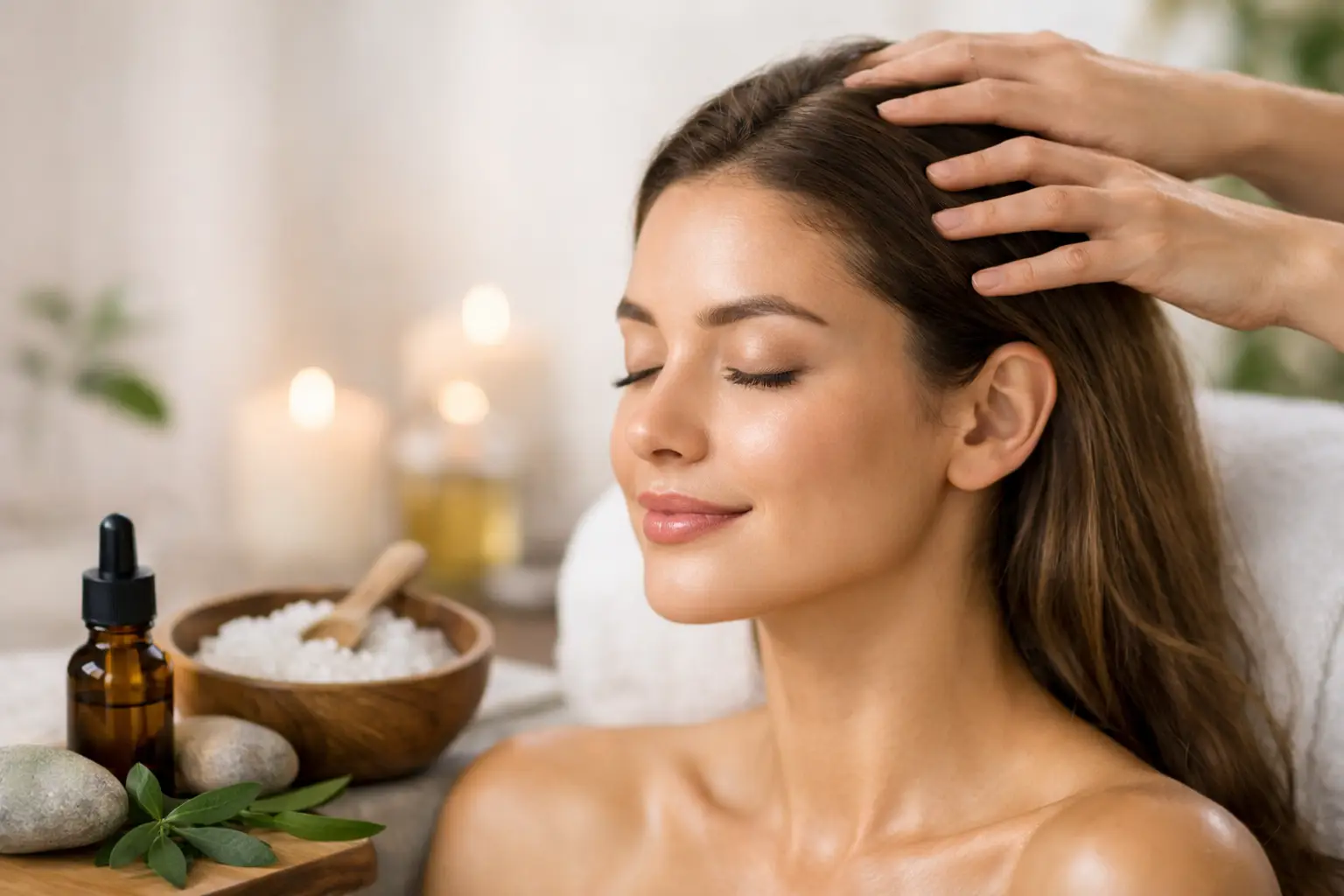
A head spa can offer careful cleansing, warm water, scalp-focused touch, and time away from the work of doing your own hair. It may leave the scalp feeling fresher and can be a very comfortable way to unwind. It is still a wellness service, not a diagnosis or a treatment for hair loss or scalp disease.
At donÉvita, EvitaHaloCrown™ centers on water-halo care, the scalp, head, and neck. Before beginning, share recent coloring, extensions, tenderness, allergies, active irritation, or any products you want avoided.
Know when to skip the spa and call a dermatologist
Seek medical advice for persistent or intense itching, painful or spreading redness, open or oozing areas, pus-filled bumps, thick scale, sudden or patchy hair loss, or symptoms that do not improve with ordinary care. Those problems can have causes that a spa cannot identify by appearance alone.
The American Academy of Dermatology lists several conditions that can produce an itchy scalp and recommends professional evaluation when the cause is unclear.
A good routine is not measured by how many products it contains. If your scalp is comfortable, clean, and predictable, you are probably doing enough.