
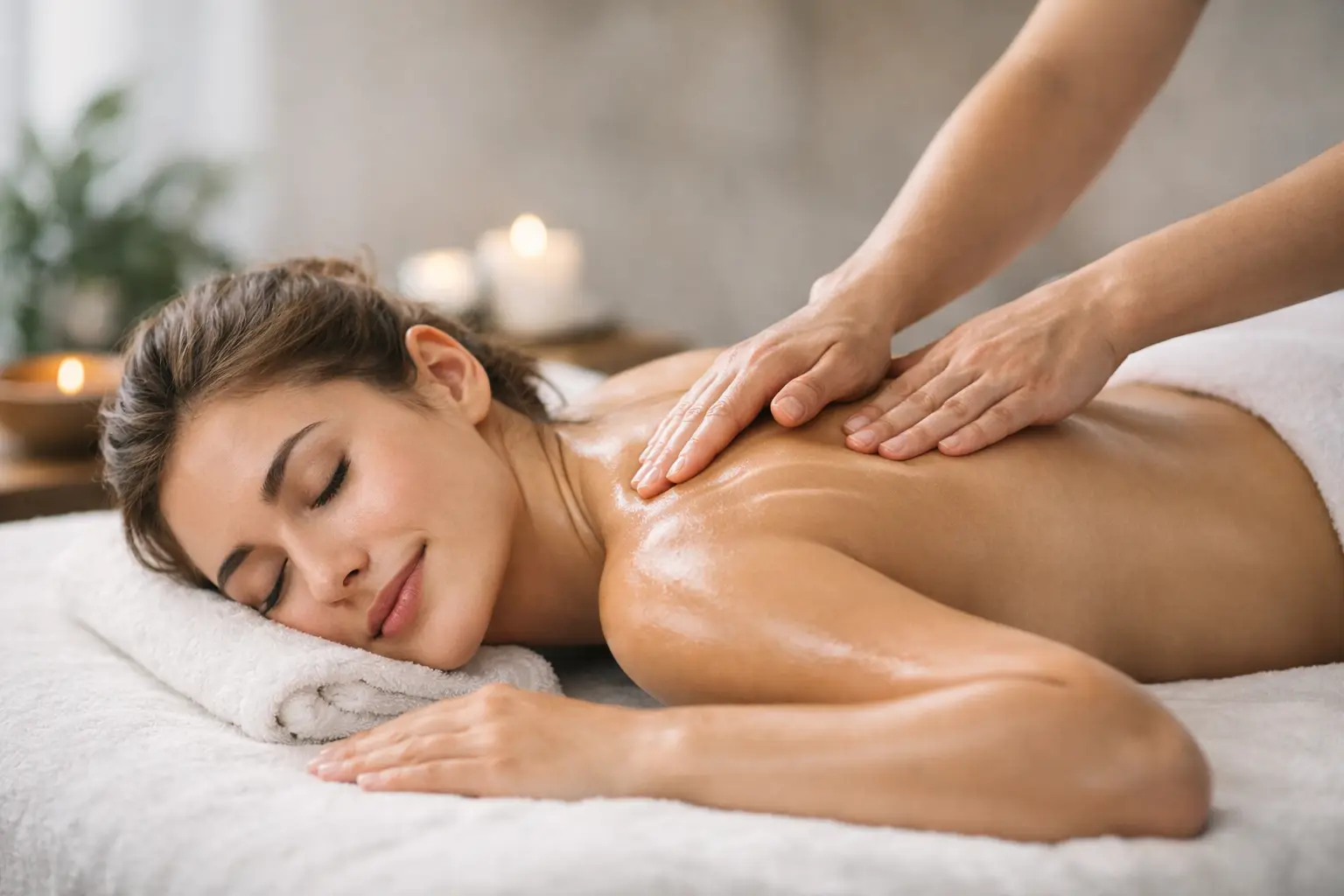
Some forms of bodywork focus on pressure. Some focus on technique. Sensory Flow Massage begins somewhere quieter - with the way the body receives touch when it finally feels safe enough to soften.
Rather than treating massage as a series of isolated movements, this ritual is shaped as a continuous experience. The hands move with rhythm. The breath slows. The nervous system is gently invited out of vigilance and into rest. For many people, that shift is the real beginning of renewal.
Sensory Flow Massage as a ritual
Sensory Flow Massage is best understood as an immersive, full-body ritual guided by continuity, pace, and atmosphere. The experience is not rushed or mechanical. It's designed to feel unbroken, so the body does not have to keep bracing for the next change in pressure or position.
That sense of flow matters. When touch is consistent and intentional, the mind has fewer reasons to stay alert. Muscles often respond by releasing more naturally, not because they were forced to, but because they were given the right conditions to let go.
The sensory element is just as essential. Warmth, texture, aroma, sound, and stillness all shape how deeply a person can settle. In a thoughtful setting, these details do not distract. They support the body in arriving more fully in the moment.
What makes Sensory Flow Massage feel different
The difference is often less about intensity and more about coherence. A traditional massage may move between techniques with a practical goal in mind. Sensory Flow Massage tends to prioritize the felt experience of the whole session, where each movement leads naturally into the next.
That can create a distinctly meditative quality. Instead of waiting for attention to land on one tight shoulder or one sore area, the body begins to experience itself as connected. Tension in the jaw may soften when the back relaxes. The breath may deepen when the scalp and neck are held with care. This is why a lighter, more intuitive approach can sometimes feel more profound than firmer pressure.
Of course, preference matters. Some guests want highly targeted work and very specific muscle release. Others are craving calm, grounding, and a sense of being restored rather than worked on. Sensory Flow Massage speaks most clearly to the second need, though elements of both can coexist depending on the practitioner and the setting.
The role of the nervous system
Many people carry more stimulation than they realize. Notifications, noise, decision fatigue, shallow breathing, interrupted rest - it all accumulates. By the time they arrive for massage, the body may still be operating as if it needs to stay ready.
That's where slower rhythm becomes meaningful. Long, flowing strokes and steady transitions can help signal that there is nowhere to rush and nothing to manage. The body is no longer asked to perform. It's allowed to receive.
That response is deeply individual. Some people feel emotional release. Some drift into a half-sleep state. Some simply notice that their thoughts have become quieter. None of these outcomes need to be dramatic to be valuable. Often the most lasting effect is a subtle one: feeling more present in your own skin afterward.
Who this massage is for
Sensory Flow Massage often resonates with people who are not only tense, but overstimulated. If your exhaustion feels mental as much as physical, a ritual built around pace and presence may be more supportive than an aggressively corrective session.
It can also suit anyone who values atmosphere as part of wellness. The setting, the cadence of touch, and the sense of care all contribute to the experience. For those drawn to more intentional forms of self-care, that wholeness matters.
There are times, though, when a different style may be better. If you are seeking highly focused pressure for a very specific area, or you prefer a more clinical, sports-oriented approach, a flow-based ritual may feel too subtle. The right massage is not the most luxurious one. It's the one that meets your body honestly.
What to expect from a Sensory Flow Massage session
A well-designed session usually feels seamless from beginning to end. There's often a sense of gradual arrival rather than abrupt beginning. The pace remains steady. The touch may vary, but the overall impression is continuity.
You may notice that your breathing changes first. Then the jaw unclenches. The shoulders lower. Time becomes less important. That is often the point where massage becomes something more than relief. It becomes recalibration.
Here at donÉvita, this kind of experience belongs naturally within a broader philosophy of renewal - one where touch, environment, and intention are never separate. The ritual is not there to impress. It's there to help you return to yourself.
If Sensory Flow Massage calls to you, it may be because what you need is not more intensity, but more ease. Sometimes the body opens most fully when nothing is forced.