
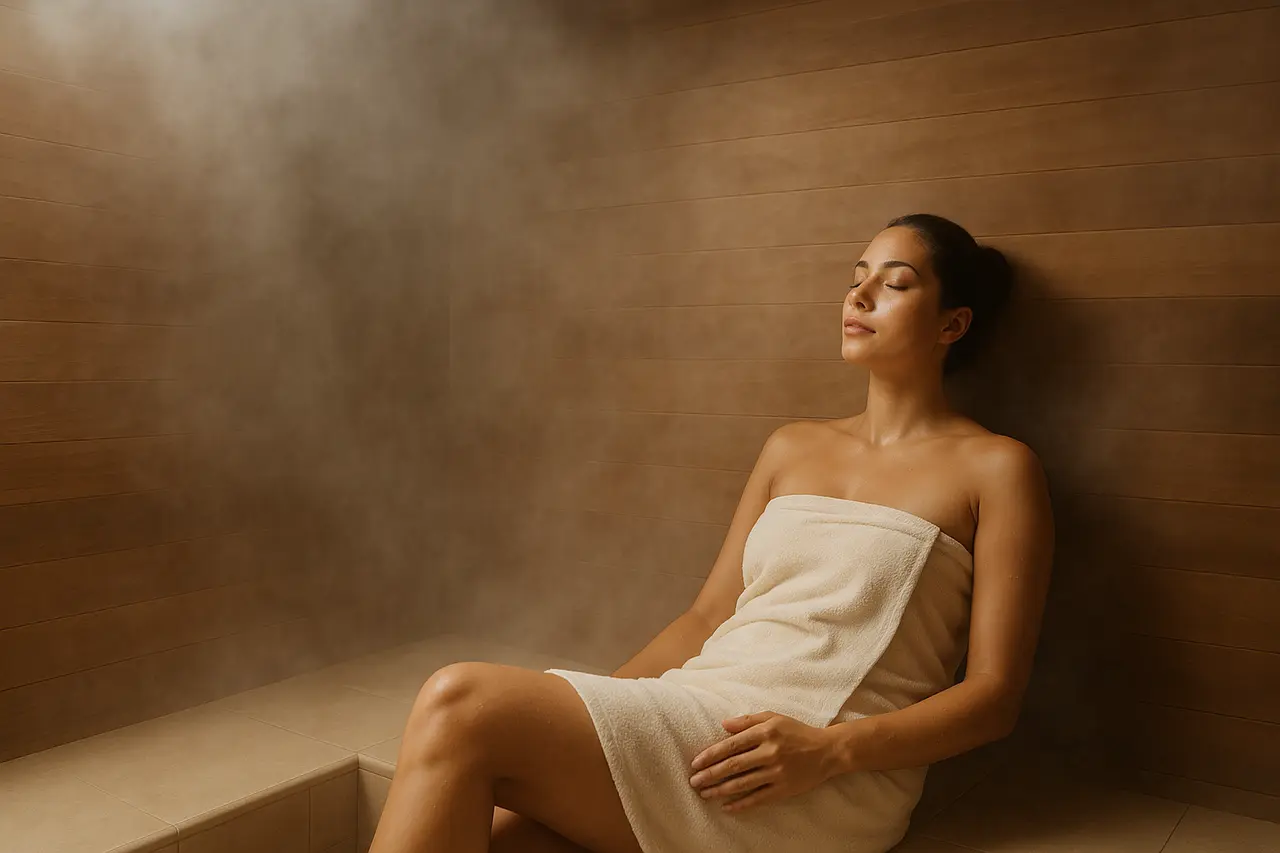
The warmth of a sauna can be a welcome pause in a busy day. But the number on the thermometer tells only part of the story. A steam room may run at a lower air temperature than a dry sauna and still feel surprisingly intense.
The difference is humidity. Moisture in the air changes how readily sweat evaporates, and evaporation is one of the ways your body releases heat. Understanding that difference helps you choose an experience around your comfort, rather than around how much heat you think you should tolerate.
Steam sauna vs. dry sauna: what changes?
A dry sauna generally combines hotter air with relatively low humidity. A steam sauna, often called a steam room, uses much more humid air, usually at a lower temperature. Traditional Finnish saunas can also become temporarily more humid when water is poured onto heated stones, so the categories are not absolute.
- Dry heat: sweat can evaporate more readily, although a hot room can still place considerable strain on the body.
- Humid heat: sweat evaporates less readily. Moisture may remain on the skin, and the warmth can feel close and enveloping.
- Either experience: air temperature, humidity, exposure time, and your own response matter together. A cooler thermometer reading does not guarantee a gentler session.
Visible moisture is not a useful score for how well a session is working. Sweating more, or staying longer, is not the aim of a thoughtful spa visit.
What the latest humidity research actually shows
A study published in July 2026 in Temperature followed 50 healthy, recreationally active adults through four 10-minute Finnish sauna sessions, with 30-minute recovery periods. Participants could add water to the stones. Researchers measured the room conditions, heart rate, core temperature, and how the heat felt.
Higher air temperature and higher relative humidity were each associated with greater increases in heart rate and core temperature. The practical lesson is that humidity deserves attention alongside temperature.
Those were short-term physiological responses, not proof of long-term health benefits. The study did not test donÉvita's steam sauna, establish a safe duration for every guest, or show that steam is better than dry heat. Most participants were habitual sauna users, which also limits how closely their experience represents a first visit.
An earlier comparison published in 2014 found greater heat strain in the steam condition despite its lower temperature. It involved just ten healthy young men under specific test conditions. It supports taking humid heat seriously, but cannot predict every guest's response.
Why dry-sauna headlines need context
Research about dry sauna should not automatically be applied to steam rooms. For example, a 2018 systematic review of regular dry-sauna bathing deliberately excluded predominantly high-humidity steam exposure. Studies differ in their participants, heat settings, and outcomes. They do not establish that a steam session prevents or treats disease, or that a more intense session is more beneficial.
Your heat tolerance matters more than someone else's
You may enjoy humid warmth while a friend finds it uncomfortable. Even your own response may differ between visits. Familiarity with heat, hydration, health conditions, and medications can all matter. There is no reason to match another guest's time in the room.
A session that feels pleasant should still leave room to pause or stop. Feeling lightheaded, nauseated, weak, unusually breathless, or headachy is a reason to leave the heat and alert the team. The CDC's heat guidance describes these as possible signs of overheating. Do not push through them to finish an appointment.
Confusion or loss of consciousness requires urgent help. CDC guidance on heat-related illness identifies these as emergency warning signs; call 911 when heat stroke is suspected.
What to disclose before a steam session
A brief conversation before the heat begins is part of personal care. Tell the team about:
- Pregnancy or a possible pregnancy. Ask your maternity clinician before choosing heat exposure; the CDC notes that pregnancy increases vulnerability to heat illness.
- Heart or blood-pressure concerns, breathing conditions, or previous fainting or heat illness. Discuss suitability with your healthcare professional, especially if a condition is not well controlled.
- Medicines that may affect heat tolerance or hydration. These can include diuretics, some blood-pressure medicines, and certain antihistamines or psychiatric medicines. A pharmacist or prescriber can review your specific medicines.
- Feeling unwell today. Mention fever, dizziness, dehydration, or recent alcohol use before beginning.
- Skin sensitivity, allergies, recent procedures, or mobility needs. These details are especially useful if steam is paired with exfoliation or another service.
CDC medication guidance explains why some medicines can affect sweating, fluid balance, or temperature regulation. Do not stop or change a prescribed medicine to accommodate a spa visit. The spa team can discuss the experience; medical suitability belongs with your clinician.
You can review donÉvita's safety and guest-care guidance before booking, or contact the team with a comfort question.
EvitaSteamVault™: warmth within your ritual
At donÉvita in Bedford, Texas, EvitaSteamVault™ steam sauna offers a quiet moment of warmth within the rhythm of your visit. It may be paired with massage, head spa, or body exfoliation when available within your reserved experience.
The value is in the pause: time to slow down, receive personal attention, and choose a pace that feels comfortable. You do not need to stay in the heat for the full length of a ritual to make the visit worthwhile.
Pairing steam with body exfoliation
If you are considering EvitaGlow Finish™ body exfoliation and scrub, ask about the sequence and share your skin concerns. Combining services does not mean adding more heat or stronger scrubbing.
The American Academy of Dermatology's exfoliation guidance recommends choosing an approach suited to your skin and avoiding exfoliation over sunburn or open wounds. Mention products such as retinoids that may make your skin more sensitive. A gentler approach, or skipping exfoliation, may suit you better.
A few questions before you book
Is steam automatically gentler because it is cooler?
No. High humidity limits evaporative cooling. The way the heat feels, and the strain it places on you, depends on more than air temperature.
How long should I stay in a steam sauna?
There is no single duration appropriate for everyone. Discuss pacing before beginning, take breaks, and leave as soon as you feel uncomfortable. The 10-minute sessions in the 2026 study are a research protocol, not a recommendation for your visit.
Can I still enjoy a ritual if steam is not right for me?
Ask the team about the available options before booking. Your visit can begin with a conversation about what feels comfortable and what you would like to leave out.
Explore steam sauna at donÉvita, review what to share before your visit, or choose your ritual. Renewal begins with care that makes sense for you.