
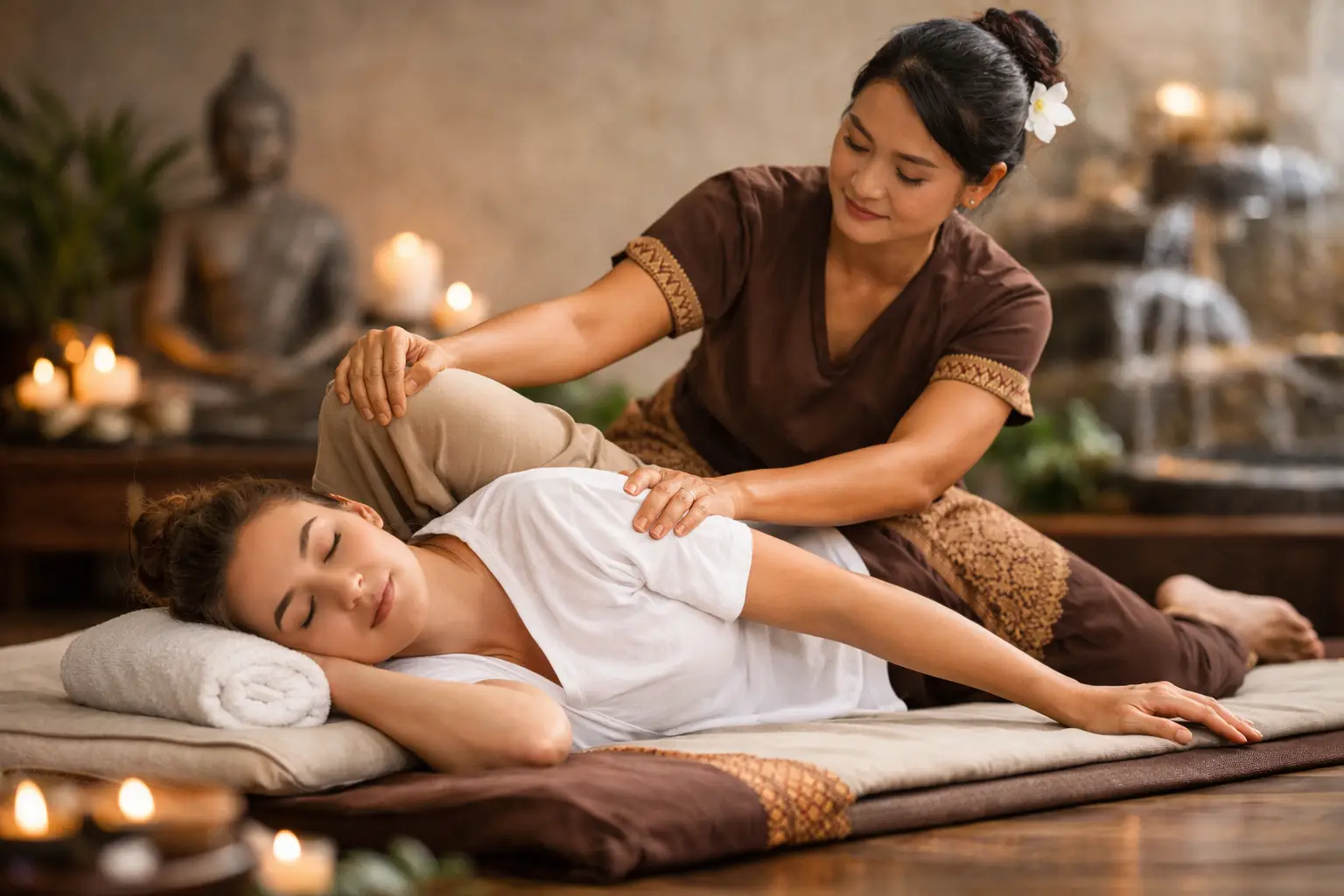
Tension rarely arrives all at once. It gathers quietly - in the neck after long hours, in the hips after too much sitting, in the breath when life begins to feel crowded. Thai Massage meets that kind of tension with something more thoughtful than simple relief. It's a body ritual rooted in movement, pressure, and presence, designed to restore space where the body has grown guarded.
Unlike oil-based massage styles that focus mainly on gliding strokes, Thai Massage works through a flowing sequence of assisted stretches, rhythmic compression, and acupressure. There's a grounded simplicity to it. Nothing feels excessive. Every movement has a purpose, and every pause allows the nervous system to catch up with the body.
What Thai Massage feels like
The sensation is often described as somewhere between massage, stretching, and meditation. That is true, but it still does not fully capture the experience. Thai Massage has a distinct rhythm. Pressure is applied with hands, thumbs, forearms, elbows, and sometimes feet, then softened by gentle rocking or lengthening stretches. The body is moved with care, not forced. Breath becomes part of the ritual.
For many people, the first surprise is how immersive it feels. Rather than addressing one tight area in isolation, Thai Massage tends to work in connected lines across the body. Tight shoulders may be approached through the chest and upper back. Lower back discomfort may be eased by opening the hips and legs. This whole-body perspective is part of what makes the practice feel so balancing.
Why Thai Massage can feel different from other bodywork
Some massage rituals invite stillness through quiet pressure. Thai Massage invites stillness through motion. That difference matters, especially for those whose tension is tied to posture, repetitive habits, or a sense of feeling compressed in their own body.
The stretches can help improve ease of movement, while compression can bring a steady, grounding sensation that many people find deeply calming. There's also an energetic quality to the practice. Traditional Thai approaches are often built around the idea that the body holds patterns of blocked or stagnant energy. Whether you think of that as energy, stress, or simple muscular holding, the result is often the same: after a well-delivered session, the body feels more open, the mind quieter, and the breath less restricted.
That said, intensity can vary. Some sessions are deeply restorative and slow. Others are more invigorating, especially if the focus is mobility and release. A better practitioner reads the body rather than imposing a fixed routine. That's where Thai Massage becomes not just effective, but personal.
Who Thai Massage is best for
Thai Massage can be especially appealing for people who carry tension from sedentary work, exercise regularly, or simply prefer a spa ritual that feels active rather than passive. It often suits those who want more than surface relaxation and are looking for a deeper sense of reset.
It may also feel more comfortable for guests who prefer to remain clothed during bodywork. The ritual has a certain ease because of that. There's less emphasis on undressing and more emphasis on settling in.
Still, this is not a one-note experience. If someone is very sensitive, recovering from strain, or new to bodywork, the session may need a gentler pace. Communication matters. Thai Massage is at its best when it responds to the person, not just the method.
The deeper value of Thai Massage
At a certain level, every meaningful spa ritual offers the same quiet gift: a return to yourself. Thai Massage does this beautifully because it does not ask the body to perform. It asks the body to soften, lengthen, and remember its natural rhythm.
There's something deeply reassuring about being moved with skill and steadiness. The joints feel less burdened. The muscles feel less defensive. Even the mind often follows, releasing the need to brace. In that sense, Thai Massage is not only about flexibility or tension relief. It's about reintroducing harmony where there has been friction.
For those drawn to more intentional forms of self-care, this matters. Wellness is not always found in intensity. Often it is found in the subtle but lasting shift that happens when the body no longer feels at war with itself.
Here at donÉvita, rituals are valued for exactly this reason - not for how much they promise, but for how fully they allow you to arrive. Thai Massage offers that kind of arrival. It creates space in the body, steadiness in the breath, and a calm that lingers long after the session has ended.
If you have been craving a form of bodywork that feels both grounding and expansive, Thai Massage may be the ritual that meets you there.