
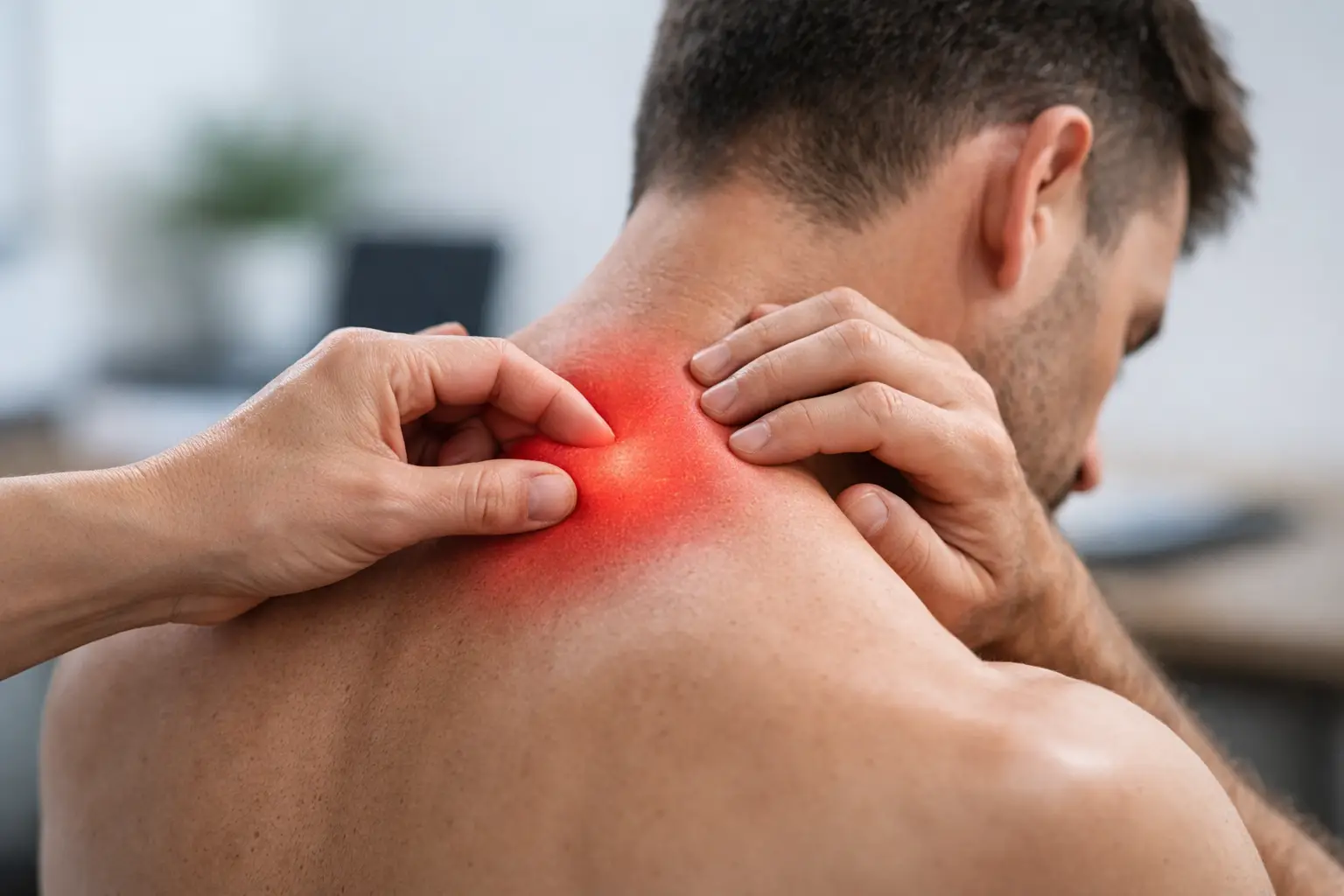
Pain around the scapula, or shoulder blade, is one of the most common reasons people seek massage therapy. It may feel like a dull ache between the shoulder blades, a sharp knot near the inner edge of the scapula, tightness across the upper back, or discomfort that travels toward the neck, shoulder, or arm. For many people, this pain is connected to muscle tension, posture, repetitive movement, stress, or trigger points.
How Trigger Point Massage May Help Relieve Scapula Pain
Trigger point massage is a focused massage approach that may help reduce discomfort by working on sensitive, tight areas within the muscles. These areas are often described as “knots.” When they develop around the upper back, neck, shoulders, or chest, they may contribute to pain near or around the scapula.
Here at donÉvita in Bedford, Texas, massage is approached as a calming spa ritual rather than a rushed treatment. For guests experiencing shoulder blade tension, trigger point massage may be included as part of a personalized EvitaFlow™ massage ritual to support relaxation, ease muscular tightness, and help the body feel more balanced.
What Is the Scapula?
The scapula is the flat triangular bone commonly called the shoulder blade. It sits on the upper back and plays an important role in shoulder movement. Every time you reach, lift, pull, push, turn your neck, or raise your arm, the scapula works together with the shoulder joint, ribs, spine, and surrounding muscles.
Because the scapula is connected to so many movements, discomfort in this area can come from several sources. The pain may not always come from the shoulder blade itself. Often, it comes from the muscles that attach to or move around it.
Important muscles around the scapula include:
- Trapezius
- Rhomboids
- Levator scapulae
- Infraspinatus
- Supraspinatus
- Teres major and teres minor
- Serratus anterior
- Latissimus dorsi
- Pectoralis muscles in the chest
When these muscles become tight, overworked, weak, or irritated, the scapula may not move as smoothly. This can create a feeling of pulling, aching, burning, or pressure around the shoulder blade.
What Are Trigger Points?
Trigger points are sensitive spots in tight bands of muscle tissue. Many people describe them as knots, tender points, or small areas that feel unusually sore when pressed. Sometimes the discomfort stays local. Other times, the sensation may travel to another area. This is often called referred pain.
For example, a tight spot in the upper trapezius may create discomfort near the neck or shoulder. A trigger point in the rhomboids may feel like pain between the shoulder blades. A trigger point in the infraspinatus, located on the back of the shoulder blade, may create discomfort that seems to move toward the shoulder or arm.
Trigger points may develop from:
- Long hours sitting at a desk
- Looking down at a phone or laptop
- Poor posture
- Repetitive lifting or reaching
- Sleeping in an awkward position
- Stress-related muscle tension
- Overtraining or sudden exercise changes
- Carrying bags on one shoulder
- Driving for long periods
- Lack of movement throughout the day
The scapula area is especially prone to this type of tension because it is heavily involved in posture and upper-body movement.
How Trigger Point Massage May Help Scapula Pain
Trigger point massage uses focused pressure, slow compression, gentle stretching, and careful release techniques to work into tight muscle areas. You're not trying to force the muscle; you're trying to help it soften gradually.
When performed properly, trigger point massage may help scapula pain in several ways.
1. It May Reduce Muscle Tension Around the Shoulder Blade
Tight muscles can pull on the scapula and create discomfort. When muscles like the rhomboids, trapezius, or levator scapulae become tense, they may make the upper back feel stiff or locked.
Trigger point massage focuses on these tight areas and may help reduce the feeling of muscular gripping. As the tissue softens, the shoulder blade may feel less restricted.
For many guests, this can create a sensation of lightness across the upper back and shoulders.
2. It May Improve Scapula Movement
The scapula is designed to glide across the rib cage. When surrounding muscles are tense, that movement can become limited. You may notice stiffness when raising your arm, turning your neck, or pulling your shoulders back.
Trigger point massage may help improve the quality of movement by reducing tightness in the muscles that control scapular motion. This may make everyday movements feel easier, such as reaching overhead, working at a computer, exercising, or driving.
3. It May Help Referred Pain Patterns
Scapula pain is not always located exactly where the problem begins. Trigger points in nearby muscles can create pain that seems to show up somewhere else.
For example:
- Trigger points in the neck may refer pain toward the shoulder blade.
- Trigger points in the upper back may create discomfort between the shoulder blades.
- Trigger points in the back of the shoulder may create pain that travels toward the arm.
- Tight chest muscles may pull the shoulders forward and contribute to upper back discomfort.
A skilled massage therapist looks beyond the exact painful spot. Instead of only massaging where it hurts, they may also work nearby areas that contribute to the tension pattern.
This is one reason trigger point massage can be helpful for scapula pain. It addresses the surrounding muscle system, not just one isolated point.
4. It May Support Better Posture
Many people with scapula pain have rounded shoulders or forward-head posture from sitting, phone use, driving, or computer work. Over time, the chest muscles may become tight, while the upper back muscles become overworked.
This imbalance may contribute to shoulder blade discomfort.
Trigger point massage may help by releasing tightness in the chest, neck, shoulders, and upper back. When combined with gentle stretching and better daily posture habits, massage may support a more open and relaxed upper-body position.
Here at donÉvita, this type of work can be blended into a calming EvitaFlow™ massage ritual, where the focus is not only on one painful area, but on helping the body unwind as a whole.
5. It May Calm Stress-Related Muscle Holding
Stress often shows up in the shoulders. Many people unconsciously lift their shoulders, tighten their neck, clench their jaw, or hold tension across the upper back when they are mentally or emotionally stressed.
Over time, this constant muscle holding may contribute to trigger points around the scapula.
Trigger point massage may help interrupt this pattern by combining focused muscle work with a calming environment. Slow pressure, warm touch, steady breathing, and quiet surroundings may encourage the nervous system to settle.
This is important because pain is not only mechanical. The body’s stress response can affect how tight muscles feel and how sensitive pain areas become.
Common Muscles Involved in Scapula Pain
Several muscles may contribute to pain around the shoulder blade.
Rhomboids
The rhomboids sit between the spine and the shoulder blade. They help pull the shoulder blades together. Trigger points here may feel like deep aching between the shoulder blades.
Trapezius
The trapezius covers the upper back and neck area. Tension here may create pain near the neck, shoulders, and upper scapula.
Levator Scapulae
This muscle connects the neck to the top of the shoulder blade. It's often involved when people feel pain at the upper inside corner of the scapula.
Infraspinatus
The infraspinatus sits on the back of the shoulder blade and is part of the rotator cuff. Trigger points here may create shoulder blade pain or discomfort that travels toward the shoulder and arm.
Pectoralis Muscles
The chest muscles may not seem connected to scapula pain at first, but they can pull the shoulders forward. When the chest is tight, the upper back may work harder to hold posture, which can contribute to shoulder blade tension.
What Trigger Point Massage Feels Like
Trigger point massage should come across as focused, specific, and therapeutic, but it should not feel unbearable. A common description is “good pressure” or “good discomfort.” The therapist may apply pressure to a tender point and hold it for several seconds while the muscle gradually releases.
You may feel:
- Local tenderness
- A dull ache
- A spreading sensation
- Warmth
- Gradual softening
- A feeling of release
- Easier movement afterward
Communication is important. More pressure is not always better. If the pressure is too intense, the body may guard and tighten instead of relaxing.
A professional massage therapist should adjust the pressure based on your comfort, sensitivity, and goals.
Simple Home Habits That May Support Relief
Trigger point massage can be helpful, but daily habits matter too. For scapula discomfort, simple changes may support longer-lasting comfort.
Take Posture Breaks
Every 30 to 60 minutes, gently roll your shoulders, stand up, or walk for a moment. Small movement breaks may reduce upper back stiffness.
Stretch the Chest
Stand in a doorway with your forearm resting on the door frame. Step forward gently until you feel a stretch across the chest. Hold without forcing.
Strengthen the Upper Back
Gentle rows, scapular squeezes, or resistance band exercises may help support better shoulder blade control.
Adjust Your Workstation
Keep your screen at eye level, relax your shoulders, and avoid reaching too far for your keyboard or mouse.
Use Heat
Warmth may help relax tight muscles before stretching or massage. A warm shower or heating pad may feel soothing for upper back tension.
When to Be Careful
Scapula pain is often muscular, but not always. You should seek medical guidance if the pain is severe, sudden, related to an injury, or accompanied by chest pain, shortness of breath, numbness, weakness, fever, dizziness, or pain spreading down the arm in a concerning way.
Massage is not a replacement for medical care. If you are unsure about your symptoms, have a recent injury, surgery, medical condition, or unexplained pain, check with a healthcare provider before receiving massage.
Trigger Point Massage in Bedford, Texas
For people in Bedford, Hurst, Euless, Colleyville, Grapevine, Southlake, and the surrounding DFW area, trigger point massage may be a supportive option for shoulder blade tension, upper back tightness, and stress-related muscle discomfort.
Here at donÉvita in Bedford, Texas, each massage ritual is personalized. Guests can share where they feel tension, how much pressure they prefer, and whether the discomfort is focused near the scapula, neck, shoulders, or upper back.
You're not just trying to work out knots. The aim is to create a thoughtful experience that helps the body soften, the shoulders relax, and the mind slow down.
Final Thoughts
Trigger point massage may help relieve scapula pain by reducing tight muscle knots, improving shoulder blade movement, calming referred pain patterns, and supporting relaxation. Because the scapula connects with the neck, shoulders, spine, chest, and upper back, effective massage often works with the whole surrounding area rather than only the painful spot.
If your shoulder blade pain comes from stress, posture, desk work, repetitive movement, or muscular tension, a personalized trigger point massage may help you feel more comfortable and mobile.
Here at donÉvita, the experience is designed to be calm, professional, and restorative. Whether you need focused upper back work or a full EvitaFlow™ massage ritual, your session can be shaped around your body’s needs and your comfort level.