
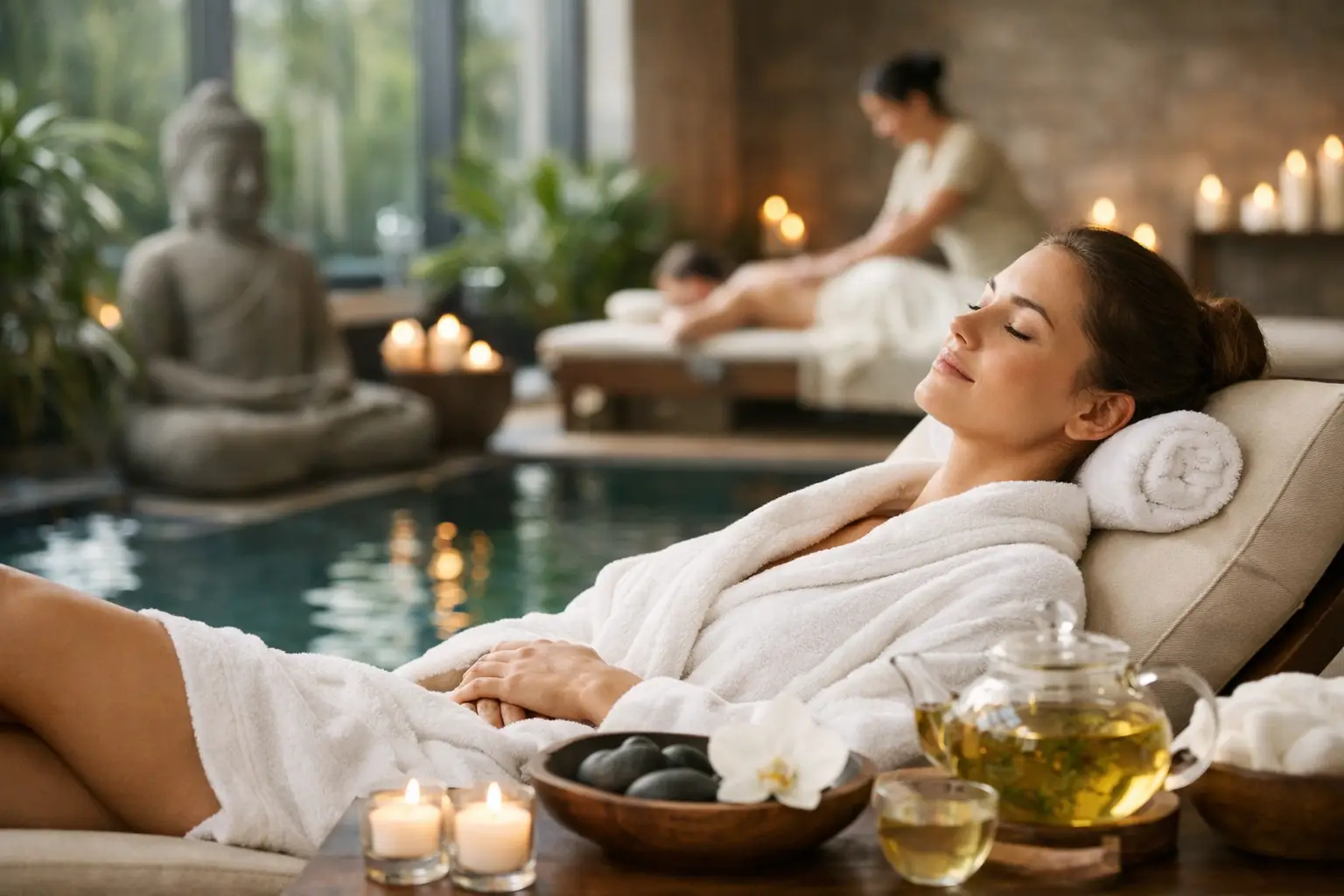
The difference is often clear within the first few minutes. A true relaxation spa does not rush you from check-in to treatment and back out the door. It changes your pace before anything else begins. Your breathing slows. Your shoulders drop. The mind that arrived crowded and noisy starts to soften.
That shift matters more than people realize. Many spa experiences promise relief, but not all of them create the conditions for it. Real relaxation is not just a service on a menu. It's a carefully held experience shaped by atmosphere, touch, scent, warmth, quiet, and the feeling that every detail has been considered.
What a relaxation spa should actually feel like
The word relaxing is used so often that it can lose meaning. In practice, a relaxation spa should come across as intentional. The space should not be loud, bright, or overstimulating. It should invite stillness without trying too hard. Gentle lighting, softened sound, clean air, warm linens, and unhurried transitions all contribute to the body feeling safe enough to let go.
The quality of touch matters just as much. Relaxation is not always about deep pressure or dramatic results you can measure by the hour. Sometimes it is the opposite. Skilled, attentive touch can calm the nervous system, release surface tension, and help the body move out of its guarded state. When that happens, rest feels possible again.
This is also where customization becomes essential. One guest may need warmth and quiet after a demanding week. Another may respond best to steam, exfoliation, scalp care, or aromatic oils that settle the senses. A better spa experience pays attention to these differences instead of treating relaxation like a fixed formula.
Why the environment matters as much as the treatment
People often focus on the treatment itself, but the environment shapes the outcome. If a room feels impersonal, hurried, or overly clinical, the body notices. It can remain alert even while receiving care. On the other hand, when the surroundings feel peaceful and private, the experience goes deeper.
This is why the best spa visits are often remembered less for one single step and more for the way everything worked together. Warm water can prepare the body for touch. Steam can soften tension before a service even begins. Exfoliation can create a sense of physical renewal that supports emotional release too. Scent can ground attention when the mind wants to wander back to meetings, errands, and screens.
That layering is what turns an appointment into a ritual. It does not need to be complicated. It needs to feel coherent. Each element should support the same outcome - calm, restoration, and a return to yourself.
The quiet power of personalized spa rituals
A premium spa experience usually feels more personal, not more elaborate. That distinction matters. Luxury is not excess for its own sake. It's care that feels considered.
A personalized ritual begins with listening. How has your body been feeling lately? Are you carrying stress in the neck and shoulders, or are you simply tired in a deeper way? Do you want to leave feeling lighter, softer, more grounded, or more restored? Those answers shape the experience.
Organic oils, body scrubs, mineral soaks, nourishing lotions, and aromatic enhancements can all be part of that care when they are selected with purpose. Coffee, brown sugar, coconut oil, grapeseed oil, collagen, vitamins, or Epsom salt each bring a different texture and feeling. What matters most is not to add more and to choose what serves your body well in that moment.
That is also why a relaxation spa should never feel mechanical. The most restful experiences are responsive. They adapt to the person on the table, not just the treatment booked in advance.
Relaxation spa treatments and what they help with
Not every guest comes in for the same reason, even if the goal sounds similar. Stress relief can mean mental quiet for one person and physical ease for another. A relaxation spa can support both, but the path there may look different.
Massage-centered rituals often help guests who feel overworked, overstimulated, or disconnected from their bodies. Gentle to moderate pressure, warm oils, and a slower rhythm can help settle the system rather than challenge it. Body scrubs and wraps appeal to people who want renewal they can feel immediately - softer skin, lighter limbs, and the satisfying sense of having shed a layer of fatigue. Scalp treatments can be unexpectedly powerful for guests who carry tension in subtle ways and need help letting the mind go quiet.
Couples experiences offer something else entirely. For some, they create closeness and shared rest in a way daily life rarely allows. For others, they simply make it easier to pause together. Privacy matters here. So does atmosphere. A couples ritual should come across as intimate and calm, never performative.
There's also value in choosing less. Some guests need a longer, layered experience. Others need one beautifully executed service and a quiet room. It depends on your season of life, your stress level, and what your body is asking for that day.
How to tell if a spa is focused on renewal, not volume
A busy schedule does not automatically mean a spa lacks quality, but there are signs that reveal its priorities. If every part of the experience feels timed to the minute, if the setting feels generic, or if personalization is minimal, the result can feel transactional even when the service itself is pleasant.
A spa centered on renewal takes a different approach. It creates room for pause. It treats atmosphere as part of the service, not decoration around it. It values sensory details because they affect how deeply a guest can relax. It understands that restoration is both physical and emotional.
In a place like Bedford, where daily life in the Dallas-Fort Worth area can move quickly, that kind of care stands out. Guests are not only looking for a break. They are looking for a setting that helps them come back to themselves with less noise inside.
That's where donÉvita feels distinct. The experience is shaped as a ritual of renewal rather than a basic spa stop. Touch, scent, steam, exfoliation, water, and stillness are treated as part of one whole experience - personal, calming, and quietly restorative.
When a relaxation spa is most worth booking
People often wait until they feel depleted. That is understandable, but it is not always the best timing. A relaxation spa can be most beneficial before stress becomes the body’s normal setting.
That might mean booking during a demanding season at work, after extended travel, before an important life event, or when sleep has felt shallow for too long. It can also mean making space for care after emotional strain, even if there is no dramatic reason behind it. The body keeps score in quiet ways. Tightness in the jaw, heaviness in the chest, restless sleep, skin that feels dull, or a constant sense of mental static can all be signs that restoration is overdue.
There's no perfect frequency. For some people, occasional visits are enough to reset. For others, regular ritual creates more lasting balance. What matters most is recognizing that rest works better as a practice than a last resort.
Choosing the right relaxation spa for you
The most helpful choice is not always the longest menu or the trendiest setting. It's the place where you feel genuinely cared for. Look for signs of intention. Is the environment calming? Does the language feel warm and thoughtful rather than sales-driven? Are treatments described as experiences with purpose, not just interchangeable options?
It's also worth paying attention to what a spa values. A premium setting should not feel intimidating. It should come across as welcoming, polished, and deeply attentive. Products matter, especially if you care about what touches your skin. So does the flow of the visit. Small details often reveal the whole philosophy.
Most of all, choose a space that respects quiet. Many people are carrying more than physical fatigue. They need a pause from decision-making, conversation, stimulation, and the subtle strain of being available all the time. A better relaxation spa understands this without needing to announce it.
Sometimes the most restorative thing you can do is step into a place designed to hold calm for you until you can feel it again on your own.