
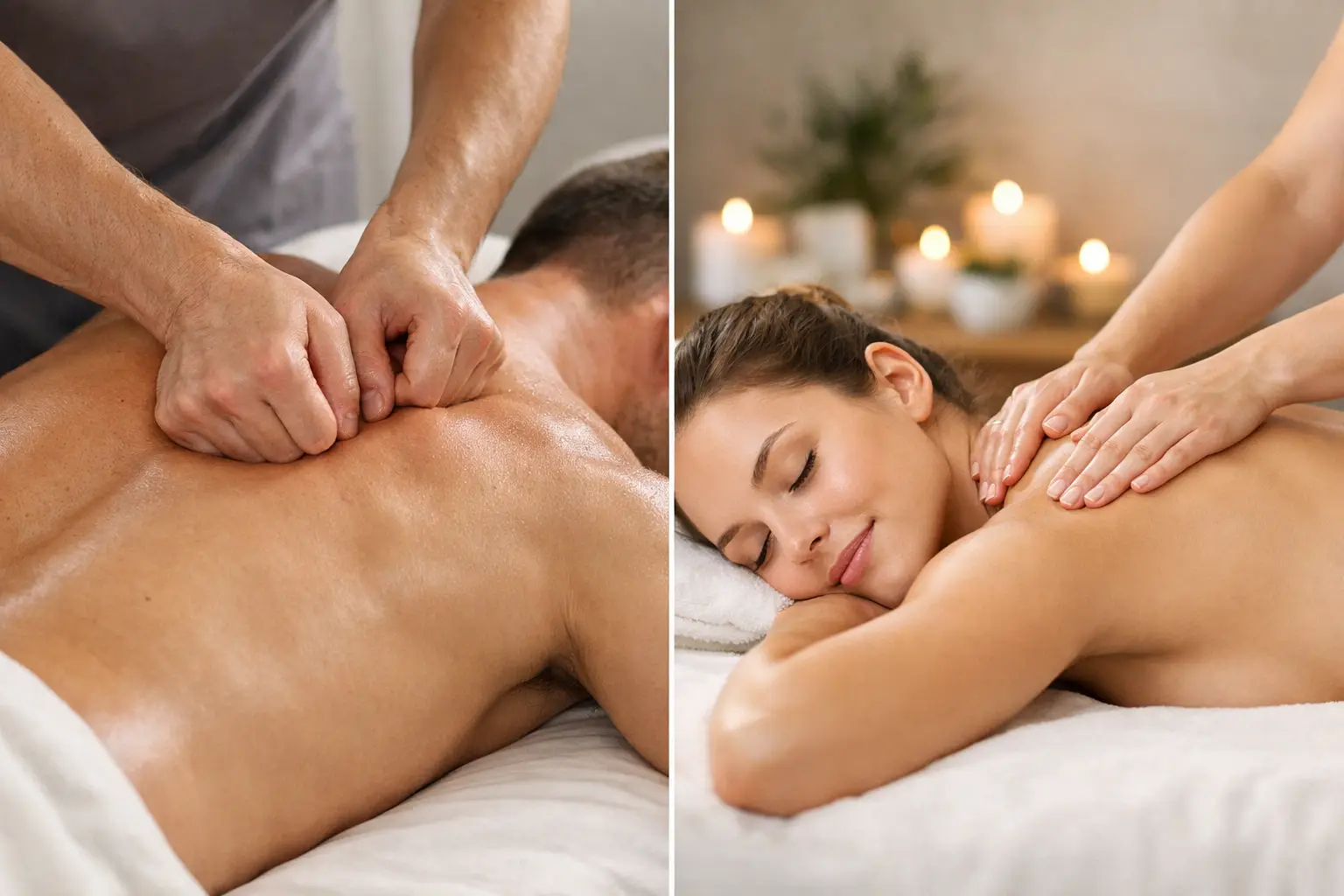
Some days, your body asks for quiet. Other days, it asks for release. That is the real question behind deep tissue vs Swedish massage - not which one is better, but which one meets you where you are.
Both styles use skilled touch to restore balance, soften tension, and help you return to yourself. Yet they create very different experiences. One tends to feel flowing, soothing, and expansive. The other often feels more focused, deliberate, and intent on working through deeper layers of holding. Knowing the difference can help you choose a massage that feels right not only in the moment, but also in the days that follow.
Deep tissue vs Swedish massage: the core difference
At the simplest level, Swedish massage is centered on relaxation, circulation, and gentle relief. Deep tissue massage is designed to address more persistent tension and deeper muscular tightness. That difference sounds straightforward, but the experience is more nuanced than a simple soft versus firm comparison.
Swedish massage usually involves long, gliding strokes, kneading, and rhythmic movements that encourage the nervous system to settle. It often creates a sense of spaciousness in the body. Breathing slows. The jaw softens. The mind becomes less crowded. This is the massage many people picture when they imagine a peaceful spa ritual.
Deep tissue massage uses slower, more targeted pressure to reach areas that feel bound up, dense, or resistant. The therapist may spend more time on one shoulder, one hip, or the muscles around the neck and upper back. You're not trying to rush through the body; you're staying with tension long enough for it to begin letting go.
That said, deep tissue should not feel harsh for the sake of being harsh. Effective pressure is intentional, not aggressive. A thoughtful therapist listens to the body rather than trying to overpower it.
What Swedish massage feels like
Swedish massage often feels like an exhale. It's ideal when your body is tired, your thoughts are loud, or stress has left you feeling disconnected from yourself. The pressure can be light to moderate, and the pace is usually smooth and continuous.
This style supports circulation and helps the entire body shift into a calmer state. For many guests, that is the real value. The muscles may be tense, yes, but the tension is often tied to overstimulation, long workdays, poor sleep, or simply carrying too much for too long. In those moments, the body may respond best to softness before it responds to intensity.
Swedish massage is also a strong choice if you are newer to massage, sensitive to pressure, or looking for an experience that feels restorative rather than corrective. It can still ease tightness, especially when stress is the source, but it does so with a gentler hand.
What deep tissue massage feels like
Deep tissue massage is more specific. Instead of creating an even, floating sensation from head to toe, it may focus closely on the places where your body has started gripping. Maybe it is the shoulders that rise toward your ears each afternoon. Maybe it is a lower back that feels stubborn after long hours at a desk. Maybe your legs carry the imprint of workouts, travel, or constant standing.
The pressure is usually firmer, but pressure alone does not define deep tissue. Technique matters more. The therapist works slowly, often following the grain of the muscle or pausing into a point of tension until the area begins to soften. At times, it can feel intense. It may bring that familiar sensation of finding the exact place your body has been guarding.
For some people, this is deeply relieving. For others, especially when stress levels are already high, too much intensity can feel like one demand too many. That's why the best massage choice depends on your full state, not just your sore spots.
When Swedish massage may be the better choice
If your body feels worn out rather than locked up, Swedish massage is often the wiser path. It's especially supportive when you want to rest deeply, reset your mood, or recover from mental overload. Many people assume they need deep tissue because they feel tense, but tension does not always mean the body wants heavier pressure.
A gentle, flowing session can sometimes release more than a forceful one because it invites the nervous system to feel safe. When the body stops bracing, muscles often soften on their own. That can be especially helpful if your tension comes with anxiety, poor sleep, headaches from stress, or a general sense of fatigue.
Swedish massage also tends to be a better fit if you simply want to leave feeling light, calm, and cared for. There's value in choosing a treatment that restores your energy rather than asking your body to work through discomfort.
When deep tissue may be the better choice
Deep tissue massage makes sense when tension feels specific, repetitive, or difficult to shake. If one area keeps tightening no matter how much you stretch, or if your muscles feel dense and overworked, a more focused approach may help.
This can be a good option for people who sit for long stretches, train regularly, carry stress physically in the same places, or prefer firmer bodywork. It may also be useful when you want a session that spends less time on general relaxation and more time on a particular issue.
Still, deeper is not always better. If the pressure makes you hold your breath, tighten your body, or mentally brace against it, the work may be going too far. A better deep tissue massage walks a careful line - enough pressure to create change, enough sensitivity to keep the body receptive.
Deep tissue vs Swedish massage for stress, soreness, and recovery
If your main goal is stress relief, Swedish massage usually has the edge. Its flowing rhythm is naturally calming, and many people leave feeling mentally quieter as well as physically looser. It supports the kind of full-body unwinding that can be hard to reach on your own.
If your main goal is working on chronic knots or localized soreness, deep tissue often has the advantage. It allows more attention to the exact areas that need time and precision. That can be especially helpful after repetitive movement, long periods of poor posture, or accumulated muscular strain.
Recovery is where the choice becomes more personal. Some bodies recover beautifully from deep work and feel freer the next day. Others need a gentler session to avoid feeling tender or depleted. Swedish massage is less likely to leave you sore afterward, while deep tissue may involve some temporary tenderness, especially if the muscles were already highly guarded.
Neither outcome is wrong. It simply depends on what your body responds to best.
The pressure question most people ask first
Many guests describe their preference by saying they want a massage that is not too light but not painful. That middle ground matters. Swedish massage can be adjusted upward in pressure, and deep tissue can be approached with restraint and care. The names matter less than the skill behind them.
A well-crafted session is never one-size-fits-all. Some people want Swedish massage with focused attention on the neck and shoulders. Others want deep tissue work on the back and legs, balanced by gentler techniques elsewhere so the whole experience still feels grounding. The most helpful treatments are responsive, not rigid.
In a premium spa setting, this is where massage becomes more than a service. It becomes a ritual shaped around the person on the table - their stress, their pace, their sensitivity, their need for stillness or release.
Which one should you choose?
Choose Swedish massage if you want calm, softness, better circulation, and a sense of being fully restored. Choose deep tissue if you want more targeted relief for areas that feel stuck, overworked, or chronically tense.
If you are torn between the two, ask yourself a simpler question. Do you want to melt, or do you want to work something out? Melt points toward Swedish. Work it out points toward deep tissue.
And if the answer is a little of both, say that. The most meaningful massage experiences are often the ones that listen closely and adapt. At a sanctuary for renewal like donÉvita, that kind of care is part of the ritual.
The right massage should leave you feeling more at home in your body. Whether that comes through gentle flowing strokes or slower focused pressure, the best choice is the one that gives your body room to soften, breathe, and begin again.