
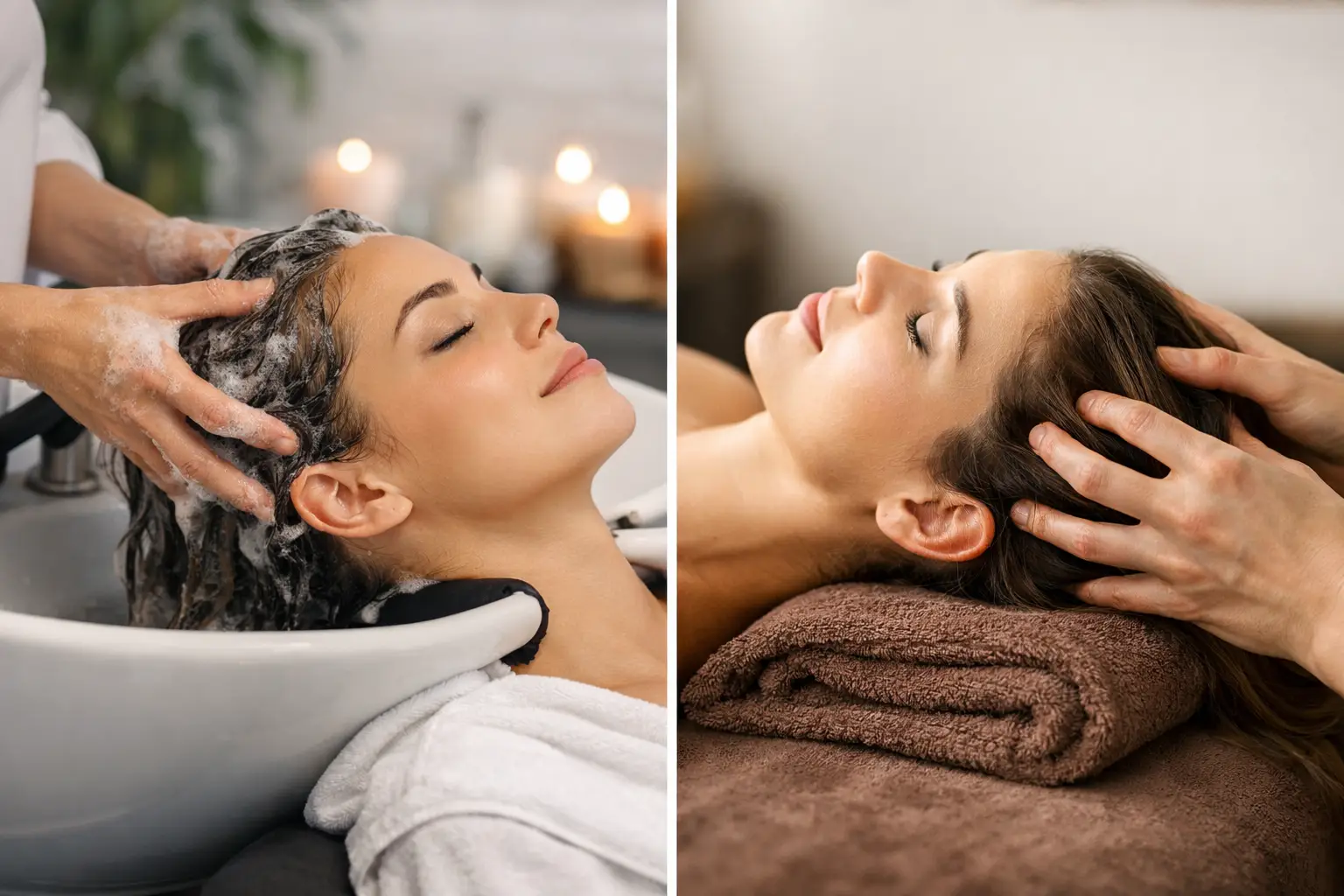
Some days, what you need is simple - a few quiet minutes, skilled hands, and the tension in your head finally letting go. Other days, you want something deeper. Not just relief, but a full reset for your scalp, senses, and nervous system. That is where the question of head spa vs scalp massage becomes more than a spa menu detail. It becomes a question of what kind of care your body is asking for.
They can look similar at first. Both involve touch at the scalp. Both can feel deeply calming. Both may leave you lighter, softer, and more present than when you arrived. But the experience, and the intention behind it, are not quite the same.
Head spa vs scalp massage: the core difference
A scalp massage is usually centered on touch. The focus is the hands, the pressure, and the rhythm working across the scalp, temples, neck, and sometimes shoulders. It is often chosen for stress relief, tension release, or simply the comfort of soothing contact.
A head spa is broader. It tends to be a ritual rather than a single technique. Along with massage, it may include cleansing, exfoliation, steam, warm water, scalp treatments, aromatic oils, and a more immersive sensory environment. The goal is not only relaxation, but renewal - for the scalp, the hair, and the mind.
If a scalp massage is a beautiful pause, a head spa is more of a full exhale.
That does not make one better than the other in every case. It depends on what you want most when you walk in. If you are craving quick tension relief, a scalp massage may be exactly right. If you want to feel cared for in a slower, more layered way, a head spa often offers more depth.
What a scalp massage does well
A good scalp massage can be surprisingly powerful. Many people carry stress in places they barely notice until someone works through them - the base of the skull, the temples, the crown, the jawline. When that tension begins to soften, the whole body can follow.
This is part of why scalp massage feels so immediate. There is usually no long setup and no elaborate sequence. The simplicity is part of the appeal. Pressure, movement, and therapeutic touch create relief in the moment, and for many guests, that is enough.
It also fits well into a shorter visit or as part of another service. If you do not necessarily need scalp exfoliation, hair-and-scalp products, or steam, the directness of a scalp massage can feel clean and satisfying.
The trade-off is that it may not address buildup, dryness, excess oil, or the desire for a more immersive ritual. It calms, but it does not always restore in the same multi-sensory way.
What makes a head spa feel different
A head spa is often chosen by people who want more than muscle relief. They want a change in state.
Warm water, botanical ingredients, careful scalp work, steam, and scent can shift the experience from pleasant to transportive. The scalp is cared for, not just worked on. Dryness may be softened. Buildup may be loosened. The hair and scalp can feel cleaner, lighter, and more refreshed afterward.
Just as important, the pacing is different. A head spa tends to invite stillness. There is less of the practical, in-and-out feeling that some treatments carry. Instead, each step builds on the next, creating the sense that you are being guided somewhere quieter.
For guests who are mentally overstimulated, that difference matters. The combination of water, warmth, touch, and silence can settle the mind in a way that feels almost meditative.
At a sanctuary for renewal like donEvita, that ritual quality is part of the point. Care is not rushed. It is layered, intentional, and deeply personal.
Which is better for scalp health?
This is where head spa vs scalp massage becomes a little more practical.
If your main concern is relaxation, both can help. If your main concern is the condition of your scalp, a head spa usually has the advantage. That is because the service can include cleansing, exfoliation, hydration, and ingredients chosen for what your scalp needs in that moment.
A scalp massage can support circulation and help you feel looser and calmer, but on its own it is not always designed to address flakes, buildup, excess oil, or product residue. A head spa can be better suited for those concerns because it combines touch with treatment.
Still, there is nuance here. Not every dry scalp needs exfoliation, and not every sensitive scalp wants heavy products or intense stimulation. A premium experience should feel customized, not one-size-fits-all. The best care respects your scalp’s condition instead of forcing a routine that sounds impressive but feels wrong.
Which is better for stress?
Both can be excellent, but they soothe stress in slightly different ways.
A scalp massage often works quickly. If you have been clenching your jaw, staring at screens, or carrying pressure behind your eyes and temples, focused massage can bring fast relief. It is tactile, grounding, and effective.
A head spa tends to calm the nervous system more completely because it surrounds the body with multiple cues of safety and rest - warmth, water, scent, stillness, and steady touch. For someone who feels mentally scattered or emotionally worn thin, that fuller sensory environment may be more restorative.
So the better option depends on the kind of stress you are carrying. Physical tension may respond beautifully to massage alone. Emotional fatigue, overstimulation, and the feeling of needing to fully disappear for a while may call for the deeper quiet of a head spa.
The sensory experience matters more than people expect
People often compare services by benefit alone. Relaxation. Scalp care. Hair health. Tension relief. Those are useful categories, but they miss something important. How a treatment feels while you are receiving it matters just as much as what it accomplishes.
A scalp massage can feel intimate and immediate. It brings attention right to the places where you hold strain. Some guests love that clarity.
A head spa feels more enveloping. Water, steam, product texture, and a slower rhythm create a sense of being held by the experience, not just worked on by it. For many people, that is what turns a treatment into a ritual.
This is especially true for guests who do not want self-care to feel transactional. They want beauty and calm, but they also want atmosphere, intention, and softness. In that setting, the choice is not only about results. It is about how deeply you want to let go.
When to choose a scalp massage
A scalp massage is often the right fit when you want focused relief without the length or layering of a full ritual. It makes sense if you are short on time, if tension is your main concern, or if you simply prefer a treatment centered on therapeutic touch.
It can also be ideal if you are new to spa experiences and want to start with something familiar. There is comfort in simplicity. No complicated steps, no guessing what comes next - just skilled hands, steady pressure, and a calmer mind.
When to choose a head spa
Choose a head spa when you want the experience to feel immersive. If your scalp feels neglected, your mind feels noisy, or your body has been asking for rest in quieter ways, a head spa can meet you there.
It is especially appealing before a special occasion, after long periods of stress, or anytime you want to feel renewed rather than just relieved. The combination of scalp care and sensory calm makes it feel more complete.
For many guests, that is the real difference. A scalp massage helps you feel better. A head spa helps you feel restored.
So, head spa vs scalp massage?
If you are choosing between the two, ask yourself a gentler question than which one is best. Ask what kind of care feels right today.
If your body wants targeted tension relief, choose the massage. If your whole system wants warmth, stillness, cleansing, and a longer exhale, choose the head spa. There is wisdom in both choices.
The most meaningful treatments are not always the most elaborate ones. They are the ones that meet you honestly, exactly where you are. And sometimes, that small moment of listening is where renewal begins.