
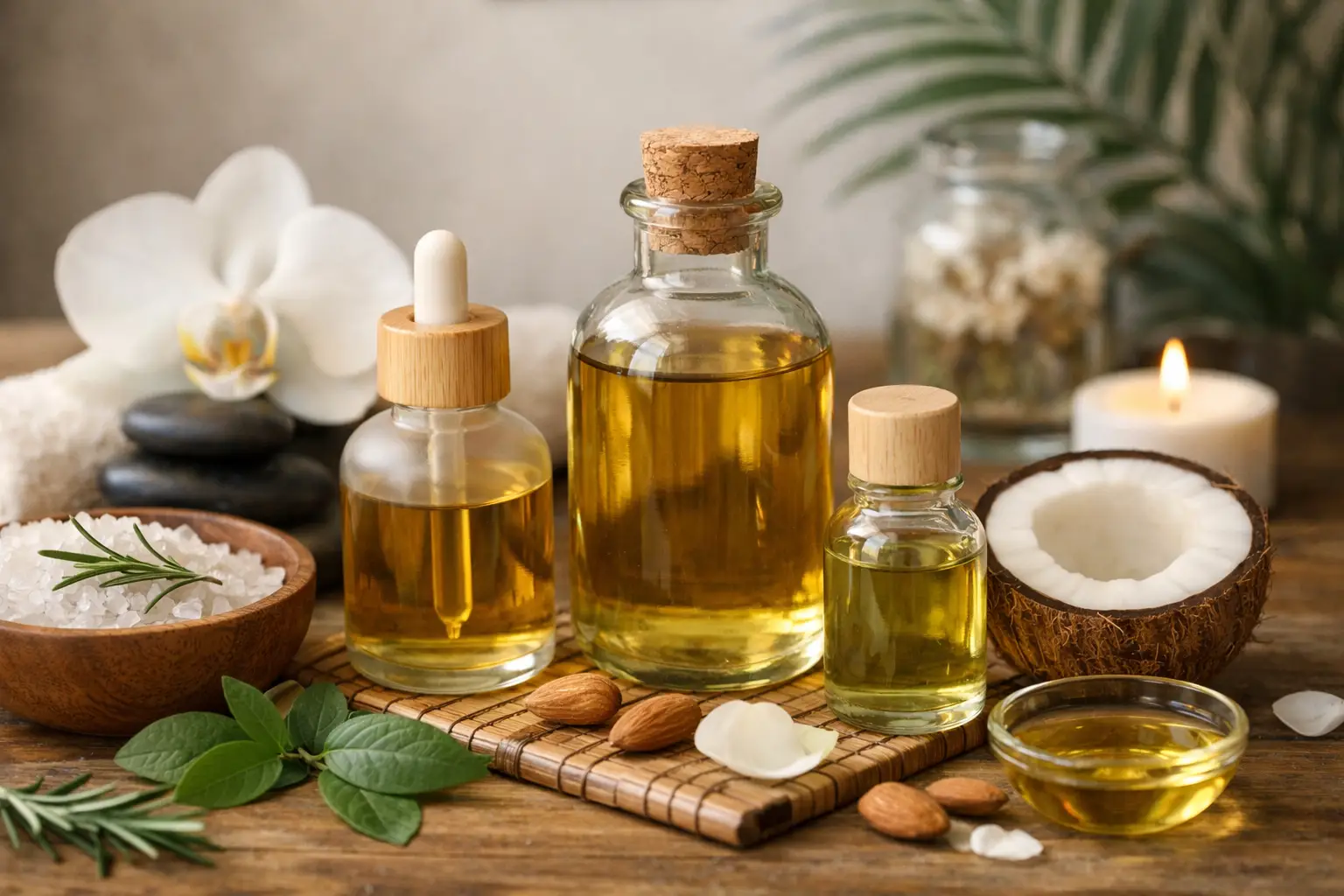
A spa oil should do more than leave a soft finish on the skin. It should help create a pause - a moment when breath slows, shoulders soften, and the outside world feels a little farther away. Knowing how to choose organic spa oils begins with looking beyond a beautiful bottle or a familiar scent. The most thoughtful choice is one that feels good on your skin, fits the purpose of your ritual, and brings a sense of quiet care to the experience.
At home or during a professional treatment, oil becomes part of the atmosphere. It carries warmth through massage, holds the fragrance of botanicals, and can turn a simple shower or bath into a more restorative act of self-care.
Start With the Oil Base
The foundation matters. Essential oils may be the part you smell first, but carrier oils make up most of the blend and do much of the work on the skin. A quality organic spa oil should name its base oils clearly rather than hiding them behind a vague phrase such as "proprietary blend."
Grapeseed oil is a favorite for massage because it has a light, smooth glide and does not usually leave the skin feeling overly coated. It is a lovely choice for those who prefer a clean, barely-there finish. Coconut oil offers richer softness and a comforting texture, although it can feel too heavy for some skin types or solidify in cooler rooms.
Jojoba is technically a wax ester rather than a traditional oil, yet it is often included for its balanced, silky feel. Sweet almond oil is another classic option, valued for its gentle slip and cushion during longer massage rituals. Those with nut allergies should take special care with almond-based products and ask about every ingredient before use.
There is no single best base oil. A light oil can feel fresh and effortless in warm Texas weather, while a richer blend may be more welcome when skin feels dry or when the ritual calls for slow, unhurried touch.
How to Choose Organic Spa Oils by Ingredient Quality
The word organic is meaningful, but it is not a substitute for reading the label. Look for oils made with identifiable plant ingredients and a clear indication of which components are organically grown or certified organic. A product may contain some organic ingredients without the entire formula meeting organic certification standards, so the details matter.
A shorter ingredient list is often easier to understand, though simple does not automatically mean superior. What matters is whether each ingredient has a clear purpose. Botanical oils, plant extracts, and carefully measured essential oils can create a beautiful formula. Unnecessary synthetic fragrance, artificial color, or a long list of unfamiliar fillers may not fit the kind of intentional ritual you want to create.
Freshness deserves attention, too. Natural oils can oxidize over time, especially when exposed to heat, sunlight, or air. Choose packaging that protects the oil, such as dark glass, and notice whether the product has a production date, expiration date, or recommended period after opening. An oil that smells stale, sharply rancid, or oddly waxy has likely passed its best moment.
Let Scent Support the Moment You Need
Scent is personal. The same aroma that feels grounding to one person can feel overwhelming to another. Rather than choosing a blend because it is popular, begin with the kind of atmosphere you hope to create.
Lavender is often associated with stillness and a gentler transition into rest. Eucalyptus or peppermint can feel clear and cooling, particularly after a long day, though they may be too intense for sensitive skin or for a ritual meant to feel deeply soothing. Citrus oils can bring brightness and lift, while sandalwood, frankincense, and soft woods tend to create a warmer, more contemplative mood.
Natural does not always mean mild. Essential oils are concentrated botanical materials, and a blend with a strong aroma may not be the right choice for direct body application. For massage, body oils should already be properly diluted by the maker. If you are creating your own blend, use essential oils sparingly and follow reliable dilution guidance rather than adding drops by instinct.
If scent sensitivity is part of your life, an unscented organic oil can be the most luxurious option. Quiet does not need fragrance to feel complete.
Match the Texture to Your Skin and Ritual
The best spa oil is not necessarily the richest or most fragrant. It is the one that complements how your skin feels and how you plan to use it.
For a full-body massage, choose an oil with enough glide that hands can move slowly without pulling at the skin. Grapeseed, jojoba, and almond blends are often well suited to this purpose. For a post-shower ritual, a lighter oil applied to damp skin may absorb beautifully while helping skin feel soft and comfortable.
For hands, feet, elbows, and other areas that need extra attention, a thicker blend can be welcome. You may enjoy a formula that includes coconut oil or a small amount of a botanical butter. Just remember that richer textures can transfer onto sheets, clothing, or furniture more easily. Give the oil a few quiet minutes to settle before dressing.
Facial skin calls for a more selective approach. A body oil can be lovely from neck to toe but may feel too rich, fragrant, or active for the face. If you want a face ritual, choose a product specifically made for that area and introduce it slowly.
Consider Sensitivities Before the First Use
A thoughtful ritual should never ask your skin to simply endure it. Even organic, plant-based ingredients can cause irritation or allergic reactions. Patch testing is a small act of care that can prevent a disappointing experience.
Apply a small amount of the oil to the inside of the forearm and wait at least 24 hours before using it more broadly. If redness, itching, burning, or discomfort appears, wash the area gently and do not continue with the product. Avoid applying oils to broken, freshly exfoliated, or irritated skin.
Extra caution is wise during pregnancy, while nursing, when managing allergies, or when using prescription skin treatments. In these situations, ingredient questions are worth asking before the ritual begins. A trusted health professional can offer personalized guidance when needed.
Use Oil as Part of a Larger Ritual
Spa oil has more presence when it is not rushed. Warm a small amount between your palms before applying it. Begin at the feet, shoulders, or hands - places where the body often carries the day - and use slow, steady movements. There is no need to use a large amount. Start with less, then add more only if the skin still feels dry or the massage needs more glide.
For a bath ritual, do not pour undiluted essential oils directly into the water. Oil and water do not truly blend, which can leave concentrated droplets against the skin. Use a body oil formulated for bath use, or apply a gentle oil to damp skin after bathing instead.
At donEvita, organic oils are chosen as part of a wider experience of renewal, where skilled touch, warmth, scent, and stillness are allowed to work together. That same intention can guide the oils you keep at home. The product is only one part of the ritual; the way you make space for yourself is the deeper care.
Choose the oil that invites you to slow down without asking too much of your senses or your skin. A clear ingredient list, a texture you enjoy, and a scent that feels like exhale are often enough to turn an ordinary evening into a softer place to land.