
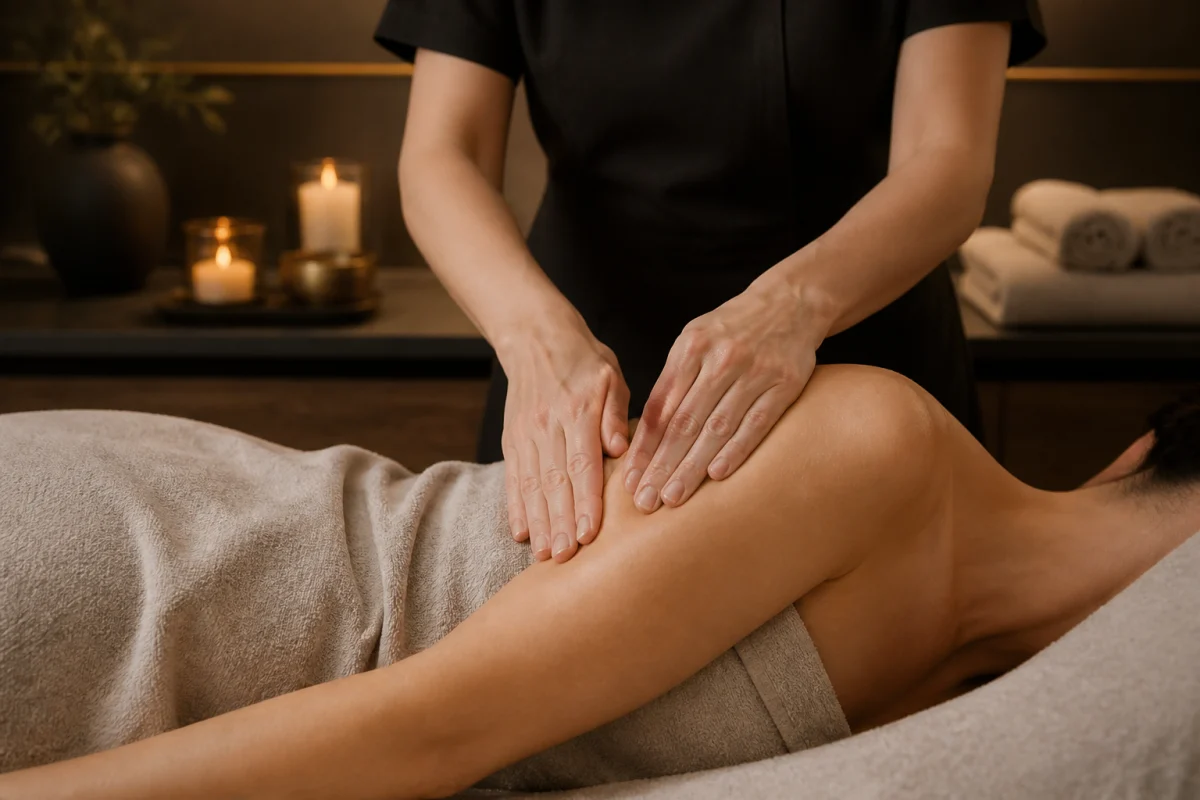
Lymphatic drainage massage is having a very visible moment. Social feeds are filled with sculpted before-and-after photos, morning routines for a puffy face, promises to move stagnant fluid, and treatments marketed as a full-body detox. In 2026, the Global Wellness Institute’s Massage Makes Me Healthy and Happy initiative named manual lymph drainage a leading massage trend, reflecting how quickly public interest has moved from specialist clinics into spas, beauty studios, and at-home wellness routines.
Some of that attention is useful. The lymphatic system matters, and manual lymphatic drainage has a legitimate place in care. But the loudest claims often stretch far beyond what the evidence shows.
The honest version is more specific. Lymphatic drainage massage may help move excess fluid and reduce swelling in the right person, especially when it is part of clinician-guided lymphedema care. It may feel calming and may temporarily reduce puffiness. It does not melt fat, flush an undefined backlog of toxins from a healthy body, or supercharge the immune system.
Understanding that difference does not make the treatment less valuable. It makes the decision to receive it safer, clearer, and more credible.
What the Lymphatic System Actually Does
The lymphatic system is a network of tiny vessels, larger collecting vessels, lymph nodes, and lymph-related organs. Its core jobs include maintaining fluid balance, absorbing certain dietary fats, and supporting immune surveillance.
Fluid continually moves out of blood capillaries and into the spaces around cells. The lymphatic system collects the excess—including water, proteins, immune cells, and other material—and eventually returns that fluid to the circulation. Along the way, lymph passes through lymph nodes, where immune cells monitor what it carries.
Unlike the blood circulation, the lymphatic network does not rely on one central pump like the heart. Lymphatic vessels have their own contractile activity and one-way valves, while breathing, ordinary movement, and skeletal-muscle contractions also help move fluid.
This is important because the internet often describes lymph as though it becomes dirty water sitting motionless under the skin until a massage therapist pushes it out. That is not how a healthy lymphatic system works. It is active all day, every day.
What Manual Lymphatic Drainage Really Is
Manual lymphatic drainage, often shortened to MLD, is a specialized technique that uses light, rhythmic, skin-stretching movements. The pressure is usually much gentler than traditional massage because many initial lymphatic vessels sit close to the surface.
A trained practitioner follows the body’s drainage pathways and usually begins by preparing areas nearer to functioning lymph nodes before working with a swollen region. The sequence matters. More pressure is not automatically more effective.
True MLD should not look like aggressive kneading, forceful abdominal pumping, painful scraping, or hard tools being used to reshape the body. Those services may be marketed with lymphatic language, but they are not necessarily the same technique used in lymphedema care.
Bruising, sharp pain, or the feeling that tissue is being crushed are not signs that lymph is finally moving. They are reasons to pause and ask what kind of treatment is actually being performed.
Where the Evidence Is Strongest
The clearest medical role for MLD is in the management of lymphedema, a condition in which lymph fluid accumulates because drainage pathways are damaged, obstructed, underdeveloped, or removed. It can occur after lymph-node surgery or radiation, with cancer and some cancer treatments, or because of other lymphatic disorders.
The National Cancer Institute describes manual lymphatic drainage as one part of complete decongestive therapy. That broader plan may also include compression, exercise, skin care, education, and self-management under the guidance of a certified lymphedema therapist.
That context matters. Research does not show that MLD is a universal stand-alone cure. Reviews of cancer-related lymphedema generally support complete decongestive therapy, while the added benefit of any one component can vary by the person, stage, body area, and study. A 2025 BMJ clinical review also noted that much of the evidence remains low quality and is concentrated in breast-cancer populations.
In other words, the evidence is not “lymphatic massage works for everything.” It is that carefully selected, trained, multicomponent care can help manage certain forms of swelling and improve comfort or function for some patients.
What About Swelling After Surgery?
MLD is sometimes used after medical or cosmetic procedures to help manage swelling. That does not mean every post-surgical body should be massaged, or that treatment should begin whenever a social-media timeline recommends it.
Timing, technique, surgical site, infection risk, clot risk, wound healing, and the exact procedure all matter. A surgeon or treating clinician should clear postoperative lymphatic work, and the practitioner should have training that matches the situation.
Forceful massage over healing tissue can be inappropriate. So can massage performed around drains, open incisions, new redness, increasing warmth, unexpected pain, or swelling that has not been medically evaluated.
If the goal is postoperative care, choose clinical coordination over a dramatic before-and-after photo.
The “Detox” Claim: A Real System Wrapped in a Vague Promise
The lymphatic system does transport fluid, cellular material, and immune-related substances. That biological fact is often turned into a much bigger marketing statement: that a massage removes toxins from the body.
The word toxin is rarely defined in these promises. Which substance is being removed? How was it measured? Through which organ does it leave? What changed after the session? Without answers, “detox” becomes a feeling rather than a testable claim.
Your body already has sophisticated systems for processing and eliminating substances. The liver transforms many compounds. The kidneys filter the blood and produce urine. The lungs remove carbon dioxide. The digestive system processes and eliminates material. The lymphatic system contributes to fluid balance and immune transport, but massage does not replace those organs or perform a whole-body cleanse.
MLD may help move accumulated lymph fluid when drainage is impaired. That is different from saying a healthy person has a hidden reservoir of toxins that must be manually flushed.
Does Lymphatic Drainage Cause Weight Loss?
No good evidence shows that lymphatic drainage massage causes fat loss.
If a person is retaining fluid or has visible swelling, moving some of that fluid may temporarily change measurements, scale weight, facial puffiness, or how clothing fits. Lighting, posture, compression, hydration, meal timing, and camera angle can make a before-and-after result look even more dramatic.
But fluid is not body fat. A temporary reduction in swelling does not mean fat cells were burned or removed. UCLA Health’s 2026 evidence review makes this distinction directly: MLD may create a slimmer appearance when swelling decreases, but it does not directly produce weight loss.
A reputable practitioner should never promise inches lost, permanent contouring, or metabolic fat burning from lymphatic massage.
Does It Boost Immunity?
The lymphatic system is essential to immune function. Lymph nodes help filter lymph and provide places where immune cells can interact. That does not automatically mean manually moving the skin gives a healthy person a stronger immune system.
This is a common wellness logic error: a body system has an important function, therefore stimulating something associated with that system must improve the function. The conclusion needs evidence of its own.
Current medical guidance does not establish routine MLD as a way to prevent colds, avoid infections, or broadly “boost” immunity in healthy people. Massage may support rest and help someone feel calmer, but those comfort benefits should not be rewritten as disease protection.
What a Healthy Person Might Honestly Notice
A healthy person can still enjoy a gentle lymphatic-style session. The honest expectations are simply more modest than the marketing.
- A slow, light-touch treatment may feel deeply relaxing.
- Temporary puffiness or mild fluid retention may appear reduced.
- The body may feel less heavy or more comfortable for a period of time.
- Quiet touch and unhurried breathing may create a calming experience.
- Some people may notice no meaningful change at all.
None of those outcomes proves that toxins left the body. None should be sold as fat loss, a stronger immune system, or treatment for unexplained swelling.
When Swelling Needs a Medical Answer First
Swelling is a symptom, not a diagnosis. It can have many causes, including injury, infection, a blood clot, medication effects, vein problems, heart or kidney disease, surgery, or a lymphatic condition.
New, persistent, one-sided, painful, red, hot, or rapidly increasing swelling should be medically evaluated. Sudden swelling with chest pain, shortness of breath, faintness, or other severe symptoms needs urgent care.
Cleveland Clinic advises avoiding lymphatic drainage massage in situations that include blood clots or deep vein thrombosis, cellulitis, fever, active infection, heart disease, kidney failure, or stroke unless an appropriate healthcare professional has provided guidance. Recent surgery, cancer-related concerns, pregnancy risks, damaged skin, and unexplained edema also deserve individual clearance.
A massage appointment should never delay evaluation of a symptom that may have a serious cause.
How to Choose a Responsible Practitioner
The phrase lymphatic drainage is used loosely across wellness, beauty, postoperative, and medical settings. Before booking, ask practical questions:
- What training do you have in manual lymphatic drainage?
- Do you work with diagnosed lymphedema, postoperative swelling, or wellness clients?
- When do you require medical clearance?
- What pressure and technique should I expect?
- How do you screen for infection, clot risk, heart or kidney concerns, and other contraindications?
- Are you promising relaxation and temporary comfort, or making claims about detox, immunity, weight loss, or body sculpting?
For diagnosed lymphedema, cancer-related swelling, or complex postoperative needs, look for a certified lymphedema therapist or another clinician with appropriate training and coordination with your healthcare team.
Where Wellness Massage Fits
There is room for both clinical care and spa care, but the two should not be blurred.
Clinical MLD is a specialized intervention used for specific indications. A wellness massage is designed around comfort, rest, and the guest’s pressure preferences. It may include gentle, flowing touch, but that does not turn it into treatment for lymphedema or a medical drainage problem.
At donÉvita, we believe the more responsible promise is also the more meaningful one: a carefully paced experience, respectful touch, and time for the body to settle. We do not need detox language to make rest sound valuable.
If your goal is relaxation and personalized bodywork, you can explore massage at donÉvita. If your concern is persistent swelling, postoperative recovery, or diagnosed lymphedema, begin with your healthcare team and ask what type of trained provider is appropriate.
The Bottom Line
Lymphatic drainage massage is neither a miracle nor a fraud. It is a real, gentle technique with its clearest role in carefully selected swelling and lymphedema care. Its usefulness depends on why it is being performed, who is performing it, and whether it is part of an appropriate plan.
The trend gets it right when it encourages people to learn about a system that is often overlooked. It gets it wrong when temporary de-puffing becomes permanent weight loss, immune function becomes an immunity boost, and fluid movement becomes a mysterious detox.
Your body does not need to be frightened into wellness with the idea that it is clogged, dirty, or failing to drain. It may need movement. It may need medical care. It may need rest. And sometimes it may benefit from skilled, gentle touch—with honest expectations attached.
Sources and Further Reading
- Global Wellness Institute: 2026 Massage Initiative Trends
- UCLA Health: Lymphatic Drainage Massage — Separating Fact from Fiction
- National Cancer Institute: Lymphedema and Cancer
- Annual Review of Physiology: Transport and Immune Functions of the Lymphatic System
- The BMJ: Cancer-Related Lymphedema
- Cleveland Clinic: Lymphatic Drainage Massage