
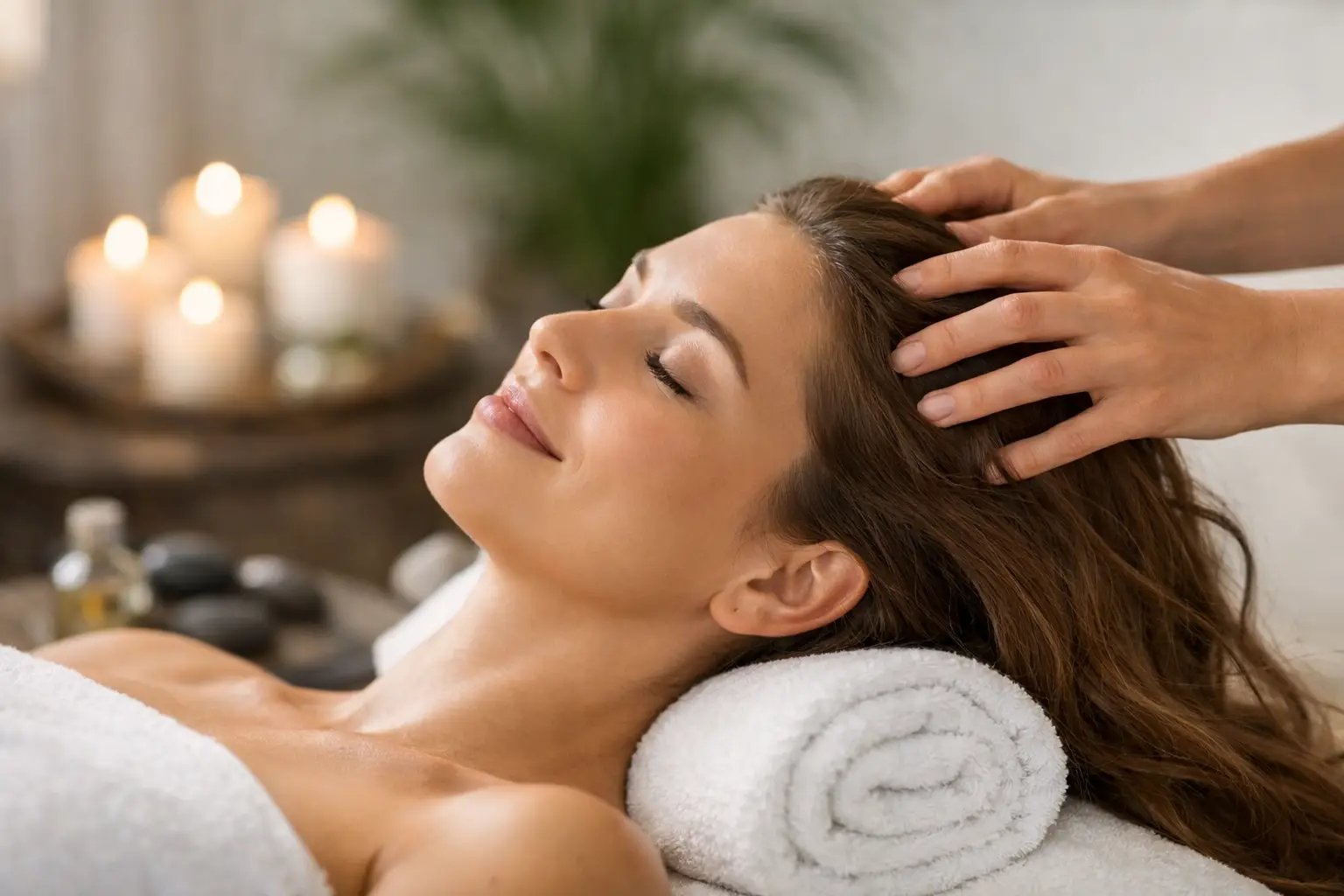
The moment often arrives quietly: your shoulders are raised toward your ears, your jaw is set, and the space at your temples feels crowded with the day. A scalp massage for stress offers an unusually direct invitation to pause. It brings caring, intentional touch to the place where screens, deadlines, noise, and unspoken thoughts can seem to gather.
This is not about forcing relaxation or checking another task off a self-care list. It is a small ritual of return. With unhurried pressure, warmth, and breath, the scalp can become a pathway back to softness.
Why Stress Can Feel So Present in the Scalp
The scalp is easy to overlook until it feels tender, tight, or fatigued. Yet it sits beside other familiar places where many people notice the effects of a long day: the forehead, temples, jaw, neck, and upper shoulders. Hours spent driving, concentrating, looking down at a phone, or carrying responsibility can leave the whole area feeling less spacious.
A thoughtful scalp massage does not need to chase a dramatic result. Its value is often in the contrast it creates. The steady movement of fingertips asks your attention to leave the rushing mind for a moment and settle into sensation: the warmth of the hands, a slow circle at the temples, the gentle lift at the base of the skull.
For many people, that shift is deeply calming. Touch can make it easier to notice the breath, unclench the jaw, and let the shoulders fall without being told to do so. The ritual may not erase the source of stress, but it can create a quiet interval between what has been asked of you and what comes next.
Scalp Massage for Stress Is a Ritual, Not a Shortcut
There is a difference between absentmindedly scratching your head and receiving or giving the scalp sustained, mindful attention. The first is a passing gesture. The second is a practice of care.
A calming scalp ritual begins with pace. Quick, vigorous rubbing can feel energizing for some people, especially in the morning, but it may be too stimulating when your nervous system is already asking for less. For evening or post-work relaxation, slower circles and a lighter, consistent pressure tend to feel more restorative.
Scent can deepen the experience when used with restraint. A softly aromatic oil or a few moments with a preferred essential oil nearby can give the mind a gentle place to land. The fragrance should feel like an exhale, not fill the room or compete with the experience. If your skin is sensitive or you are unsure how an oil will feel, begin without it or use only a small amount of a suitable carrier oil.
The setting matters, too. A bright bathroom mirror, a buzzing phone, or a rushed five minutes between obligations changes the feeling of the ritual. Dimmer light, a warm towel at the neck, and even ten uninterrupted minutes can turn simple touch into a more meaningful form of restoration.
A Simple At-Home Practice
Begin seated or lying down where your neck is supported. Before your hands reach your scalp, take a slow breath in and allow the exhale to be a little longer. There is no need to perform calm. Simply notice where you are holding effort.
Place the pads of your fingertips, not your nails, at the hairline above the forehead. Make small, gentle circles without dragging the skin. Move gradually toward the temples, then travel up and over the crown. Let your fingers pause in any area that feels especially dense, while keeping the pressure comfortable.
From there, bring both hands to the base of the skull. Use small circular movements where the head meets the neck, then slowly work behind the ears. Many people find this area especially soothing after a day of computer work, travel, or mental concentration. If it feels good, lightly cradle the head for several breaths before finishing.
Five to ten minutes is enough to make the practice feel complete. The goal is not to cover every inch perfectly. It is to give yourself a few unbroken moments in which nothing needs to be solved.
Let Breath Set the Pace
Try matching each small set of circles to one full breath. Breathe in as your fingers settle, then exhale as they move. This simple rhythm helps prevent the massage from becoming hurried or overly mechanical.
If thoughts keep returning, let them. The practice does not require an empty mind. Each time you notice that you have drifted back into planning, bring your attention to the sensation beneath your fingertips. That gentle return is part of the renewal.
Know When Less Is More
Pressure should feel comforting, never sharp or intense. More force does not always create more relief. In fact, a lighter touch may feel more calming when the scalp is already sensitive or when your body is worn down.
It also depends on your hair and scalp needs. Oils may feel nourishing for dry hair, but they are not necessary for everyone and can leave finer hair feeling heavy. A dry massage can be just as grounding. If you have a rash, open skin, recent procedure, unusual tenderness, or persistent unexplained discomfort, skip the massage and seek guidance from a qualified health professional.
The Beauty of Professional Scalp Care
At home, scalp massage can be a valuable pause in the middle of ordinary life. In a spa setting, it can become something more immersive: a chance to receive care without directing it yourself. When the hands working through the scalp are trained, attentive, and unhurried, you are free to soften fully into the experience.
This is where a broader wellness ritual can be especially meaningful. The quiet of the room, the warmth of a towel, carefully chosen organic oils, and therapeutic touch throughout the head, neck, and shoulders can work together in a way that feels held rather than hurried. A scalp-focused moment can be woven into a massage, body ritual, or private escape, depending on what your body is asking for that day.
At donEvita in Bedford, renewal is approached with this kind of intention. Care is not treated as a quick fix. It is shaped around the guest, with thoughtful details that create room to breathe, rest, and feel present again.
Make the Calm Easier to Return To
The most effective ritual is usually the one you can revisit. Rather than waiting until stress feels overwhelming, consider a brief scalp massage as a transition: after closing the laptop, before a shower, while waiting for tea to steep, or before sleep. Repetition teaches the body that this small sequence signals a change in pace.
You may find that certain details become part of the comfort. Perhaps it is the clean scent of your hair after a shower, a favorite oil warmed between the palms, or the way your hands rest at the base of the skull at the end. These details are not trivial. They are the language of ritual, and they make care feel personal.
On the evenings when everything feels like too much, begin with your fingertips at your temples and one slower breath than the last. Let that be enough. Calm does not always arrive all at once, but it often begins with a small, caring touch.