
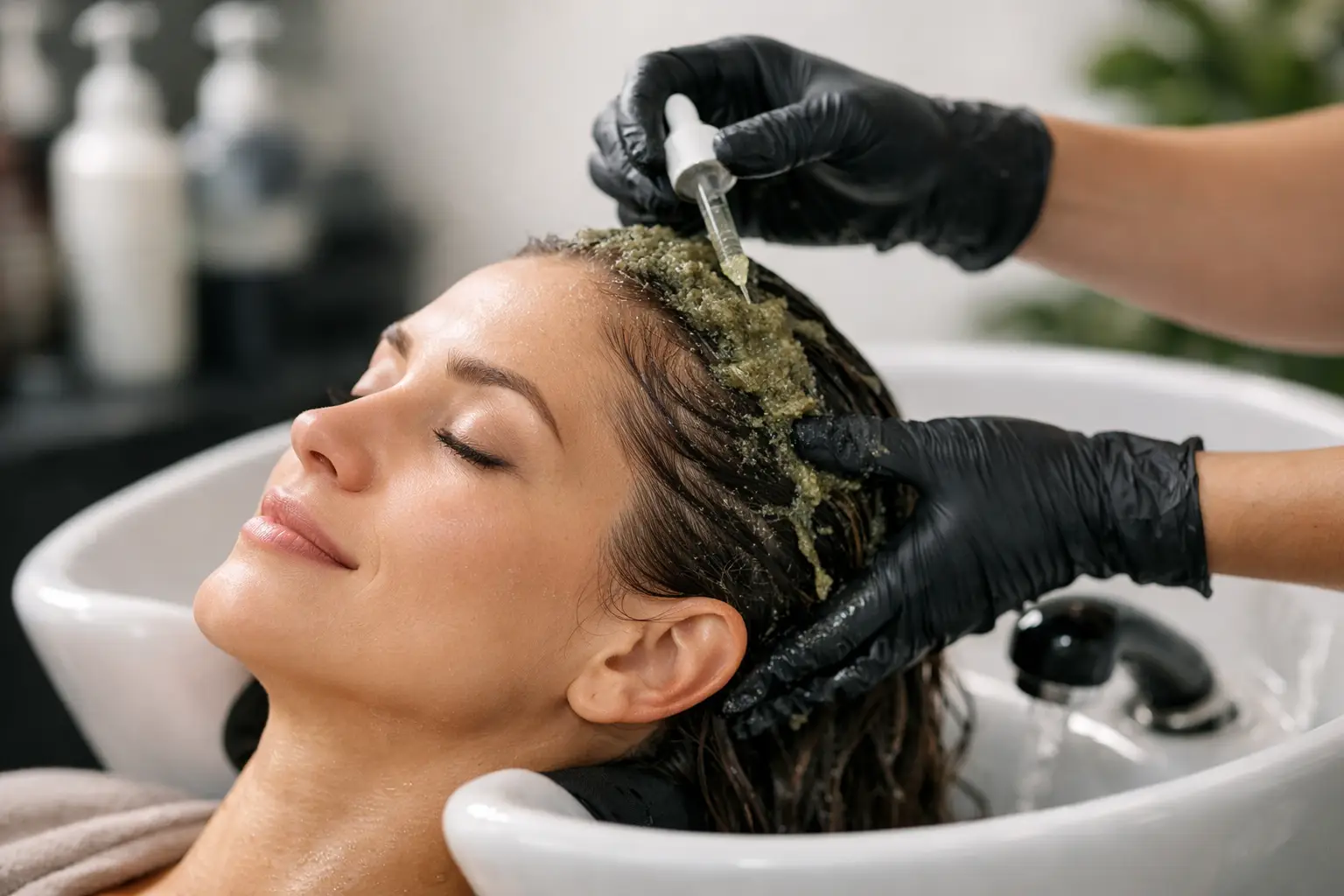
When your hair feels heavy only a day after washing, the problem is not always your shampoo. Sometimes the scalp is simply asking for more attention than a quick rinse can give. A scalp detox treatment creates space for that reset - lifting away buildup, calming the surface, and helping the scalp feel light, balanced, and clean again.
For many people, scalp care starts and ends with washing. That works until it does not. Dry shampoo, styling creams, oil, sweat, hard water, and even gentle products can collect over time. The result can feel subtle at first - flat roots, itchiness, flakes that are not quite dandruff, a scalp that feels tight, or hair that loses its softness and movement.
A detox is not about stripping everything away. The best treatments do the opposite. They clear what does not belong while protecting the scalp’s natural comfort. That distinction matters, because an overdone detox can leave the skin irritated and the hair dull. A thoughtful one leaves behind relief.
What is a scalp detox treatment?
A scalp detox treatment is a focused cleansing ritual for the scalp rather than the hair alone. It usually combines exfoliation, massage, and a deep but balanced cleanse to remove buildup from products, excess oil, dead skin, and environmental residue.
Some treatments use fine sugar or salt-based exfoliants. Others rely on enzymes, charcoal, clay, or lightweight acids that loosen debris without a rough scrub. In a spa setting, the experience may also include warm steam, nourishing oils, and slow massage to encourage circulation and soften tension held across the scalp, temples, and neck.
That is part of what makes the treatment feel different from washing at home. It is not rushed. It is guided. The scalp is treated as skin that deserves care, not just the place hair grows from.
Signs your scalp may need a detox
The need for a scalp detox treatment is not always dramatic. Often, it shows up in small frustrations that keep repeating. Your hair may look dull even when it is freshly styled. The roots may feel greasy while the ends stay dry. You may notice sensitivity near the hairline, or a layer of residue that seems to return no matter what products you switch to.
Flaking can also be misleading. Sometimes flakes come from dryness. Sometimes they come from buildup trapping oil and dead skin together. Those two situations need different care, which is why a harsh exfoliant is not always the answer. If the scalp is already irritated, aggressive cleansing can make it feel worse.
A detox tends to help most when the scalp feels congested rather than inflamed. If there is persistent redness, pain, or significant shedding, it makes sense to pause the self-diagnosis and seek professional guidance. Wellness rituals can be deeply supportive, but some scalp concerns need medical evaluation.
Why buildup changes how your hair feels
Healthy-looking hair begins where it grows. When buildup collects on the scalp, it can weigh down the root area and interfere with that clean, airy feeling people often want after a wash. Hair may seem less responsive, less full, or harder to style. Even beautiful products can stop performing well if they are layered onto an unbalanced scalp.
This is why people often describe the results of a scalp detox treatment as their hair feeling lighter, softer, or more alive. The treatment is not changing the hair strand itself in a permanent way. It is removing what has been muting it.
There is also a comfort factor that matters just as much. A calm scalp can change how you feel in your body. Less itching, less tightness, less heaviness - those small shifts can create an immediate sense of ease.
What happens during a scalp detox treatment
The exact process depends on the setting and the products used, but a premium treatment often begins with a consultation. That moment matters. A dry scalp, an oily scalp, a sensitive scalp, and a product-heavy scalp do not need the same ritual.
From there, the treatment may begin with a gentle exfoliant worked carefully into the scalp in sections. This helps loosen residue and lift dead skin without scratching. Warm water or steam may follow to soften buildup and prepare the scalp for a deeper cleanse.
Massage is often the most memorable part. Slow, intentional pressure across the scalp can feel deeply settling, especially for guests who carry stress in the jaw, forehead, and neck. In a peaceful setting, that touch becomes more than technique. It becomes release.
After cleansing, nourishing ingredients may be applied to restore softness and balance. Depending on the scalp’s needs, this could include lightweight botanical oils, hydrating masks, or calming blends chosen to comfort the skin without leaving it coated. At donEvita, this kind of care fits naturally into a broader ritual of renewal, where scent, warmth, touch, and stillness are all part of the experience.
Who benefits most from scalp detox care
A scalp detox treatment can be a good fit for many people, but especially for those who use dry shampoo often, rely on styling products, exercise regularly, or live with hard water. It can also help if your scalp tends to get oily quickly or if your hair never quite feels clean at the root.
That said, frequency matters. More is not always better. If your scalp is sensitive or naturally dry, too much exfoliation can disturb the barrier and leave you uncomfortable. For some people, once a month feels ideal. For others, every six to eight weeks is enough. It depends on your scalp condition, your routine, and the products you use between treatments.
Season also plays a role. In warmer months, sweat and sunscreen can increase buildup around the hairline and crown. In colder weather, indoor heat can leave the scalp feeling drier and tighter. The best rhythm is one that responds to your actual skin, not a fixed schedule copied from someone else.
Scalp detox treatment at home versus in a spa
At-home scalp care has its place. A well-formulated scrub or clarifying cleanser can be useful, especially when used gently and not too often. If you enjoy a simple ritual in the shower, home care can help maintain freshness between professional visits.
But there are limits. It is easy to over-scrub, apply too much product, or choose ingredients that are too strong for your scalp type. Many people also rush through the process, which reduces the benefit. What should feel calming turns into another task.
A spa treatment offers something different. The scalp is assessed with care. The products are selected with intention. The massage is unhurried. And perhaps most valuable of all, you are not multitasking. You are resting while someone skilled guides the ritual.
For guests in Bedford and across the DFW area, that distinction can matter. When daily life stays loud and full, a treatment that restores both scalp comfort and mental quiet holds a different kind of value.
How to care for your scalp after a detox
After a scalp detox treatment, the goal is to protect that clean balance for as long as possible. A gentle shampoo is usually the best place to start. Heavy product layering right away can shorten the fresh feeling, especially at the roots.
It also helps to be selective with dry shampoo. Used occasionally, it can be useful. Used day after day, it often becomes part of the problem. The same is true for thick styling creams and residue-prone sprays.
If your scalp tends to swing between oily and dry, resist the urge to correct it too aggressively. Stripping away oil can prompt the scalp to produce more. Adding heavy oils without need can create congestion. A lighter hand usually works better.
The treatment is not one-size-fits-all
This is where nuance matters most. Not every scalp needs exfoliation. Not every flake means detox. Not every oily root is a sign of buildup. Sometimes the best care is more moisture. Sometimes it is less product. Sometimes it is simply a gentler wash routine.
A good scalp detox treatment respects those differences. It should leave the scalp refreshed, not raw. Hair should feel clean, not squeaky. Relief should arrive with softness.
When the ritual is done well, the result is more than cosmetic. The scalp feels lighter. The roots breathe a little easier. Your whole head feels less crowded, less tense, more at ease. And that quiet shift is often the real reason people come back - not just for cleaner hair, but for the sense of restoration that begins at the root.