
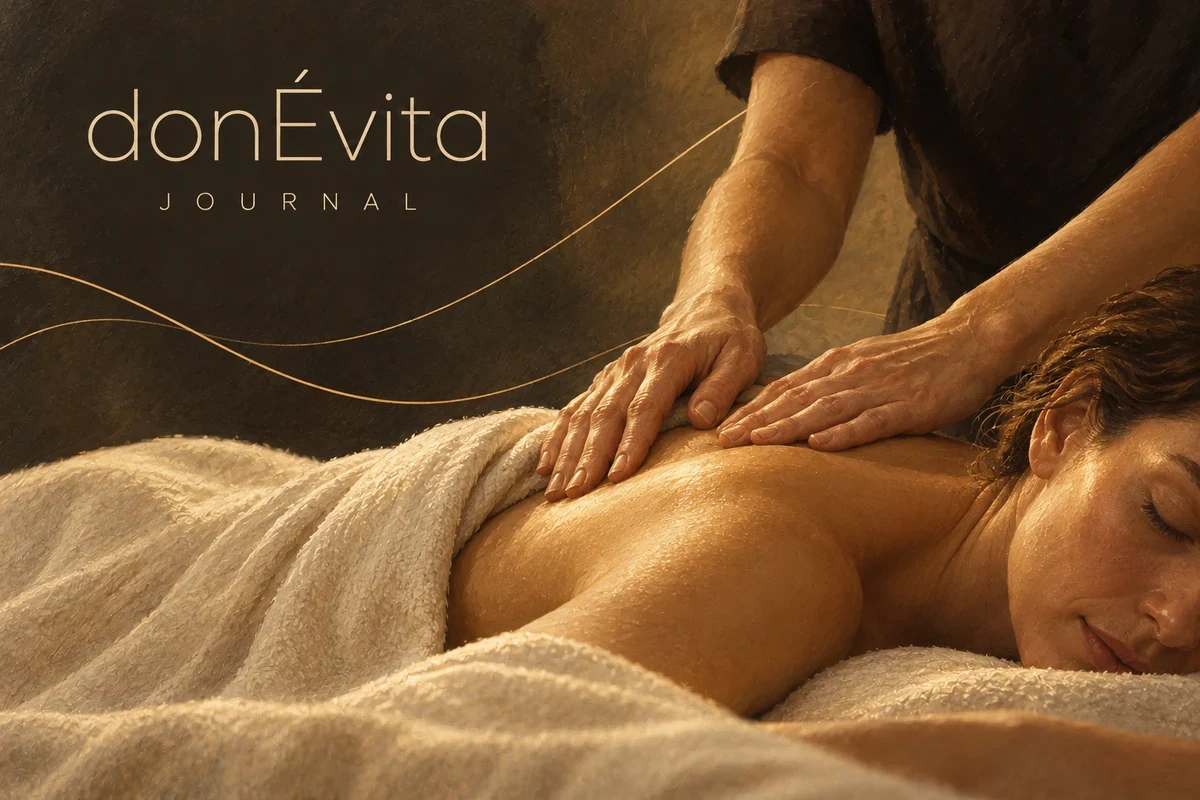
Sometimes, the first thing you notice is how much tension you were carrying. Your shoulders settle into the table. Your hands stop gripping, and you realize you have held your jaw tight for most of the afternoon.
For some people, the pleasure of massage comes from steady pressure across tired shoulders. Others enjoy gentle scalp work, a slower rhythm, or time when nobody needs anything from them.
There is no single explanation for why massage feels so good to so many people. Touch, physical comfort, personal preference, and being cared for all have a part to play.
Touch is something we feel and interpret
Your skin gives your brain information about pressure, movement, texture, and temperature. Touch also has an emotional quality. It can feel comforting, distracting, ticklish, reassuring, or unwelcome.
Researchers studying “affective touch,” the emotional side of touch, have identified nerve fibers that respond to gentle stroking. A review of C-tactile afferents and affective touch describes their role. These fibers help explain one aspect of pleasant touch, but they do not explain every enjoyable massage sensation. The person, situation, and kind of touch matter too.
The same technique can feel wonderful to one guest and uncomfortable to another. A good massage leaves room for those differences.
Relief can be part of the pleasure
When an area feels tired or uncomfortable, having it attended to can be particularly satisfying.
Massage may offer short-term relief for some kinds of neck and shoulder pain, although the strength of the evidence varies. NCCIH’s massage overview explains these limitations. Feeling better during or after a session does not necessarily mean an underlying problem has been corrected.
The immediate experience may be simpler: moving feels easier, the shoulders feel less tight, or a familiar area of discomfort becomes less noticeable for a while.
Persistent or unexplained pain deserves appropriate medical attention. Massage can be part of a comfort routine without having to answer every question about why something hurts.
You have permission to stop for a while
Much of an ordinary day involves responding. Messages arrive, someone asks a question, and there is another task to finish before you can sit down.
During a massage, you can lie still and ask for quiet. You do not have to keep a conversation going or turn the time into something productive. That pause may be an important part of what you enjoy.
Some people become sleepy. Others stay awake because they want to notice the warmth, movement, and pressure. Both are welcome ways to experience a session. Falling asleep is not a measure of how successful the massage was.
Comfortable does not mean the same pressure for everyone
Some guests enjoy broad, firm pressure. Others prefer lighter contact or slower movements. Preferences can change with fatigue, soreness, mood, or the area being worked on.
More pressure is not automatically more useful. If you are holding your breath, bracing, or waiting for a movement to end, tell your therapist.
Simple feedback helps:
- “A little lighter, please.”
- “That pressure feels good.”
- “Could we spend more time on my shoulders?”
- “I would rather skip that area.”
You can change your mind during the session. The aim is to find an approach that suits you today.
Feeling comfortable includes having a choice
Knowing what to expect matters. So does knowing that your preferences will be respected.
A thoughtful consultation, appropriate draping, clear explanations, and the freedom to request a change help make the experience enjoyable.
You do not need to tolerate touch you dislike because it is part of a routine. You can ask to adjust a technique, avoid an area, change position, or stop. These choices are part of donÉvita’s guest comfort standards.
If you are uncertain about massage, that sense of control may be just as valuable as the technique itself.
What this means at donÉvita
At donÉvita, the starting point is a conversation about what you would like from your visit.
Perhaps you want an EvitaFlow™ massage with attention to your shoulders and back. A quieter session with gentle pressure may appeal to you, or you may prefer the scalp-focused care of an EvitaHaloCrown™ head spa.
Tell us whether you hope to rest, stay present and enjoy the experience, or focus on an area of everyday tension. Share relevant health concerns and anything you would like us to avoid.
The pleasure of a good massage can be personal. It might be the pressure, the pace, or the feeling of being listened to. You do not need a more complicated reason to make a little time for yourself.